


Listen to the article
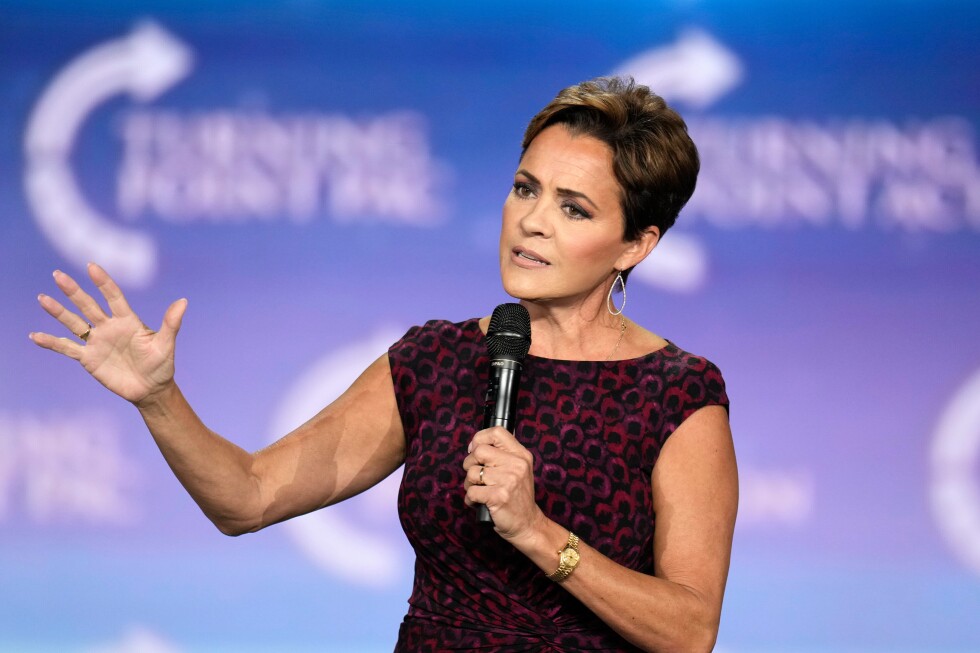
A federal judge ruled Saturday that Kari Lake, who was appointed by President Donald Trump to lead the U.S. Agency for Global Media, lacks legal authority for her recent actions that have substantially dismantled Voice of America (VOA), the nation’s international broadcasting service.
U.S. District Court Judge Royce C. Lamberth determined that Lake, who has yet to receive Senate confirmation for her role, cannot legally serve in the capacity she has assumed. In his ruling, Lamberth stated: “Only the Appointments Clause or the Vacancies Act’s exclusive structure may authorize service as a principal officer, and Lake satisfies the requirements of neither the statute nor the Constitution.”
Lake swiftly denounced the decision as “bogus” and indicated plans to appeal. She defended her actions in a statement posted on social media platform X, saying, “The American people gave President Trump a mandate to cut bloated bureaucracy, eliminate waste, and restore accountability to government.” She further characterized Lamberth as “an activist judge trying to stand in the way of those efforts.”
The ruling stems from a lawsuit filed by VOA’s White House bureau chief Patsy Widakuswara and colleagues Kate Neeper and Jessica Jerreat, who were among numerous employees laid off by Lake. Since Lake took control, VOA has been operating with minimal staff broadcasting in only a handful of languages, a dramatic reduction from its previously extensive global coverage.
“We feel vindicated and deeply grateful,” the journalists said in a statement following the ruling. They described the decision as “a powerful step toward undoing the damage she has inflicted on this American institution that we love.” However, they acknowledged uncertainty about what this means for their colleagues whose careers have been disrupted.
Voice of America has played a significant role in American international relations since its establishment during World War II. For over eight decades, it has broadcast news and information to international audiences, particularly in regions where press freedom is limited. Supporters view VOA as an essential element of America’s “soft power” strategy, offering unbiased news coverage to populations living under governments that control information flow.
Lake’s controversial approach to VOA represents a fundamental shift in philosophy. She has argued that government-funded news outlets like VOA are wasteful and should instead promote the administration’s viewpoints—a position that conflicts with VOA’s traditional editorial independence and mission of objective journalism.
The ruling has drawn support from press freedom advocates. Clayton Weimers, executive director of Reporters Without Borders’ North American branch, stated that Lamberth’s decision affirmed their position that the administration had acted unlawfully in dismantling VOA. “This case is proof that fighting for press freedom matters,” Weimers said, while noting that more work remains to ensure VOA’s journalists can resume their duties.
The immediate impact of the ruling on VOA’s operations remains unclear. The agency has undergone dramatic changes under Lake’s brief tenure, with most of its staff dismissed and its global reach severely curtailed. Restoring VOA’s operations would require rehiring personnel and reestablishing broadcasting capabilities that have been scaled back.
The case highlights ongoing tensions between the Trump administration’s approach to government agencies and the legal frameworks that govern federal appointments and operations. It also underscores the delicate balance between political leadership of government-funded media and maintaining editorial independence that has characterized VOA throughout its history.
As the appeal process unfolds, the future of one of America’s most enduring instruments of international engagement hangs in the balance, with significant implications for U.S. public diplomacy and global information dissemination.
Fact Checker
Verify the accuracy of this article using The Disinformation Commission analysis and real-time sources.

8 Comments
Interesting ruling on the Trump administration’s attempt to dismantle VOA. It will be important to see how this plays out, as international broadcasting services play a key role in sharing information and perspectives globally.
I agree, the independence and integrity of VOA is crucial. It will be worth following the appeals process closely.
This is a concerning development for the future of impartial international journalism. VOA serves an important purpose, and efforts to undermine it are troubling. Hopefully the courts will uphold its mandate going forward.
The Trump administration’s actions to dismantle VOA raise questions about transparency and accountability in government. An independent press is vital for a healthy democracy, so this ruling is an important check on executive overreach.
Absolutely. The judge’s decision to block the administration’s moves is a win for press freedom and the public’s right to accurate information.
This dispute over VOA highlights the ongoing tension between the executive branch and independent institutions. It will be interesting to see how the appeal plays out and what it means for the future of U.S. international broadcasting.
Agreed. The outcome could set an important precedent for the balance of powers and the role of the free press, which is crucial for investors to monitor.
As an investor in mining and energy stocks, I’ll be watching this case closely. Reliable information flows are critical for market transparency, so undermining VOA could have broader implications for the industries I follow.