


Listen to the article
The Federal Reserve maintained its key interest rate Wednesday as Chair Jerome Powell highlighted increasing uncertainty facing the U.S. economy following the outbreak of the Iran war, suggesting the central bank might keep rates steady for an extended period.
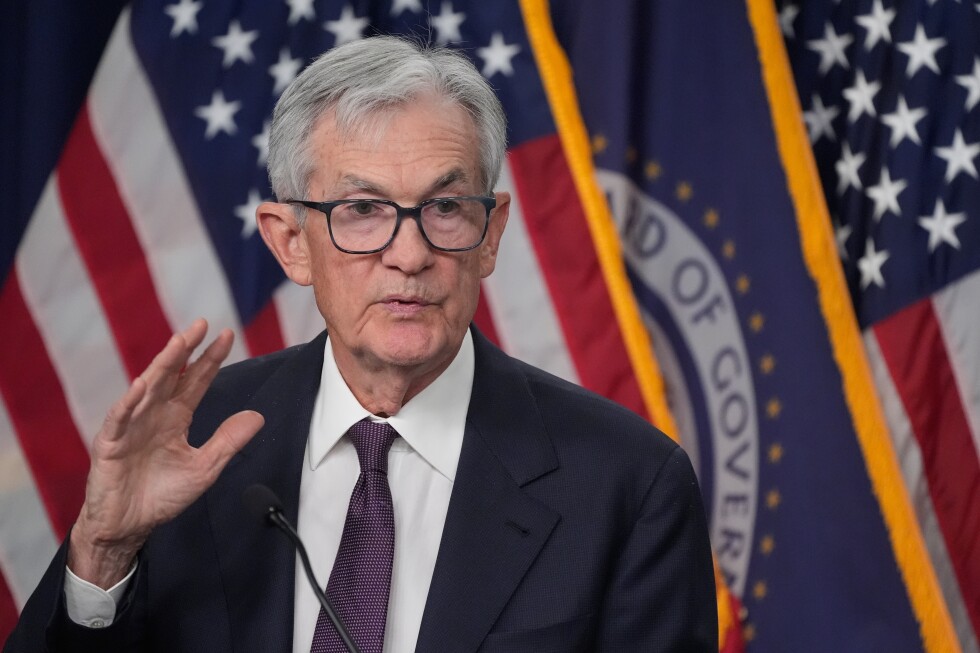
During his news conference, Powell emphasized the unpredictable economic impact of the Middle East conflict. “The thing I really want to emphasize is, nobody knows,” Powell stated regarding the war’s economic effects. “They could be bigger, they could be smaller, they could be much smaller, they could be much bigger. We just don’t know.”
While Fed policymakers maintained their forecast for one additional rate cut this year, Powell indicated that stubborn inflation remains a concern. The Fed’s benchmark rate currently stands at 3.6% after three cuts last year, followed by pauses in January and now March.
“The rate forecast is conditional on the performance of the economy, so if we don’t see that progress then you won’t see the rate cut,” Powell explained, noting that the central bank needs to see further declines in goods prices as tariff impacts fade before implementing additional cuts.
Investors reacted negatively to Powell’s cautious tone, with the S&P 500 dropping 1.4% following his comments. Market participants had hoped for clearer signals about future rate reductions.
Nathan Sheets, chief economist at Citi and former Fed economist, observed that Fed officials “are aware they’ve missed their inflation target for five years, and they do not want to continue to miss it indefinitely.” Inflation according to the Fed’s preferred measure stood at 2.8% in January, up from 2.3% nearly a year ago and still above the Fed’s 2% target.
Powell addressed his own future at the central bank, stating he has “no intention” of leaving until an investigation into his congressional testimony about the Fed’s building renovation is concluded. Last Friday, a judge rejected Justice Department subpoenas to the Fed, though U.S. Attorney Jeannine Pirro has indicated she will appeal that ruling.
This leadership question comes as President Donald Trump has nominated former Fed official Kevin Warsh as Powell’s replacement, though Warsh’s confirmation has stalled because key Republican senators oppose the DOJ investigation. Powell’s term as chair ends May 15, and while he could remain as a Fed governor until 2028, he indicated he hasn’t yet decided whether to do so.
Despite uncertainties, Powell maintained a largely optimistic economic outlook. “The U.S. economy has been doing really well through a lot of challenges,” he said. “It’s been amazing to see.” He noted the economy has weathered numerous shocks—including tariffs, previous rate hikes, and pandemic aftermath—without falling into recession.
In the Fed’s quarterly projections, officials modestly raised their inflation forecast to 2.7% by year-end, slightly improved their growth outlook, and expect unemployment to remain at 4.4%. Tim Duy, chief economist at SGH Macro, characterized these forecasts as “stale,” suggesting they don’t fully account for the Iran war’s potential impacts.
The Fed’s decision-making is complicated by recent economic data presenting mixed signals. Nationwide gas prices have surged to $3.84 per gallon, up 92 cents from a month ago, which will push headline inflation higher in March. Meanwhile, employers shed 92,000 jobs in February, an unexpectedly weak performance after January’s gain of 130,000, with unemployment ticking up to 4.4%.
One Fed official, Trump appointee Stephen Miran, dissented in favor of a quarter-point rate cut, highlighting divisions within the central bank about the appropriate policy path amid these economic crosscurrents.
Fact Checker
Verify the accuracy of this article using The Disinformation Commission analysis and real-time sources.

7 Comments
While the markets may have reacted negatively to the Fed’s cautious stance, Powell’s transparency and emphasis on data-driven decision-making is reassuring. Maintaining flexibility is key in these uncertain times.
The Fed’s cautious stance on further rate cuts, contingent on economic progress, is a sensible way to navigate the current uncertainty. Maintaining stability in the face of geopolitical volatility is paramount.
Interesting to see the Fed keeping rates steady despite the uncertainty around the economic impact of the Iran conflict. Glad to hear Powell emphasizing the unpredictability – it’s wise to err on the side of caution in these volatile times.
The Fed’s decision to hold off on further rate cuts, despite pressure from the White House, demonstrates its commitment to independence and data-driven policymaking. This will help maintain credibility in turbulent times.
The Fed’s balanced approach, maintaining the key rate while signaling potential future cuts, seems prudent given the mixed signals on inflation and economic growth. Powell’s transparency about the unknowns is refreshing.
With stubborn inflation still a concern, the Fed’s decision to hold rates steady is understandable. It will be crucial to monitor the situation closely and be ready to act as needed to support the economy.
Keeping the key rate unchanged while monitoring the impact of the Iran conflict is a prudent move by the Fed. Powell’s acknowledgment of the unpredictability of the situation suggests a flexible, data-driven approach.