


Listen to the article
Federal Reserve Expected to Hold Rates Steady Amid Political Scrutiny
The Federal Reserve is set to maintain its key short-term interest rate at approximately 3.6% when officials conclude their two-day meeting on Wednesday, following three consecutive quarter-point cuts last year. The decision comes amid unprecedented political and legal challenges that have thrust the central bank into the spotlight.
Fed Chair Jerome Powell signaled the central bank’s intention to pause rate adjustments after December’s meeting, stating they were “well positioned to wait to see how the economy evolves” before making additional moves. The Fed’s rate decisions influence various borrowing costs including mortgages, auto loans, and business financing, though market forces also play a significant role in determining these rates.
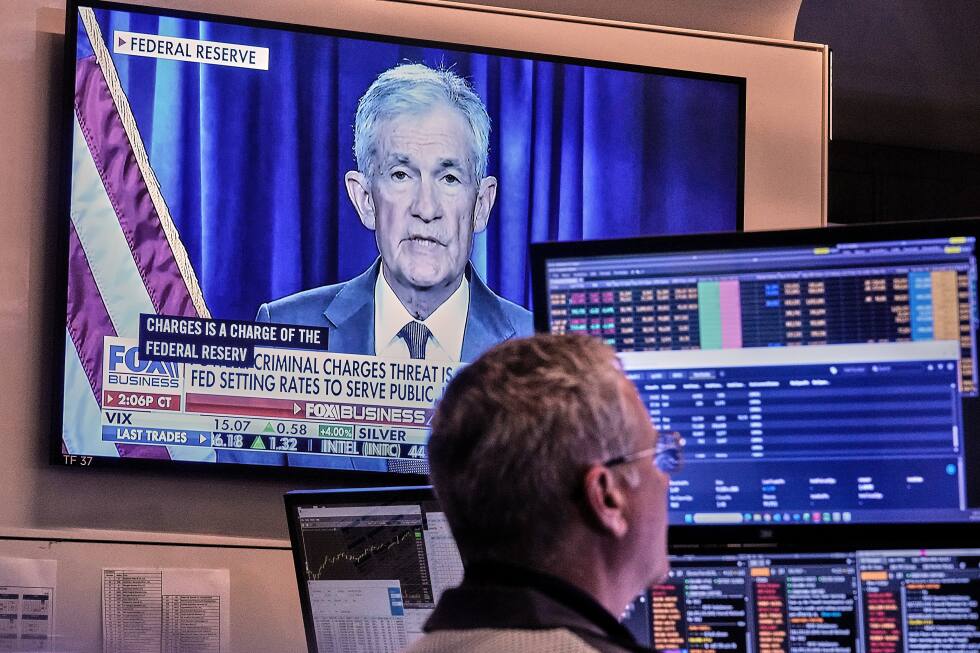
This week’s meeting—one of eight regular sessions the Fed holds annually—unfolds against a dramatic backdrop. Earlier this month, news broke that the Justice Department had subpoenaed the Fed as part of a criminal investigation into Powell’s testimony last June regarding a $2.5 billion building renovation project. This marks the first time a sitting Fed chair has faced such an investigation, prompting an unusual public response from Powell.
The Fed Chair stated on January 11 that the subpoenas were “pretexts” to punish the central bank for not cutting rates as aggressively as President Donald Trump desires. This accusation highlights the tension between the traditionally independent Federal Reserve and the White House.
“Powell will be under even more pressure to underscore that everything they’re doing is all about the economics,” said Claudia Sahm, former Fed economist and chief economist at New Century Advisors. “He’ll need to emphasize they didn’t think about the politics.”
Adding to the Fed’s challenges, the Supreme Court recently considered whether President Trump can dismiss Fed governor Lisa Cook over allegations of mortgage fraud, which she denies. No president has fired a Fed governor in the institution’s 112-year history. During oral arguments, the justices appeared to favor allowing Cook to remain in her position until the case is resolved.
Despite these distractions, Michael Gapen, chief U.S. economist at Morgan Stanley and former Fed staffer, expects the meeting to proceed with its regular structure. “The meetings have a regular flow to them. There are presentations that are made, discussions that have to be had… Some of these other broader-based attacks on the Fed don’t really come up.”
Economic data largely supports the Fed’s wait-and-see approach. The unemployment rate decreased in December after rising for much of last year, and other labor market indicators suggest stability. Weekly unemployment claims remain historically low, indicating that companies aren’t conducting widespread layoffs.
However, inflation continues to run above the Fed’s 2% target. According to the central bank’s preferred measure, prices rose 2.8% in November compared to a year earlier, up from 2.6% in November 2022. Unless job losses accelerate or unemployment rises, economists believe the Fed will likely maintain current rates for at least several months.
If inflation gradually declines this year as anticipated, the central bank might implement additional rate cuts in spring or summer. Wall Street investors currently expect just two quarter-point reductions in 2023, according to futures prices.
Economic growth prospects also factor into the Fed’s calculus. The economy expanded at a robust 4.4% annual rate in 2022’s third quarter and may have maintained similar momentum in the final three months of the year. Additionally, Gapen estimates that tax refunds could be approximately 20% higher this spring compared to last year as the Trump administration’s tax cuts take effect, potentially averaging $3,500 per refund.
With such solid growth projections, Fed officials will likely monitor whether hiring strengthens in response, which would further reduce the need for additional rate cuts in the near term.
Fact Checker
Verify the accuracy of this article using The Disinformation Commission analysis and real-time sources.

10 Comments
With the political and legal challenges the Fed is facing, I imagine they’re trying to tread very carefully. Maintaining their independence will be critical.
The Fed’s rate decisions have such a huge impact on the economy and markets. It will be critical for them to communicate their strategy clearly during this uncertain time.
Absolutely. The Fed’s credibility is on the line, so transparency and consistency in their messaging will be key.
Interesting to see the Fed pause rate hikes amid the legal and political scrutiny they’re facing. Curious to see how the economy holds up without further tightening.
Yeah, the Fed seems to be walking a fine line between managing inflation and avoiding further political drama. Wonder if they’ll be able to strike the right balance.
It will be interesting to see if the Fed’s pause on rate hikes helps provide some stability in the markets and economy. They have a tough job ahead.
Given the economic uncertainty, it makes sense for the Fed to hold off on further rate hikes for now. But they’ll need to be vigilant about inflation pressures.
The Fed’s role in regulating the economy is always a tricky balance. Curious to see how they manage the competing priorities this time around.
With the Justice Department investigating the Fed chair, this meeting takes on an even more political dimension than usual. Curious to see how they navigate this environment.
You’re right, the legal scrutiny adds an extra layer of complexity. The Fed will need to be extremely careful in their decision-making and communications.