


Listen to the article
It feels simple: You shop, find something you want and click to buy. It shows up today, overnight or tomorrow. We’ve gotten used to that speed. But that convenience comes with a climate cost.
Multiple factors shape the environmental impact of a delivery, including the distance from fulfillment centers, whether shipments ride in half-empty trucks, how many trips drivers make in the same area, and the transportation methods used to move packages.
When customers opt for faster shipping and earlier delivery dates, logistics systems shift from optimized routing to whatever gets the package out fastest—a change that significantly increases emissions, according to Sreedevi Rajagopalan, a research scientist at MIT’s Center for Transportation and Logistics.
“For the same demand, fast shipping definitely increases emissions 10 to 12%,” Rajagopalan explains.
To meet tight delivery windows, retailers often rely on air freight, which produces substantially more carbon emissions than alternatives like trains or ships, making it the most carbon-intensive shipping method available. The pressure to deliver quickly forces companies to sacrifice efficiency.
“Given that companies want to be competitive in terms of speed, it comes at the cost of your efficiency,” Rajagopalan says. “Vans are half full, and you make multiple rounds, multiple trips to the same location… your fuel consumption goes up, and you’re not able to consolidate.”
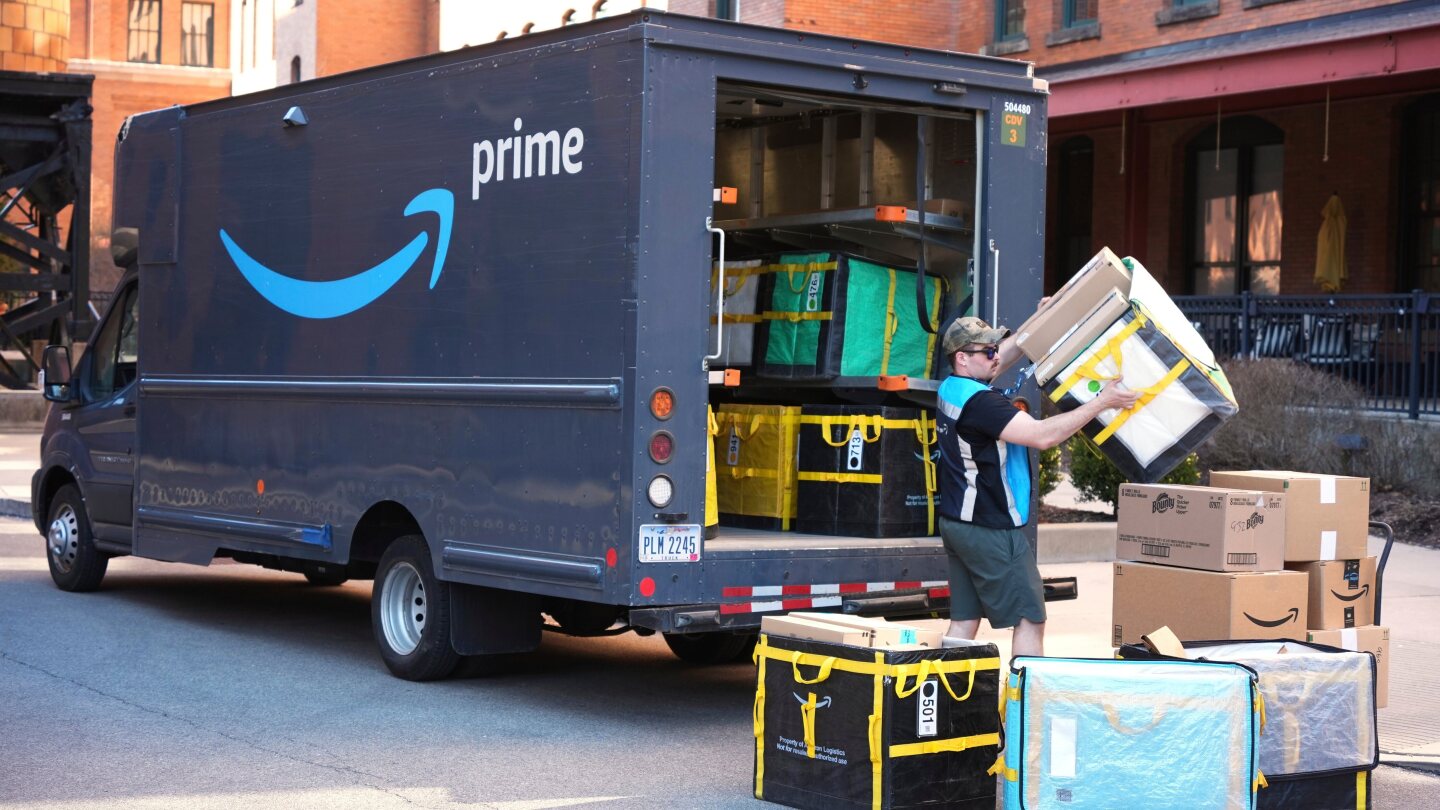
One strategy companies like Amazon employ to minimize environmental impact involves placing supply chain infrastructure closer to customers. This approach reduces mileage while maintaining delivery speed.
“By really leveraging our supply chain efficiencies that we have at scale, we’re able to both offer better speed and sustainability outcomes at the same time,” says Chris Atkins, director of Worldwide Operations Sustainability at Amazon.
The “last mile” of shipping—getting items from fulfillment centers to customers’ doors—represents one of the most challenging stages to decarbonize, according to experts. Emissions increase substantially when customers place multiple small orders throughout the week rather than consolidating purchases.
“If I place an order this morning and then I place an order this evening and choose fast shipping, the company might have already processed my morning order and wouldn’t wait for my evening order to consolidate,” Rajagopalan explains.
This fragmented ordering pattern leads to more half-full trucks on the road, creating additional inefficiencies. “Imagine you’re not only sending a half-full truck, you’re also bringing back that truck empty… Emissions are going to go up,” she adds.
Consumers can significantly reduce their carbon footprint by making small adjustments to their shopping habits, according to Christopher Faires, assistant professor of logistics and supply chain management at Georgia Southern University. These changes often come with financial benefits as well.
Rajagopalan’s research indicates that delaying delivery by just one to two days can result in a 36% reduction in carbon dioxide emissions, while extending that delay to three or four days increases the reduction to 56%. Simply opting for standard shipping instead of next-day or two-day delivery makes a meaningful difference.
Amazon’s Atkins points to several company initiatives aimed at reducing emissions associated with fast delivery, including expanding electric delivery van fleets and shifting more packages to rail transport. In dense urban areas, the company has even implemented delivery by foot or bicycle.
“Aviation is very carbon-intensive relative to ground shipping,” Atkins notes. “One of the other things that Amazon and other logistics companies are looking at doing is: How do we mode-shift to less carbon intensive forms of transportation?”
The e-commerce giant reports that shipping options encouraging customers to consolidate orders have shown promising results. During the first nine months of 2025, customers choosing a single delivery day for all items helped reduce more than 300 million delivery stops and avoided 100,000 tons of carbon emissions, according to company data.
A 2024 study co-authored by Rajagopalan examining delivery customers in Mexico found that people are more likely to delay or consolidate orders once they understand the environmental implications of fast shipping.
“A significant number of consumers decided to wait for longer delivery or delayed their shipping when we showed them the environmental impact information in the form of trees,” she explains. “So it’s important that they are educated.”
While fast shipping will likely remain a fixture of modern e-commerce, experts suggest its climate impacts can be substantially reduced through small behavioral adjustments from both shoppers and companies. Bundling orders, avoiding overnight shipping options, and selecting weekly deliveries all contribute to meaningful emissions reductions without significantly sacrificing convenience.
Fact Checker
Verify the accuracy of this article using The Disinformation Commission analysis and real-time sources.

12 Comments
This is a complex issue without easy answers. Consumers want fast shipping, but the environmental cost is substantial. It will take a collaborative effort between companies, policymakers, and consumers to find a sustainable way forward.
The data on the emissions increase from fast shipping is quite striking. Retailers and logistics providers will need to get creative to find ways to maintain speed while significantly reducing the carbon footprint.
Agreed. Optimizing routing, using more electric vehicles, and shifting away from air freight are all potential solutions they should explore.
This is an interesting article on the environmental impact of fast shipping. It’s a tricky balance between consumer convenience and emissions reduction. Retailers will need to find ways to optimize logistics and shipping methods to reduce the carbon footprint without sacrificing speed.
You raise a good point. Striking the right balance between speed and sustainability will be crucial for businesses and consumers going forward.
This article underscores the need for the logistics industry to prioritize sustainability and develop more eco-friendly shipping solutions. It’s an important challenge they’ll have to address as e-commerce continues to grow.
It’s concerning to see the significant emissions impact of fast shipping, especially the reliance on air freight. Consumers may need to adjust their expectations and be willing to wait a bit longer for deliveries to reduce the environmental toll.
That’s a fair point. Consumers will likely have to make some trade-offs between speed and sustainability when it comes to online shopping.
The article highlights an important issue that’s only going to become more pressing as e-commerce continues to grow. Innovations in logistics and transportation technology will be key to making fast shipping more eco-friendly.
Agreed. Investing in cleaner delivery options like electric vehicles and renewable energy-powered fulfillment centers could make a big difference.
The article raises a valid concern about the environmental impact of fast shipping. As e-commerce continues to grow, the logistics industry will need to prioritize sustainability and develop innovative solutions to reduce emissions without compromising speed.
Absolutely. It’s an important challenge that will require a multipronged approach to address.