


Listen to the article
Hawaiʻi’s agricultural landscape is being scrutinized as lawmakers work to distinguish legitimate farmers from those merely seeking tax breaks. The state’s 6,500 farms span from small family operations to large commercial enterprises exporting luxury foods like coffee and macadamia nuts, but the definition of what constitutes a “farm” has become increasingly blurred.
For decades, Hawaiʻi has grappled with questionable agricultural operations, where developers target farmland for housing development. Critics point to numerous examples: lavish mansions surrounded by a few fruit trees classified as orchards, or properties with a handful of goats being deemed ranches.
A new bill moving through the legislature aims to establish clear standards to differentiate genuine farmers from so-called “gentlemen farmers” – landowners primarily seeking agricultural tax benefits. The initiative could potentially increase the state’s tax base while providing additional support to legitimate farming operations.
This challenge isn’t unique to Hawaiʻi. States like New Jersey and Kentucky have faced similar difficulties in defining agriculture. Previously, Hawaiʻi enacted legislation to prevent condominium development on agricultural lands, while counties implemented requirements for farmers to demonstrate annual earnings exceeding $2,000. Neither approach has fully resolved the issue.
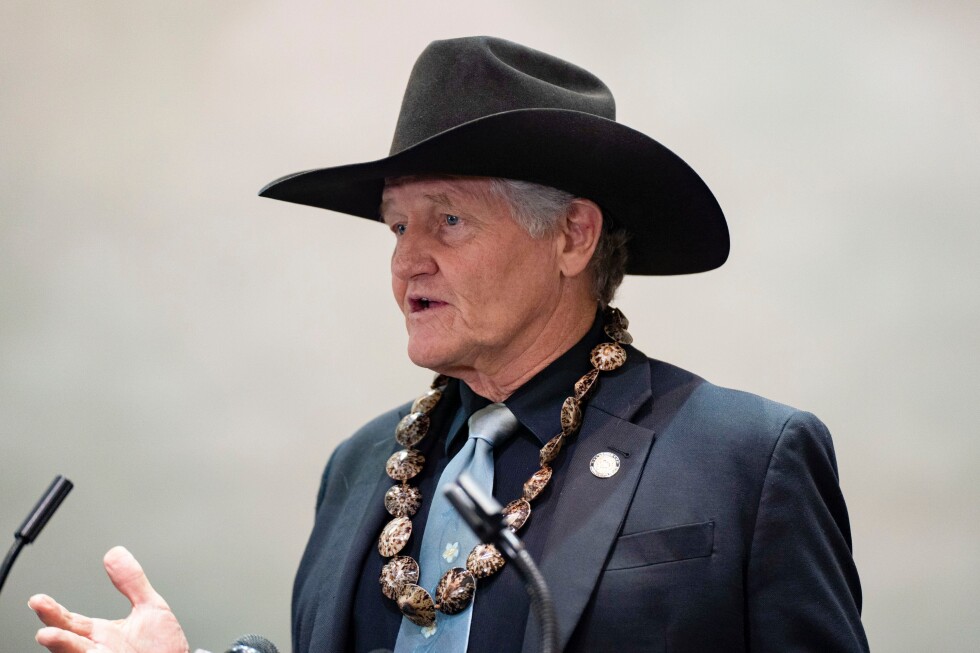
Senate Bill 2153, introduced by Senator Tim Richards of the Big Island, proposes creating a tiered classification system for farms based on multiple factors including production output, size, and function. The bill directs state agricultural agencies to consider production levels, investment, community and cultural value, environmental practices, and operational scale when determining farming legitimacy.
“What if you have an old, retired guy that raises a couple of grass fats for the family, and he kills an animal every eight months then shares that with his family?” said Richards, a cattle rancher himself. “That’s bona fide agriculture, absolutely. It’s subsistence.”
Jonathan Likeke Scheuer, former Land Use Commission chair, highlighted problematic areas across West Maui and the Big Island where agricultural land serves primarily as scenic backdrops. “They’re nothing approaching what any reasonable person would say is an agricultural use,” Scheuer noted. “You have the absurdity of people who say, ‘I’m growing turf’ because they just have a large lawn.”
While lawmakers express intentions to simplify farming operations, agricultural advocates remain cautiously optimistic but concerned about potential consequences. Some worry that small-scale farmers – who make up approximately one-third of the state’s farms – will face disproportionate scrutiny compared to larger operations.
“My concern is that we then increase the hurdles and headaches for smallholders, without meaningfully addressing the consolidation of land ownership,” said Hunter Heaivilin, advocacy director at the Hawaii Farmers Union.
The concern is particularly relevant given current agricultural trends. Between 2007 and 2022, Hawaiʻi lost more than 1,000 farms while the average operation size increased. A recent report from the Department of Agriculture and Biosecurity confirmed an increasing concentration of large-scale agricultural operations dominating the state’s farmlands.
Heaivilin, who authored a state-commissioned report on Hawaiʻi’s land management practices, discovered decades of misapplied regulations that typically benefited larger operations. He cautions that creating binding definitions requires thorough consideration to avoid unintended consequences.
The legislation represents only an initial step. It would require the agriculture department to develop the classification matrix this year, in conjunction with the Agribusiness Development Corporation, before presenting it to lawmakers for approval next year.
Both the Hawaii Farm Bureau and Farmers Union have suggested looking to Guam as a potential model. The U.S. territory requires farmers to register with its agriculture department before accessing local markets, tax exemptions, and support programs including grants. Similar initiatives have been explored in Vermont and other states.
Brian Miyamoto, executive director of the farm bureau, notes that while additional paperwork might frustrate some farmers and create more work for agricultural agencies, it could provide the state with a clearer understanding of its agricultural landscape.
Jonathan Helton, policy analyst for Grassroot Institute of Hawaii, acknowledges that enforcement will remain a challenge at both county and state levels. Nevertheless, he and other agricultural advocates see potential in the proposed classification system to help distribute incentives like grants, subsidies, and tax exemptions more effectively to those who truly need them.
Senator Richards hopes that clearly identifying the state’s legitimate farmers will accelerate future legislation and initiatives to improve agriculture throughout Hawaiʻi, though he recognizes there’s no quick fix. “I’m not convinced we have it worked out quite right. But then again, as they say, legislation is making sausage,” Richards said. “It’s going to take a little bit of grinding and mixing before you get done.”
Fact Checker
Verify the accuracy of this article using The Disinformation Commission analysis and real-time sources.

8 Comments
This is a tricky issue that many states have had to contend with. I’m curious to see the criteria Hawaii establishes to differentiate genuine farmers from those simply seeking tax breaks. Getting the definitions right will be key.
This is an interesting challenge facing Hawaii. It’s important to have clear standards to ensure legitimate farmers receive the support they need, while preventing abuse of tax incentives. Striking the right balance will be crucial.
The prevalence of ‘fake farms’ seeking tax breaks is concerning. I hope Hawaii can find an effective way to crack down on these abuses while still supporting genuine farmers. It’s a delicate balance, but important for the state’s agricultural future.
This is a complex issue without any easy answers. On one hand, Hawaii wants to incentivize and support legitimate farming. But on the other, it needs to prevent developers from exploiting loopholes. I’ll be interested to see the outcome of their legislative efforts.
Agreed, it’s a nuanced challenge that requires careful policymaking. Ensuring the right incentives and definitions are in place will be crucial.
Defining what constitutes a legitimate farming operation is no easy task, given the diversity of agricultural activities. I’m curious to see how Hawaii’s lawmakers approach this, and whether their solutions could serve as a model for other states grappling with similar issues.
The proliferation of ‘gentlemen farmers’ exploiting agricultural tax incentives is certainly concerning. Hawaii is right to try and address this, but it will require nuanced policymaking to avoid unintended consequences. I’ll be following this story with interest.
Interesting to see Hawaii grappling with this ‘fake farm’ problem. It highlights the importance of clear, enforceable standards when it comes to agricultural tax benefits. I hope their legislative efforts can strike the right balance.