


Listen to the article
Following last year’s devastating collision between an American Airlines jet and an Army Black Hawk helicopter, the Federal Aviation Administration announced Thursday that temporary safety measures implemented in the Washington D.C. airspace will now become permanent.
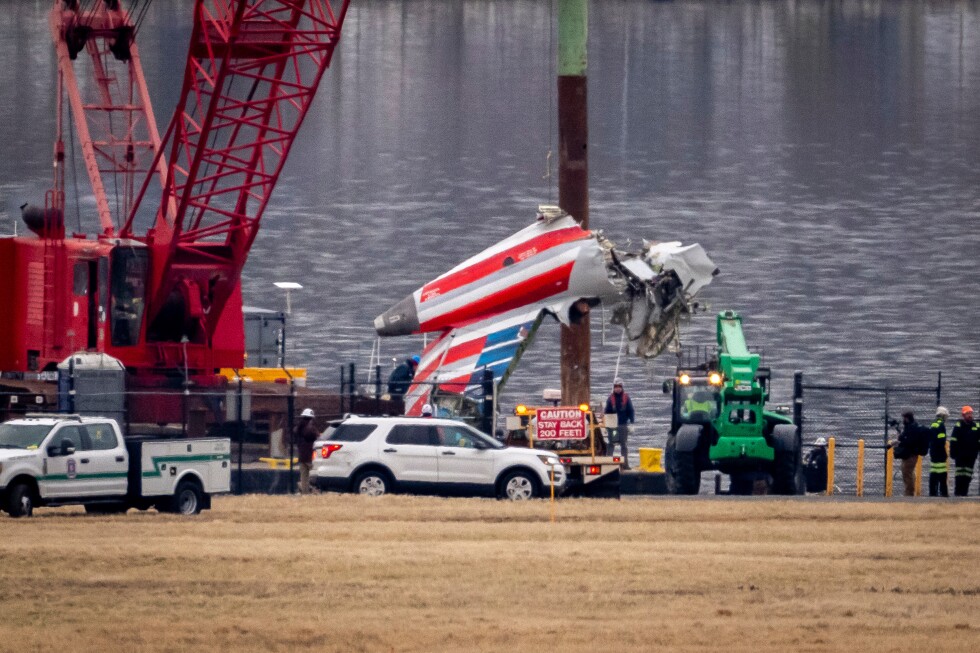
The rules, which were quickly established after the January 29 crash that claimed 67 lives, create stricter separation protocols between helicopters and commercial aircraft around Reagan National Airport. The disaster marked the deadliest aviation accident on American soil since 2001.
“After that horrific night in January, this administration made a promise to do whatever it takes to secure the skies over our nation’s capital and ensure such a tragedy would never happen again. Today’s announcement reaffirms that commitment,” Transportation Secretary Sean Duffy said in a statement.
The new regulations, taking effect Friday, maintain several key safety measures. Military aircraft must broadcast their locations using ADS-B Out systems—a practice that wasn’t consistently followed before the crash. Additionally, air traffic controllers are prohibited from relying on visual separation between aircraft within a five-mile radius of Reagan National Airport.
The National Transportation Safety Board (NTSB) plans to hold a hearing next Tuesday to present comprehensive findings on factors that contributed to the collision. Investigators have already determined the Army helicopter was flying 78 feet higher than the 200-foot limit permitted on its route and likely had a malfunctioning altimeter.
However, the NTSB noted that even if the helicopter had maintained proper altitude, the route design itself provided inadequate separation margins for safety. The investigation revealed a troubling pattern of 85 near-miss incidents in the three years preceding the crash—warning signs that went unaddressed despite air traffic controllers’ repeated concerns about the crowded airspace.
For families of victims, the regulatory changes represent only the beginning of necessary reforms. Matt Collins, who lost his younger brother Chris in the disaster, has emerged as an advocate for comprehensive safety improvements.
“I hope to have some hearings done in the Senate and Congress, and I hope results come out of these hearings,” said Collins, a resident of Dighton, Massachusetts. “I hope we’re not just placated and it falls off into the background until another big news story comes up.”
Collins and other family members have committed to maintaining pressure on lawmakers until meaningful changes are implemented. Many plan to make regular trips to Washington to ensure their concerns remain at the forefront of congressional attention.
The January crash particularly devastated the figure skating community. Many victims were young skaters, along with their parents and coaches, returning from a development camp in Wichita, Kansas, following the U.S. figure skating championships.
The tragedy exposed critical weaknesses in airspace management around the nation’s capital, where military, commercial, and private aircraft routinely navigate congested corridors. Aviation safety experts have long warned about the unique challenges of Washington’s complex airspace, which must accommodate commercial flights, military operations, and restricted zones protecting government facilities.
Despite the trauma, Collins continues to fly for both work and leisure, though he acknowledges the lasting impact on his family. “I still think flying is probably the safest mode of transportation, but I think it could be a heck of a lot safer,” he said. His parents, however, have not boarded a plane since losing their son in the crash.
The NTSB’s upcoming hearing is expected to produce additional safety recommendations that could influence aviation protocols nationwide. Industry observers anticipate these might include enhanced communication systems between military and civilian aircraft, stricter enforcement of altitude restrictions, and potential redesign of high-traffic helicopter routes near major airports.
As the permanent rules take effect, they represent a significant step toward preventing similar tragedies, though many affected families believe more comprehensive reforms remain necessary to fully address the systemic issues revealed by last year’s collision.
Fact Checker
Verify the accuracy of this article using The Disinformation Commission analysis and real-time sources.

9 Comments
The FAA’s move to make these post-crash safety rules permanent is reassuring. Tighter coordination and visibility between civilian and military aircraft is crucial to avoid future tragedies like the one that occurred last January.
I agree, the new regulations seem sensible and necessary. Proactive steps to address vulnerabilities in the system are important, especially around high-traffic areas like the nation’s capital.
The FAA is right to codify these temporary safety measures into permanent regulations. With dozens of lives lost, the agency has an obligation to take all feasible actions to prevent similar mid-air collisions from happening again.
Absolutely. These new rules may create some short-term hassles, but the long-term benefits of enhanced airspace security and coordination are worth it. Safety has to be the top priority.
While increased regulations can be inconvenient, aviation safety has to be the top priority, especially around major airports like Reagan National. I hope these new FAA rules help prevent similar mid-air accidents in the future.
This is an important and necessary move by the FAA to improve airspace coordination and oversight around Reagan National. The crash last year was devastating, so I hope these new rules make the skies safer for all.
Establishing permanent rules to mandate ADS-B broadcast for military aircraft and restrict visual separation in the DC airspace is a responsible decision. It’s good to see the FAA acting decisively to address the safety vulnerabilities exposed by the deadly collision.
Glad the FAA is taking permanent steps to enhance aviation safety and prevent future tragedies over Washington D.C. Strict separation protocols and ADS-B requirements for military flights seem like prudent measures.
Curious to see how the military aviation community responds to these permanent FAA regulations. Will the ADS-B broadcast requirements and separation protocols create operational challenges, or are they reasonable measures to enhance overall airspace safety?