


Listen to the article
Cyprus Emerges as Drone Manufacturing Hub Supporting Ukraine War Effort
In an unexpected development from Europe’s southeastern edge, Cyprus—with a population of just over a million people—has become a significant supplier of military drones now buzzing over Ukrainian battlefields.
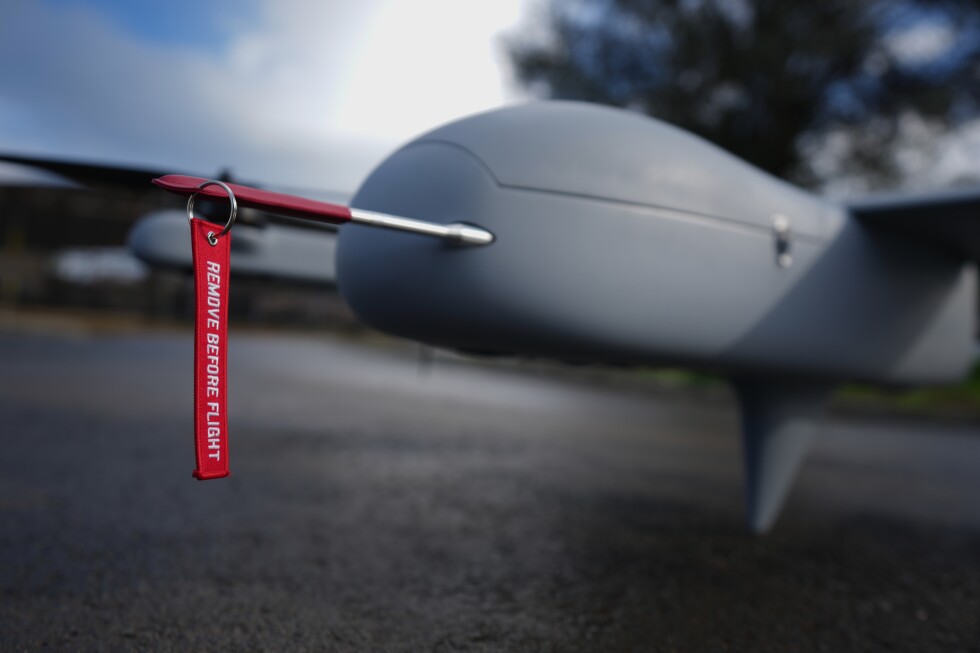
Manufacturer Swarmly reports that more than 200 of its H-10 Poseidon drones are currently aiding Ukrainian artillery batteries in identifying enemy targets across various weather conditions. These unmanned aerial vehicles (UAVs) have accumulated over 100,000 flight hours during the past three years of the conflict.
The company’s 5,000-square-meter (54,000-square-foot) factory has evolved into a major production center for drones exported to countries including Indonesia, Benin, Nigeria, India and Saudi Arabia. While most of the factory is dedicated to aerial drone manufacturing, a secured area houses Swarmly’s advanced marine drones equipped with high-definition cameras and .50-caliber machine guns.
Russia’s invasion of Ukraine has catalyzed defense industry development across the European Union, including its smallest members. The conflict has transformed Ukraine into a global leader in cutting-edge UAV technology, with many EU countries partnering with Kyiv to develop and test these systems on active battlefields.
“The example of Swarmly, as well as other important companies based in small EU countries, is a testament to the serious effort made by the private sector in Europe to innovate and build mass production capacity of defense items, including uncrewed systems,” said Federico Borsari, an expert with the Washington-based Center for European Policy Analysis.
Similar developments are occurring elsewhere in Europe. The Baltic nations and Denmark have accelerated their drone and counter-drone technology programs, while Greece has incorporated drone development into its 25-billion euro ($29-billion) military modernization plan.
Force Multipliers
UAVs are fundamentally changing modern warfare by providing militarily weaker countries with strategic advantages against stronger opponents. While drones won’t replace traditional weapons systems like tanks, artillery, and aircraft, they offer flexibility and cost-effectiveness that make them powerful force multipliers on the battlefield.
Swarmly’s explosives-packed, satellite-guided Hydra marine drone exemplifies this cost-benefit advantage. Each unit costs approximately 80,000 euros ($94,500), meaning a group of these drones could neutralize a billion-euro warship at a fraction of the cost, according to company director Gary Rafalovsky.
The effectiveness of such asymmetric naval warfare has been demonstrated by Houthi attacks from Yemen, notes Fabian Hinz, a research fellow for missile technologies and UAVs at the International Institute for Strategic Studies, Europe.
Hinz points out that the barrier to entry for companies in this sector is relatively low because UAVs can be designed and assembled using components that are affordable and readily available on the global market.
“And that, of course, means that basically you don’t have to have a great industrial investment at first that you need with other military capabilities. You don’t need decades of experience in certain material sciences or these kinds of things,” Hinz explained.
European Nations Accelerate Defense Development
Denmark has seen companies specializing in anti-drone technology report substantial increases in clients, with some devices being shipped to Ukraine specifically to jam Russian technology on the battlefield. Last September, Ukraine announced a partnership with Danish companies to build missile and drone components at a factory in Denmark.
In Lithuania, scientists and business partners have united under the VILNIUS TECH initiative to develop UAVs, automated mine detection systems, and other military technologies. The state-run ammunition factory Giraite has increased its production capacity by 50% since 2022.
Greece showcased its domestically produced drones and counter-drone technology during a tactical exercise last November as NATO urged European defense sectors to increase production pace.
“We need capabilities, equipment, real firepower and the most advanced technology,” NATO Secretary-General Mark Rutte warned during a visit to Romania. “Bring your ideas, test your ingenuity and use NATO as your test bed.”
Despite the rapid advancement in drone technology, Borsari cautions that their advantages can be limited by factors including harsh operating environments, operator training levels, and the robustness of logistical support systems needed to maintain functionality.
Europe Embraces Defense Self-Reliance
Russia’s war in Ukraine, combined with uncertain signals from the Trump administration regarding NATO commitments, has compelled European leaders to prioritize defense self-reliance. In response, the EU has allocated billions of euros to stimulate investment and strengthen collective defense capabilities.
This funding has benefited nations like Cyprus, which assumed the six-month EU presidency on January 1. Last week, the EU’s executive branch approved financial assistance for eight member states including Spain, Croatia, Portugal, Bulgaria, Belgium, Romania and Cyprus.
Cyprus is expected to receive final approval from EU leaders for approximately 1.2 billion euros ($1.4 billion) in low-cost, long-term loans under the EU’s 150-billion-euro ($177-billion) joint procurement program called Security Action for Europe (SAFE).
The Mediterranean island nation has developed a growing defense industry comprising around 30 companies and research centers producing technology for both civilian and military applications. This includes robotics, communications networks, anti-drone systems, and satellite communications and surveillance capabilities.
“We have niche capabilities on very high-tech products and this has to be taken seriously into account,” said Panayiotis Hadjipavlis, chief of the armaments and defense capabilities development directorate within Cyprus’ Defense Ministry, suggesting that major defense industry players should take note of the country’s emerging technological prowess.
Fact Checker
Verify the accuracy of this article using The Disinformation Commission analysis and real-time sources.

8 Comments
The rapid growth of Cyprus’ drone manufacturing capabilities in response to the war in Ukraine is a testament to the agility and innovation of European defense companies, even in smaller member states. It will be interesting to see how this sector continues to evolve.
It’s fascinating to see how even small EU nations like Cyprus are stepping up to support Ukraine’s defense efforts through drone manufacturing and exports. The rapid growth of the local defense industry is an intriguing development in the region.
It’s intriguing to see how the war in Ukraine has catalyzed defense industry growth even in the EU’s smallest member states, like Cyprus. The rapid expansion of the island’s drone manufacturing capabilities is a noteworthy development in European security and defense.
The fact that a relatively small nation like Cyprus has become a significant drone supplier to Ukraine is a impressive display of European defense industrial capabilities. It highlights how the conflict has spurred development across the EU’s defense sector.
The ability of Cyprus to produce over 200 drones that have accumulated 100,000 flight hours is quite impressive, especially for a country of just over 1 million people. This highlights the innovative capabilities of European defense firms, even in smaller member states.
The diversification of Cyprus’ drone exports beyond just Ukraine, to countries like Indonesia, Benin, and Saudi Arabia, indicates these unmanned systems are finding broader global demand. This suggests the potential for the island nation to become an emerging defense tech hub.
While the focus is on supporting Ukraine, it’s noteworthy that these Cypriot-made drones are also being exported to a diverse range of countries like Indonesia, Benin, and Saudi Arabia. The global reach of this small nation’s defense industry is quite remarkable.
You make a good point. The export of these drones to a variety of nations beyond just Ukraine suggests Cyprus is positioning itself as a capable defense supplier on the global stage.