


Listen to the article
EU Warns of Retaliation After US Travel Ban on European Tech Regulators
The European Union issued a sharp rebuke Wednesday after the United States imposed travel restrictions on five Europeans, including a former high-ranking EU official, accusing them of pressuring American technology companies to censor content.
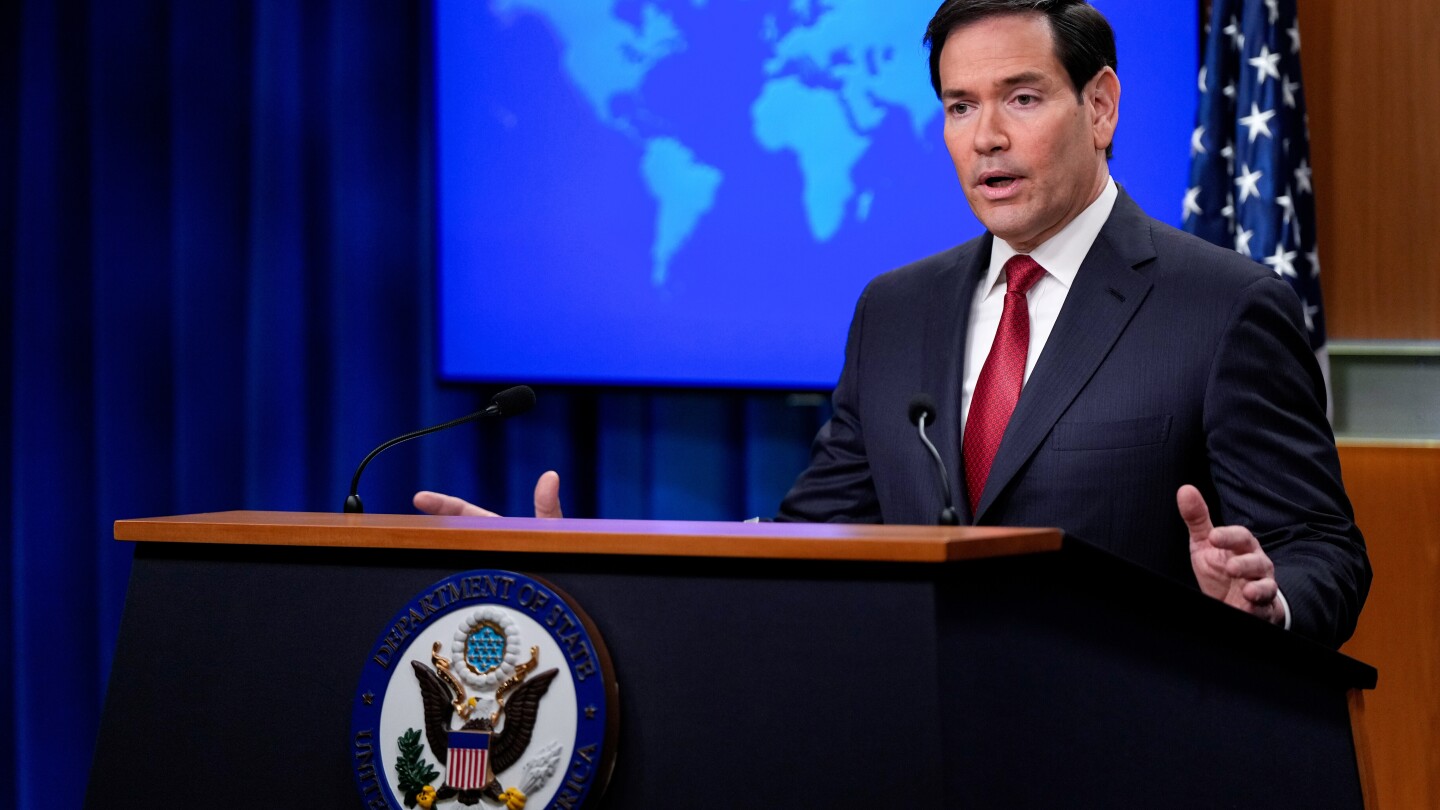
The diplomatic standoff emerged after U.S. Secretary of State Marco Rubio announced visa bans on individuals he characterized as “radical” activists from “weaponized” non-governmental organizations. Most prominently, the list includes Thierry Breton, the former EU commissioner who oversaw the bloc’s digital regulations.
“The European Commission strongly condemns the U.S. decision to impose travel restrictions,” the EU’s executive branch stated, promising to “respond swiftly and decisively to defend our regulatory autonomy against unjustified measures” if necessary. The statement reflects growing tensions between Brussels and Washington over digital governance and content moderation policies.
Breton, who previously served as French finance minister before his EU role, had notable public disagreements with Elon Musk last year over broadcasting an interview with then-presidential candidate Donald Trump. The former commissioner played a key role in developing and implementing the EU’s Digital Services Act (DSA), a landmark regulatory framework that imposes strict content moderation requirements on tech platforms operating in Europe.
French President Emmanuel Macron joined the criticism, describing the U.S. action as “intimidation and coercion aimed at undermining European digital sovereignty.” In a pointed message on social platform X, Macron emphasized that “the rules governing the European Union’s digital space are not meant to be determined outside Europe.”
The transatlantic disagreement highlights fundamental differences in approaching online speech regulation. While European regulations typically impose stricter content moderation requirements, the Trump administration has prioritized what it considers free speech protections against foreign interference.
“For far too long, ideologues in Europe have led organized efforts to coerce American platforms to punish American viewpoints they oppose,” Rubio wrote on X. “The Trump Administration will no longer tolerate these egregious acts of extraterritorial censorship.”
Beyond Breton, the visa restrictions target four other Europeans: Imran Ahmed, chief executive of the Centre for Countering Digital Hate; Josephine Ballon and Anna-Lena von Hodenberg, leaders of HateAid, a German organization; and Clare Melford, who runs the Global Disinformation Index. All have been involved in advocacy for stronger content moderation policies on social media platforms.
The U.S. action falls under a new visa policy announced in May specifically designed to restrict entry for foreigners deemed responsible for censoring protected speech in America. Rather than directly regulating platforms, the administration is using immigration powers as leverage against foreign influence over online speech.
Sarah Rogers, U.S. under secretary of state for public diplomacy, specifically called out Breton as the “mastermind” behind the EU’s Digital Services Act, which requires platforms to flag harmful or illegal content, including hate speech.
Breton responded pointedly on X, noting that all 27 EU member countries had unanimously approved the Digital Services Act in 2022. “To our American friends: ‘Censorship isn’t where you think it is,'” he wrote.
The dispute reflects deeper ideological divisions about the proper balance between free speech and protecting against harmful content online. European regulators have generally embraced more proactive content moderation requirements, while U.S. approaches—particularly under Republican administrations—have emphasized minimizing restrictions on expression.
Industry observers note that major tech companies like Meta, Google, and X (formerly Twitter) now face increasingly complex compliance challenges as they navigate divergent regulatory requirements across major markets. The companies must balance European demands for content moderation against potential U.S. accusations of censoring American viewpoints.
The diplomatic clash comes at a sensitive time for transatlantic relations, with both sides already navigating complex discussions around trade, defense, and technology policy. Analysts suggest the dispute could potentially escalate to affect broader EU-US cooperation if not resolved diplomatically.
Fact Checker
Verify the accuracy of this article using The Disinformation Commission analysis and real-time sources.

11 Comments
This dispute highlights the growing geopolitical tensions around technology and content control. The US appears to be pushing back against the EU’s assertive digital regulations, while the EU defends its sovereignty. It will be interesting to see how they navigate this minefield.
While the details are murky, it’s clear that the US and EU have fundamentally different approaches to regulating the digital space. This clash over ‘regulatory autonomy’ could have far-reaching implications for tech companies and internet users on both sides of the Atlantic.
I’m curious to see how this plays out. The EU’s promise of a ‘swift and decisive’ response suggests they won’t back down easily. This could become a protracted battle over the future of content moderation and internet governance.
Indeed, the language from both sides indicates a hardening of positions. It will be important to monitor whether this escalates into a full-blown trade or diplomatic dispute.
It’s a complex issue with valid concerns on both sides. The EU’s digital regulations are aimed at protecting user privacy and curbing misinformation, while the US views them as overreach. Striking the right balance between digital governance and free expression will be crucial.
Absolutely, this clash of regulatory philosophies could have far-reaching implications. Finding a compromise that satisfies both sides will require nuanced diplomacy and a willingness to understand each other’s perspectives.
It’s a complex issue with valid concerns on both sides. The US is accusing these European officials of pressuring tech companies to censor content, while the EU sees it as an attack on its digital sovereignty. Resolving this diplomatically will be crucial.
Agreed, the stakes are high as the two powers jostle for influence over the digital landscape. Careful diplomacy will be needed to find common ground.
This dispute underscores the growing tensions between the US and EU over the future of the internet and digital sovereignty. As the two powers jockey for influence, it will be important to ensure that user rights and democratic principles are upheld on both sides.
This is a concerning development. The EU and US appear to be at odds over digital governance and content moderation policies. I wonder if this escalation will lead to further diplomatic tensions or retaliation between the two sides.
Yes, it’s an interesting geopolitical dispute. The EU seems determined to defend its regulatory autonomy against what it sees as unjustified US measures.