


Listen to the article
European lawmakers voted Wednesday to temporarily block ratification of a major free trade agreement between the European Union and South American Mercosur countries, raising questions about the deal’s legal standing.
The European Parliament narrowly approved sending the trade pact to the European Court of Justice by a vote of 334-324, with 11 abstentions. The decision means the parliament cannot approve the agreement until the court determines whether it complies with EU treaties, potentially delaying the process for months.
The EU-Mercosur free trade agreement, which was formally signed last Saturday after 25 years of negotiations, aims to eliminate more than 90% of tariffs on products ranging from Argentine beef to German cars. The deal would create one of the world’s largest free trade zones, connecting more than 700 million consumers across both continents.
European Commission President Ursula von der Leyen had made finalizing the agreement a central priority of her administration, successfully steering it through a crucial vote among EU leaders earlier this month. At the World Economic Forum in Davos, she emphasized the strategic importance of the pact, stating, “The more trading partners we have worldwide, the more independent we are.”
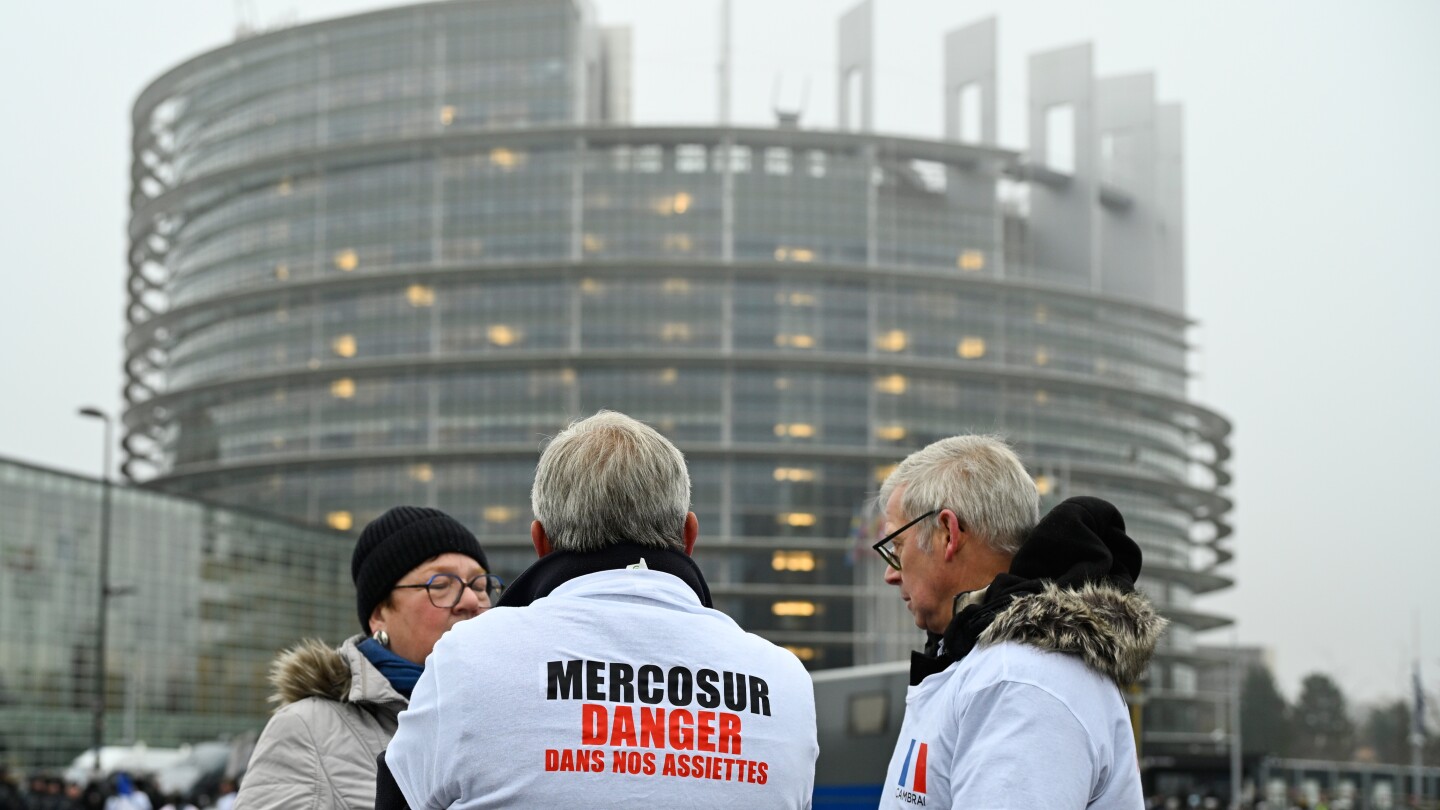
The agreement has faced significant opposition from agricultural interests, particularly in France, Europe’s leading agricultural producer. French officials have consistently sought stronger protections for farmers and have worked to delay implementation. Following the parliament vote, French Foreign Minister Jean-Noel Barrot expressed support for the decision on social media, writing, “France takes responsibility for saying no when it has to, and history often proves it right. The fight continues.”
The European Commission expressed strong disappointment with the parliament’s decision. Despite the setback, the EU’s executive branch retains the power to provisionally apply the agreement while awaiting the court’s ruling. EU leaders are expected to discuss next steps at an emergency summit on transatlantic relations scheduled for Thursday.
German Chancellor Friedrich Merz criticized the parliament’s vote as “regrettable” and said it “misjudges the geopolitical situation.” In a social media post, Merz added, “We are convinced of the legality of the agreement. No further delays. The agreement must now be applied provisionally.”
Bernd Lange, who heads the parliament’s committee on trade, called the vote “absolutely irresponsible” and “very harmful for our economic interests.” He suggested opponents should vote directly against ratification “instead of using delaying tactics under the guise of legal review.”
The EU-Mercosur agreement represents a significant attempt to strengthen commercial ties in the face of rising global protectionism and trade tensions. It would benefit both South America’s agricultural exporters and European industrial manufacturers by creating more predictable and open market access.
Ratification on the South American side is considered nearly certain, as the agreement enjoys broad support across Mercosur nations. The trading bloc consists of Argentina and Brazil—South America’s two largest economies—along with Paraguay and Uruguay. Bolivia, while Mercosur’s newest member, is not currently included in the trade deal but could join in the future. Venezuela remains suspended from the bloc and is excluded from the agreement.
The parliamentary maneuver to delay the deal highlights the complex tensions between the EU’s geopolitical ambitions for expanded trade networks and domestic concerns over agricultural competition and regulatory standards. As global trade patterns continue to shift amid growing economic nationalism, the fate of the EU-Mercosur agreement represents a critical test of Europe’s ability to advance its trade agenda.
Fact Checker
Verify the accuracy of this article using The Disinformation Commission analysis and real-time sources.

11 Comments
Delaying the ratification of this trade pact could impact the flow of mining and energy-related commodities between the EU and South American countries. This is a development worth monitoring closely.
This is an important trade agreement with significant implications for the mining and commodities sectors. The legal concerns raised by EU lawmakers will need to be carefully addressed before the deal can be ratified.
The EU-Mercosur trade pact aims to eliminate tariffs on a wide range of products, including mining and energy-related commodities. This could open up new market opportunities for companies in these industries.
This decision by EU lawmakers to seek a court review of the trade agreement is a prudent step to ensure legal compliance. The mining and commodities industries will be following the developments closely.
While the trade deal promises to create one of the world’s largest free trade zones, the legal hurdles need to be cleared first. This adds an element of uncertainty for businesses in the mining and energy sectors.
The delay in ratifying the EU-Mercosur trade agreement is a cautionary tale for the mining and energy sectors. It highlights the importance of navigating complex legal and regulatory landscapes when pursuing global trade deals.
Given the complex legal issues surrounding this trade deal, it’s understandable that EU lawmakers want to ensure it complies with existing treaties. The mining and energy sectors will be eager to see a resolution.
The strategic importance of this EU-Mercosur agreement is evident, but the lawmakers’ decision to seek a court review suggests there are still significant legal concerns that need to be addressed.
I’m curious to see how the legal issues around this trade agreement will be resolved. The concerns raised by the European Parliament could have ripple effects across the mining and commodities landscape.
The mining and commodities industries will be watching closely as the legal status of the EU-Mercosur trade agreement is determined. The outcome could have significant implications for their global supply chains and market access.
While the potential benefits of the EU-Mercosur agreement are clear, the legal concerns raised by the European Parliament need to be carefully addressed. This could impact the mining and commodities industries in the long run.