


Listen to the article
EU Signals Readiness for Provisional Implementation of Mercosur Trade Deal Despite Parliamentary Delay
The European Union is prepared to implement its landmark free trade agreement with the Mercosur bloc of South American countries on a provisional basis, European Commission President Ursula von der Leyen announced Friday. This statement comes despite a recent European Parliament vote that delayed formal ratification by referring the deal for legal review.
“There is a clear interest that we ensure that the benefits of this agreement apply as soon as possible,” von der Leyen said at a news conference following an EU leaders’ summit in Brussels. “In short, we will be ready when they are ready.”
The Commission would be prepared to act once at least one Mercosur nation ratifies the agreement, though von der Leyen clarified that no formal decision on provisional implementation has yet been taken. Antonio Costa, head of the EU Council of member governments, confirmed at the same news conference that the executive commission possesses the authority to proceed with interim implementation.
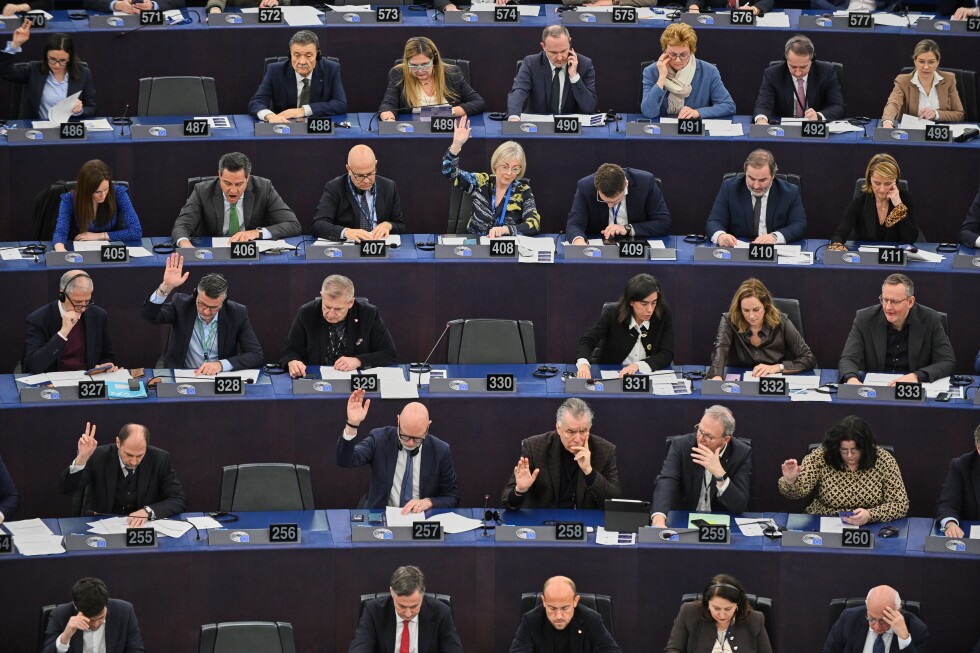
This potential move to bypass the parliamentary delay would likely intensify criticism from the agreement’s opponents, particularly France, which has voiced concerns about protections for its agricultural sector. On Wednesday, the European Parliament narrowly voted to refer the trade deal to the European Court of Justice for legal review, effectively postponing ratification since Parliament cannot vote until the court delivers its ruling—a process that could take months.
The Mercosur agreement represents a cornerstone of Brussels’ strategy to diversify its trade relationships beyond traditional dependency on the United States, particularly as Europe prepares for potential changes in transatlantic relations during Donald Trump’s second presidential term. The EU has already established trade agreements with countries ranging from Japan to Mexico and is expected to sign a similar accord with India later this month.
The ambitious trade pact aims to gradually eliminate more than 90% of tariffs on a wide range of goods, from Argentine beef to German automobiles. If implemented, it would create one of the world’s largest free trade zones, potentially reducing prices for more than 700 million consumers across both continents.
The agreement has revealed divisions within Europe. France, the EU’s major agricultural producer, has consistently sought stronger protections for farmers and pushed for delays. In contrast, German Chancellor Friedrich Merz described the parliamentary vote to delay as “regrettable” and has advocated for provisional application of the agreement.
On the South American side, ratification is considered virtually assured, as the agreement enjoys broad support across the region. The Mercosur bloc encompasses the continent’s two largest economies—Brazil and Argentina—along with Paraguay and Uruguay. While Bolivia, the bloc’s newest member, is not included in the current trade deal, it could potentially join in coming years. Venezuela remains suspended from the bloc and is excluded from the agreement.
The EU-Mercosur trade deal has been in negotiation for over two decades, with the parties reaching a political agreement in 2019. Supporters argue it will boost economic growth and strengthen strategic ties between the regions, while critics worry about potential environmental impacts and competition for European farmers.
The Commission’s willingness to pursue provisional implementation signals the EU’s determination to advance its global trade agenda despite internal resistance, highlighting the geopolitical importance Brussels places on strengthening economic partnerships with South America amid shifting global alliances.
Fact Checker
Verify the accuracy of this article using The Disinformation Commission analysis and real-time sources.

6 Comments
Interesting development on the Mercosur trade deal. The EU seems eager to implement it quickly despite the Parliament’s desire for further review. I wonder if this will lead to tensions between the Commission and Parliament.
I’m curious to see how this plays out. The Mercosur deal has been controversial, with worries about deforestation and labor rights. Provisional implementation may speed things up, but could also heighten those tensions.
This seems like a pragmatic move by the Commission to get the benefits of the deal flowing, but the Parliament’s concerns around due diligence shouldn’t be ignored. A balanced approach is needed.
The mining and commodities sector will be watching this closely. Any trade agreement that impacts countries like Brazil, Argentina, and others in the region could have significant implications for the global supply of key minerals and metals.
Absolutely, the commodities markets are always sensitive to trade policy shifts. Provisional implementation could provide quicker access to South American resources, but raises questions about oversight and environmental protections.
From a minerals and energy perspective, this agreement could facilitate more trade and investment in key commodities like lithium, copper, and even uranium if Argentina’s supplies become more accessible. But the environmental impact needs close monitoring.