


Listen to the article
War in Iran Highlights Global Energy Vulnerabilities, Boosts Case for Renewables
The war in Iran has severely disrupted global energy supplies, exposing the fragility of international fossil fuel routes and strengthening arguments for accelerating the transition to renewable energy sources.
Fighting has virtually halted oil exports through the Strait of Hormuz, a critical waterway that carries approximately one-fifth of the world’s oil and liquefied natural gas (LNG). This disruption has triggered significant price increases and created strain on economies dependent on energy imports.
Asia has been hit particularly hard as most of the disrupted oil shipments were destined for Asian markets. However, the effects extend to Europe, where policymakers are scrambling to reduce energy demand, and to Africa, which faces rising fuel costs and inflation.
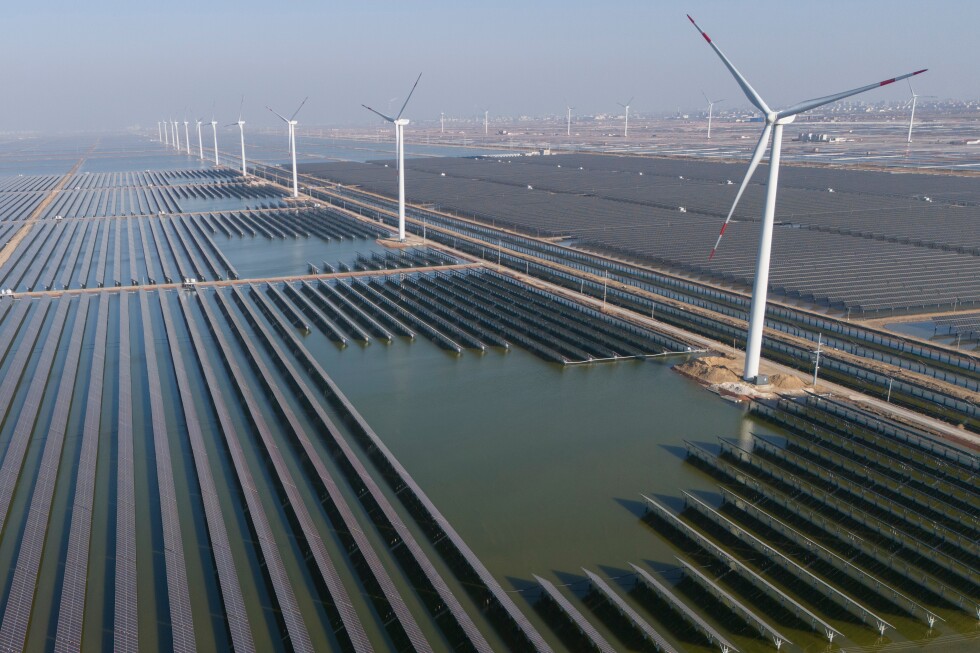
Unlike during previous energy crises, renewable power now presents a viable alternative to fossil fuels in many regions. According to the International Renewable Energy Agency, more than 90% of new renewable power projects worldwide in 2024 were more economical than fossil-fuel alternatives.
“These crises regularly occur,” said James Bowen of the Australia-based consultancy ReMap Research. “They are a feature, not a bug, of a fossil fuel-based energy system.”
The impact of the disruption varies significantly across regions, with those having invested heavily in renewable energy sources enjoying greater resilience. Nations dependent on domestic renewable resources like solar and wind have proven less vulnerable to the supply shock than those relying heavily on imported fuels.
China and India, the world’s two most populous countries, offer contrasting examples of how renewable energy investments can buffer nations against energy shocks. While both have expanded their renewable capacity, China has done so on a significantly larger scale, despite its continued reliance on coal-fired power.
Today, China leads the world in renewable energy adoption. About one in ten cars in China are electric, according to the International Energy Agency. Though China remains the world’s largest importer of crude oil and the biggest buyer of Iranian oil, electrifying portions of its economy with renewables has substantially reduced its dependence on imports.
“Without that shift, China would be far more vulnerable to supply and price shocks,” said Lauri Myllyvirta of the Centre for Research on Energy and Clean Air. China can also leverage reserves built when prices were low and flexibly switch between using coal and oil as fuel in factories, he added.
India has also expanded its clean energy portfolio, particularly solar power, but has progressed more slowly with less government support for manufacturing renewable equipment and connecting solar to its power grid. Following Russia’s invasion of Ukraine in 2022, India prioritized energy security by purchasing discounted Russian oil and increasing coal production while also expanding solar and wind capacity.
“Everyone cannot be China,” noted Duttatreya Das of the think tank Ember.
India now faces shortages of cooking gas, prompting consumers to purchase induction cooktops and raising concerns about potential restaurant closures. Industries producing fertilizers and ceramics are also likely to be affected.
In Europe, the response to previous energy crises has often involved finding new fossil fuel suppliers rather than accelerating the renewable transition. After the Russia-Ukraine conflict began, Germany rushed to build LNG terminals to replace Russian gas with primarily American fuel, while slowing efforts to reduce demand and transition to clean energy.
“In Europe, we learned the wrong lesson,” said Pauline Heinrichs, a climate and energy researcher at King’s College London. Europe’s excess spending on fossil fuels since the Russia-Ukraine War amounted to approximately 40% of the investment needed to transition its power system to clean energy, according to a 2023 study.
Japan, heavily dependent on imports, has historically responded to energy shocks by diversifying fossil fuel imports rather than investing significantly in domestic renewables. Solar and wind account for just 11% of Japan’s energy production, comparable to India but behind China’s 18%.
The Iran conflict dominated discussions during Japanese Prime Minister Sanae Takaichi’s recent meeting with U.S. President Donald Trump, who has encouraged Japan to purchase more American LNG and called on allied nations to help secure the Strait of Hormuz.
South Korean President Lee Jae-myung has taken a different approach, suggesting the crisis could be “a good opportunity” to accelerate the shift toward renewable energy.
Poorer nations in Asia and Africa face particularly severe challenges as they compete with wealthy countries for limited gas supplies. Import-dependent economies like Benin, Zambia, Bangladesh, and Thailand are especially vulnerable to price shocks, with limited foreign exchange reserves restricting their ability to pay for expensive imports.
Some countries have found partial protection through renewable energy investments. Pakistan’s solar expansion has saved over $12 billion in fossil fuel imports since 2020 and could prevent another $6.3 billion in expenditures in 2026 at current prices, according to research organizations Renewables First and the Centre for Research on Energy and Clean Air.
Vietnam’s existing solar capacity will help it avoid hundreds of millions of dollars in potential coal and gas imports in the coming year based on current high prices, according to Zero Carbon Analytics.
Other nations are implementing emergency measures to manage shortages. Bangladesh has closed universities to conserve electricity and begun rationing fuel following panic buying at gas stations. Thailand has suspended petroleum exports, increased gas production, and started using its reserves.
“The time for promoting domestic renewables should have happened a long time ago,” said Areeporn Asawinpongphan, a research fellow with the Thailand Development Research Institute.
As the crisis continues, it offers a stark reminder of the economic security benefits that accompany climate-focused energy transitions, potentially accelerating the global shift away from fossil fuel dependence.
Fact Checker
Verify the accuracy of this article using The Disinformation Commission analysis and real-time sources.

16 Comments
With over 90% of new renewable projects more cost-effective than fossil fuels, the business case for the energy transition is becoming increasingly compelling.
Good point. Policymakers should be using this crisis as motivation to double down on incentives and regulations that drive renewable energy adoption.
This crisis really underscores the need to accelerate the transition to renewable energy sources. Fossil fuel reliance leaves us vulnerable to geopolitical shocks and price volatility.
Agreed. Renewables like solar and wind are becoming increasingly cost-competitive and can help insulate us from these kinds of disruptions.
The disruption to oil and gas exports through the Strait of Hormuz is a wake-up call. We need to invest heavily in diversifying our energy mix and infrastructure.
Absolutely. Building out renewable capacity, energy storage, and smart grid technology should be top priorities to enhance energy security.
The economic strain caused by this energy crisis could be a catalyst for Europe to double down on its renewable energy commitments. Diversifying the energy mix is crucial.
Good point. Europe has been a leader in renewable energy, and this crisis may spur even more ambitious targets and policies.
Interesting that the disruptions have hit Asia particularly hard. This could accelerate renewable energy development in fast-growing Asian economies.
Absolutely. With their high energy demands, Asian nations have a strong incentive to invest heavily in solar, wind, and other renewables.
While this crisis is disruptive in the short-term, it may prove to be a positive turning point that accelerates the global shift to renewable power generation.
I hope you’re right. Crises like this can sometimes be the push policymakers and investors need to fast-track the energy transition.
This crisis highlights the vulnerability of economies reliant on imported fossil fuels. Developing domestic renewable resources is key to enhancing energy security.
Agreed. Countries need to view the transition to renewables through the lens of national security, not just environmental policy.
Curious to see if this crisis leads to any new government incentives or regulations to spur renewable energy adoption. Decisive policy action could make a big difference.
That’s a good question. Governments may feel increased pressure to implement supportive policies if this crisis persists or worsens.