


Listen to the article
Egypt Imposes Early Closures on Businesses to Save Energy Amid Regional Conflict
The Egyptian government has implemented a series of strict measures to conserve electricity as regional tensions escalate amid the U.S.-Israel war with Iran. Among the most controversial decisions is a nationwide mandate requiring stores, restaurants, and cafes to close early, dramatically altering Cairo’s reputation as a city that never sleeps.
“It’s ruinous,” said Youssef Salah, a cafe owner in Cairo’s middle-class neighborhood of Sayeda Zeinab. “It deprives us from our peak time.”
The early closure policy, which requires businesses to shut their doors by 9 p.m., represents just one component of Egypt’s broader strategy to mitigate the economic fallout from the widening Middle Eastern conflict. While Egypt is not directly involved in the hostilities, the nation is experiencing significant secondary impacts, including rising oil prices and disrupted shipping routes through vital waterways.
For Salah, the consequences have been immediate and severe. His cafe, which previously operated around the clock, has been forced to eliminate late-night shifts—traditionally the most profitable period. The 46-year-old father of three has already reduced his workforce by 40%, cutting 14 positions from his 35-member staff.
“It’s painful,” Salah lamented as he closed his doors at the mandated time on Saturday evening.
The restrictions have profound implications for Cairo’s extensive network of small businesses, many of which traditionally remain open throughout the night. Cafes, juice shops, and eateries that typically see peak business after sunset are particularly affected.
Ayman Harbi, who works at a store in Downtown Cairo, emphasized the impracticality of the current timeline. “Our work in the summer usually starts after 8 p.m. Forcing me to close at 9 p.m. makes the workday pointless,” he explained, urging officials to extend closing time to at least midnight.
Some business owners have found ways to circumvent the regulations, with certain cafes merely closing their front doors while allowing patrons inside to continue smoking shisha or playing traditional games like chess and dominoes. Social media has become a forum for both criticism and sarcasm regarding the policy change.
“The Butterfly effect,” wrote Mahmoud Elmamlouk, a local editor, on social media after cafes closed Saturday evening. “The closure of Strait of Hormuz has deprived us from smoking shisha.”
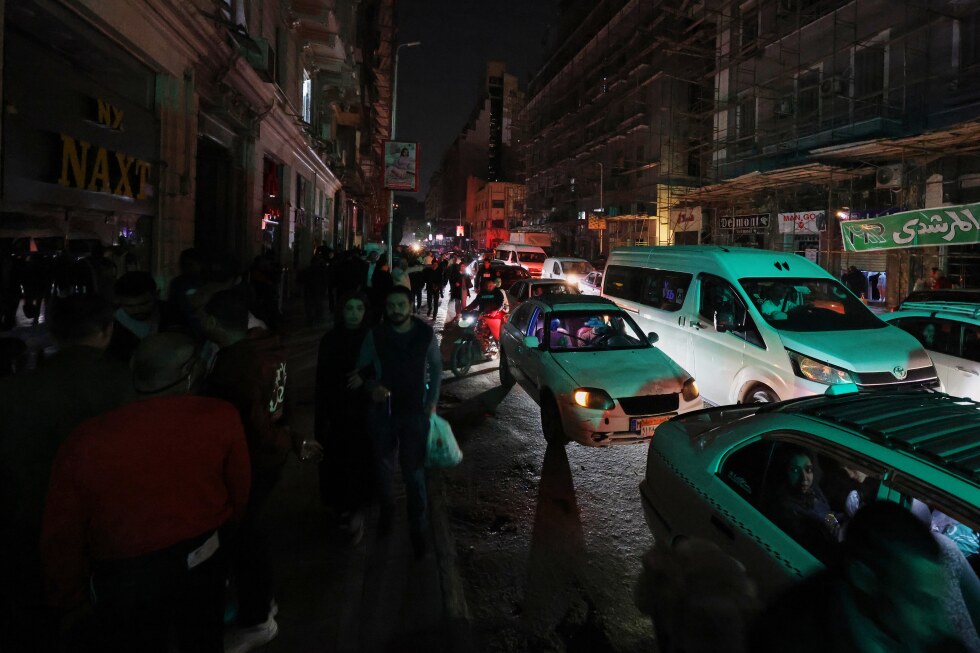
Beyond the impact on businesses, the energy conservation measures have transformed Cairo’s vibrant nightlife. Evening tours of the capital revealed unusually quiet streets where bustling activity once prevailed. For residents accustomed to 24-hour access to goods and services, the adjustment has been jarring.
Prime Minister Mustafa Madbouly has described the measures as “exceptional” and necessary to curtail oil consumption. Additional energy-saving initiatives include dimming streetlights and roadside advertising, limiting government office hours in the New Administrative Capital, and reinstating work-from-home policies for civil servants one day per week in April.
“The alternative would be to resort again to further price increases,” Madbouly warned.
The government has already increased prices for fuel and cooking gas earlier this month as global energy prices soared following the virtual closure of the Strait of Hormuz, a critical chokepoint for approximately one-fifth of the world’s oil supply.
Tourist areas including Red Sea resorts like Hurghada, Sharm el-Sheikh, and Marsa Alam, as well as the antiquities-rich southern cities of Aswan and Luxor, have been exempted from these measures, recognizing tourism’s vital role as a foreign currency generator for Egypt’s struggling economy.
The global energy crisis, which began on February 28 when the U.S. and Israel launched massive airstrikes against Iran, has had particularly severe consequences for Egypt. With a population exceeding 108 million, the country consumes $20 billion in oil products annually, including fuel used to operate power plants. Egypt imports 28% of its gasoline and 45% of its diesel, and Madbouly reported that the nation’s monthly oil bill has more than doubled since January, reaching $2.5 billion.
As business owner Magdy al-Deeb questioned while smoking shisha in a Cairo café: “Where will all those people go?” referring to workers at risk of losing their jobs. “We must protect people’s livelihoods.”
Fact Checker
Verify the accuracy of this article using The Disinformation Commission analysis and real-time sources.

12 Comments
The early closure policy is a prime example of how geopolitical tensions can disrupt daily life in unexpected ways. While I understand the need to conserve energy, the impact on Cairo’s nightlife culture seems quite severe. I wonder if there are any alternative measures the government could explore to mitigate the economic fallout for businesses.
That’s a good point. There may be more nuanced solutions that balance energy conservation with supporting local enterprises. Engaging with business owners like Salah to understand their challenges could help the government develop a more tailored approach.
The energy conservation measures in Egypt are a testament to the complex challenges countries face when dealing with the fallout from regional conflicts. While the early closure order may help address short-term energy concerns, the long-term impact on Cairo’s businesses and cultural identity is worrying. I hope the government can find a way to balance these competing priorities effectively.
Agreed. Striking the right balance between energy security and supporting the local economy will be crucial. Perhaps a gradual, flexible implementation of the closure policy, coupled with targeted relief measures, could help mitigate the disruption to businesses like Salah’s cafe.
Interesting how this regional conflict is impacting local businesses in Egypt. The early closure mandate seems like a drastic measure to conserve energy, but I can understand the government’s concerns about oil and electricity shortages. It will be tough on cafe owners like Youssef Salah who rely on late-night crowds.
Yes, it’s a difficult situation. The ripple effects of war can be far-reaching. I wonder if there are any support programs or relief efforts the government can provide to help businesses adapt to the new operating hours.
This is a tough situation for Egypt as they try to manage the ripple effects of the regional conflict. The early closure mandate will undoubtedly impact the livelihoods of many small business owners like Youssef Salah. I hope the government can find ways to provide relief and support to mitigate the economic consequences.
Absolutely. Supporting local businesses should be a priority, even as they address the energy crisis. Perhaps targeted subsidies, tax breaks, or flexible scheduling options could help cushion the blow for establishments like Salah’s cafe.
The early closure order in Egypt is a clear sign of the far-reaching implications of the ongoing regional conflict. While energy conservation is understandable, the impact on Cairo’s vibrant nightlife culture is concerning. I wonder if there are any creative solutions the government could explore to help businesses adapt without completely disrupting their operations.
That’s a good point. A more nuanced, collaborative approach with the business community could yield better results than a blanket mandate. Engaging with stakeholders to understand their needs and find mutually beneficial solutions would be a wise approach.
The rising oil prices and supply chain disruptions from this regional conflict are really taking a toll on Egypt’s economy. Businesses like Salah’s cafe are bearing the brunt of the energy conservation measures. I hope the government can find a balanced approach to manage the crisis without crippling the vibrant nightlife in Cairo.
Agreed. Preserving the local culture and economy should be a priority, even as they try to address the energy challenges. Perhaps a more gradual, flexible approach could work better than a strict nationwide mandate.