


Listen to the article
In the competitive automotive market, vehicle depreciation remains a significant concern for buyers, with some models maintaining their value better than others after purchase. This retention of value can be a crucial factor for consumers looking to maximize their investment in a new or used vehicle.
According to a recent analysis by Edmunds, certain SUVs stand out for their ability to hold value over time. The car experts examined sales transaction data, comparing the average prices of used 2023 model-year SUVs against their original manufacturer’s suggested retail prices to identify top performers across five size categories.
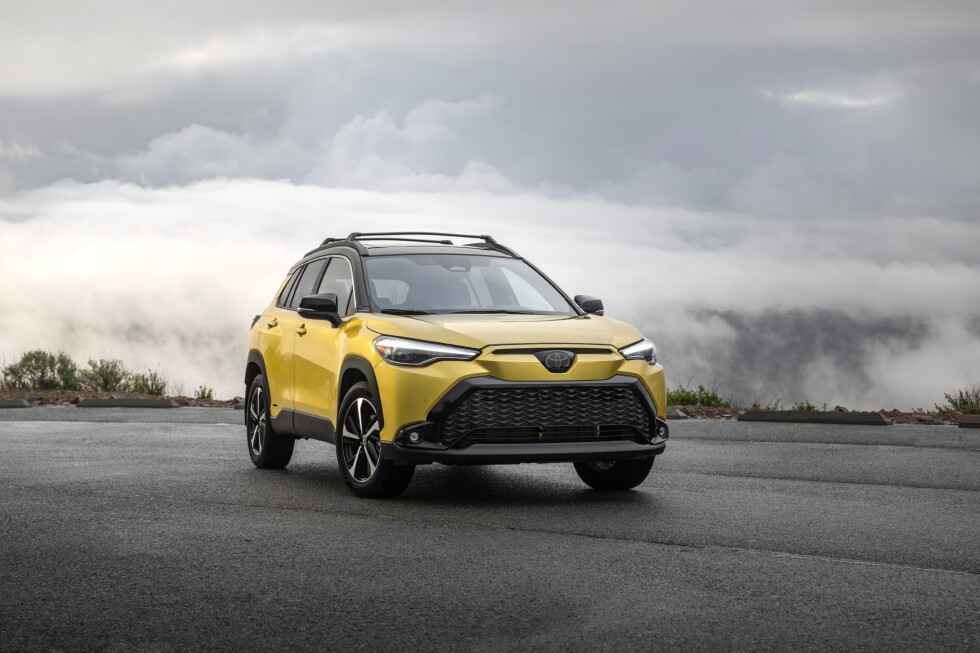
In the subcompact SUV segment, the Toyota Corolla Cross emerged as the leader, retaining an impressive 81.7% of its original value after three years of ownership. While not particularly flashy, the Corolla Cross offers practical features including standard driver assistance technology and generous cargo capacity for its size. The Honda HR-V followed closely behind, earning praise for its spacious interior despite criticism for its lackluster acceleration performance.
Among small SUVs, the Toyota RAV4 Hybrid demonstrated exceptional value retention at 81.4%. The RAV4’s success stems from its comfortable interior, versatility across numerous trim levels, strong safety ratings, and excellent fuel economy. The Honda CR-V claimed the second position in this category, with analysts highlighting its smooth ride quality, user-friendly technology features, and impressive fuel efficiency in hybrid configurations.
For midsize SUV enthusiasts, the Toyota 4Runner topped the list with an outstanding 83% value retention—the highest among all SUVs in the study. Based on the Tacoma pickup platform, the 4Runner appeals to traditionalists seeking genuine off-road capability with rugged design elements. The Ford Bronco secured the second position with its distinctive retro-inspired styling, exceptional off-road prowess, and extensive customization options.
In the three-row midsize SUV category, the Toyota Highlander continues its two-decade legacy of popularity, with the Highlander Hybrid maintaining 77% of its value after three years. While its third-row accommodations are somewhat limited, the vehicle delivers a comfortable driving experience and noteworthy fuel economy. The Honda Pilot ranked second, offering more spacious third-row seating but lacking a hybrid powertrain option.
For consumers requiring maximum space, the large SUV segment is led by the Toyota Sequoia, which retains 80% of its value after three years. Its hybrid powertrain delivers robust performance, though fuel economy remains comparable to non-hybrid competitors in its class. The Chevrolet Tahoe secured the second position, distinguished by its powerful engine options—including two V8 configurations and a turbocharged diesel six-cylinder—making it particularly suitable for heavy towing applications while featuring Chevrolet’s latest technology.
These findings highlight Toyota’s dominance in value retention across the SUV market, with the brand claiming the top position in all five size categories. Honda secured second place in three categories, while Ford and Chevrolet each claimed runner-up positions in one category.
The data specifically applies to 2023 model-year vehicles but may provide valuable insights for consumers considering new 2026 models. Industry analysts attribute these value retention patterns primarily to brand reputation, reliability records, and sustained market demand.
For consumers, understanding which vehicles best maintain their value offers significant long-term financial benefits. While depreciation remains unavoidable, selecting models with stronger resale values can substantially reduce the overall cost of ownership, providing additional peace of mind for what represents a major investment for most households.
Fact Checker
Verify the accuracy of this article using The Disinformation Commission analysis and real-time sources.

8 Comments
The Toyota RAV4 Hybrid’s 81.4% value retention after 3 years is very impressive. Its combination of fuel efficiency, reliability, and SUV practicality make it a smart long-term investment for many buyers.
Hybrid powertrains seem to be a key factor in SUVs retaining their value over time. Consumers likely appreciate the fuel savings and environmental benefits.
Interesting to see the Toyota Corolla Cross top the subcompact SUV segment for value retention. Its practical features and reputation for reliability likely contribute to its strong resale value.
The Honda HR-V is also a solid performer, though its lackluster acceleration could be a drawback for some buyers. Value retention is an important consideration when purchasing an SUV.
While vehicle depreciation is unavoidable, minimizing it through smart purchasing decisions is key. This Edmunds analysis provides helpful data points for SUV shoppers to consider.
Vehicle depreciation can really eat into the total cost of ownership, so it’s good to see analysis on which SUVs hold their value best. This data could help buyers make more informed purchasing decisions.
Kudos to Toyota for having two of their SUV models perform so well on Edmunds’ value retention list. Their reputation for reliability and long-term durability seems to pay off in the resale market.
It will be interesting to see if other automakers can match Toyota’s SUV value retention in the coming years as the market continues to evolve.