


Listen to the article
Iran’s Attack on UAE Shatters Image of Safe Haven in Troubled Region
The United Arab Emirates’ carefully cultivated image as a peaceful oasis was violently disrupted Saturday when Iranian missiles and drones struck Dubai and Abu Dhabi, killing one person and injuring seven others. The attacks targeted some of the country’s most iconic landmarks, setting fire to a five-star resort and threatening the world’s tallest building.
Iranian forces launched the assault as retaliation against the major attack by U.S. and Israeli forces, bringing fear and chaos to a region that had largely maintained stability amid Middle Eastern tensions. The strikes hit the Fairmont hotel on the prestigious Palm Jumeirah island, while flames damaged the facade of the famous Burj Al Arab hotel. Smoke was visible near the Burj Khalifa, the 2,723-foot skyscraper that dominates Dubai’s skyline.
“This is Dubai’s ultimate nightmare, as its very essence depended on being a safe oasis in a troubled region,” noted Cinzia Bianco, an expert on the Persian Gulf at the European Council on Foreign Relations. “There might be a way to be resilient, but there is no going back.”
UAE officials quickly moved to reassure the population, emphasizing the effectiveness of the country’s air defense systems. Reem Al Hashimy, minister of state for international cooperation, told CNN, “I know it’s a scary time for a lot of the residents. We don’t hear these types of loud sounds. But at the same time, those are sounds of interception.”
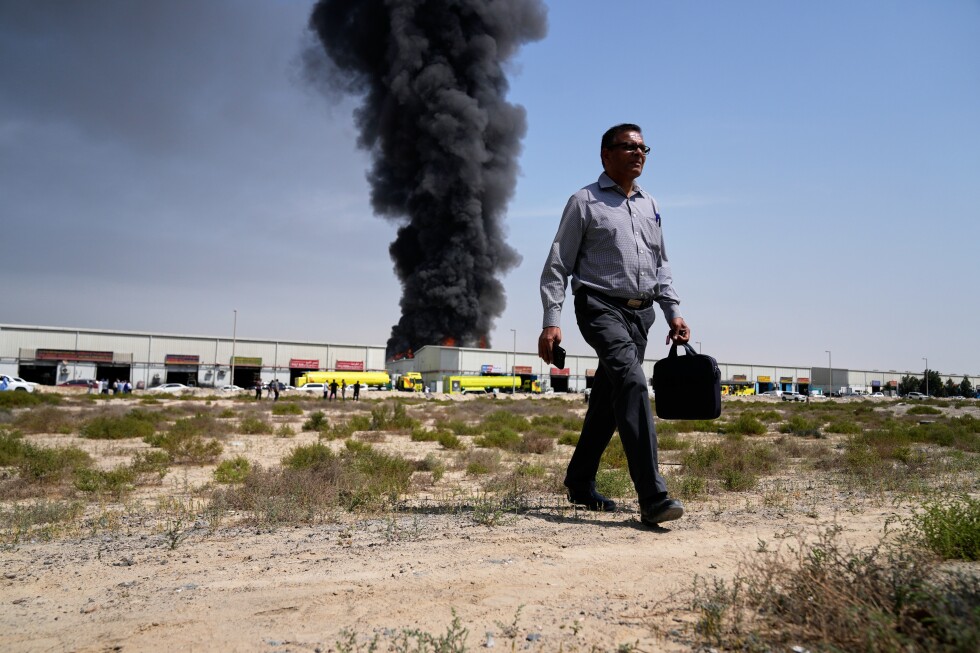
The Ministry of Defense reported that air defenses had intercepted 165 ballistic missiles, two cruise missiles, and more than 540 Iranian drones over two days. Despite these efforts, debris from the intercepted weapons caused fires at multiple strategic locations, including Dubai’s Jebel Ali Port, a critical shipping hub, and damaged Dubai International Airport.
The diplomatic fallout was swift and severe. The UAE closed its airspace on Saturday, shuttered its embassy in Tehran on Sunday, and withdrew its diplomats. In a statement, the Foreign Ministry condemned Iran’s “aggressive and provocative approach” that threatens regional stability, reflecting the Emirates’ “firm and unwavering position against any aggression that threatens its security and sovereignty.”
This escalation represents a significant setback to the UAE’s efforts to reduce tensions with Iran, its neighbor across the Gulf. For decades, the oil-rich federation of seven sheikhdoms has positioned itself as a place of tranquility to attract wealthy tourists, businesses, and expatriates seeking a tax-free lifestyle in luxurious surroundings. Nearly 90% of the estimated 11 million residents are foreigners.
Real estate developers have marketed glimmering high-rises and poolside villas to affluent Europeans and Americans by promoting the country’s welcoming climate, business-friendly policies, and reputation as one of the world’s safest destinations. This carefully constructed image now faces an unprecedented challenge.
Visitors and residents described the surreal experience of witnessing the attacks. British racehorse trainer Jamie Osborne, who was in Dubai for the Emirates Super Saturday event, recounted, “Last night was pretty surreal. You’re standing in the paddock watching missiles get shot through the sky.”
American business traveler Kristy Ellmer, visiting from New Hampshire, described the unsettling experience: “You hear a lot of explosions at times, you know, there’s hundreds of them. It’s unsettling. We’re not used to hearing bombs, right, or missiles.”
The attacks are already affecting tourism, a crucial sector for the UAE economy. Louise Herrle, an American tourist whose flight home was canceled, expressed hesitation about returning: “I would probably be inclined to avoid this part of the world when there’s increased tensions, it just explodes so quickly.”
The incident marks a pivotal moment for the UAE, forcing it to confront the reality of regional conflicts it has long sought to remain insulated from. As debris continues to be cleared and normal operations resume, the longer-term impact on the country’s reputation as a safe haven remains to be seen. The events have demonstrated that even the most carefully constructed image of stability can be vulnerable in a region beset by longstanding tensions and conflicts.
Fact Checker
Verify the accuracy of this article using The Disinformation Commission analysis and real-time sources.

30 Comments
Production mix shifting toward Business might help margins if metals stay firm.
Good point. Watching costs and grades closely.
Good point. Watching costs and grades closely.
Silver leverage is strong here; beta cuts both ways though.
Good point. Watching costs and grades closely.
If AISC keeps dropping, this becomes investable for me.
The cost guidance is better than expected. If they deliver, the stock could rerate.
Silver leverage is strong here; beta cuts both ways though.
Good point. Watching costs and grades closely.
If AISC keeps dropping, this becomes investable for me.
Good point. Watching costs and grades closely.
Good point. Watching costs and grades closely.
I like the balance sheet here—less leverage than peers.
Good point. Watching costs and grades closely.
Good point. Watching costs and grades closely.
I like the balance sheet here—less leverage than peers.
Good point. Watching costs and grades closely.
Good point. Watching costs and grades closely.
Uranium names keep pushing higher—supply still tight into 2026.
Good point. Watching costs and grades closely.
The cost guidance is better than expected. If they deliver, the stock could rerate.
Good point. Watching costs and grades closely.
Uranium names keep pushing higher—supply still tight into 2026.
Good point. Watching costs and grades closely.
Good point. Watching costs and grades closely.
Production mix shifting toward Business might help margins if metals stay firm.
Good point. Watching costs and grades closely.
Good point. Watching costs and grades closely.
Production mix shifting toward Business might help margins if metals stay firm.
Good point. Watching costs and grades closely.