


Listen to the article
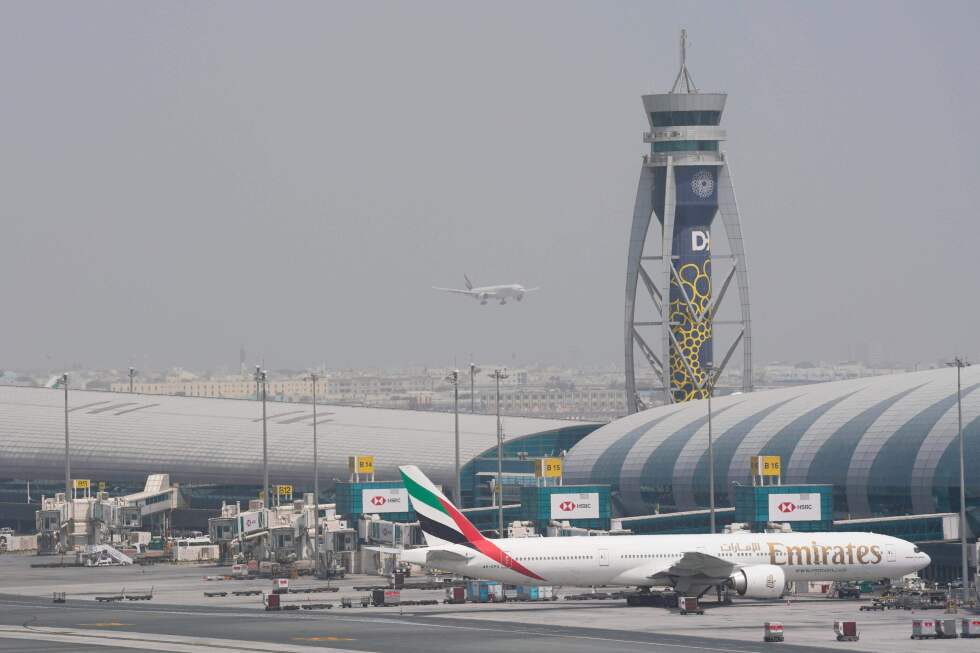
Dubai International Airport has solidified its position as the world’s busiest hub for international travel, with a record-breaking 95.2 million passengers passing through its terminals in 2025, officials announced Wednesday.
This remarkable achievement builds on Dubai’s post-pandemic travel resurgence, which has been fueled by growing global interest in travel and the emirate’s expanding tourism, business, and real estate sectors. The announcement follows Dubai’s recent report of a 5% increase in tourist arrivals last year, reaching 19.6 million visitors—the third consecutive year of record-breaking tourism figures.
The state-owned airport serves as the home base for Emirates, the long-haul carrier that forms a central component of the network of state-owned and state-linked businesses collectively known as “Dubai Inc.” This ecosystem has been instrumental in propelling the emirate’s economic growth strategy.
“Record traffic is no longer an exception, but part of its operating reality,” said Paul Griffiths, the chief executive of Dubai Airports, highlighting the airport’s consistent performance gains. The facility handled 92.3 million passengers in 2024, up from 86.9 million in the previous year, and has now substantially exceeded its pre-pandemic traffic levels of 86.3 million passengers in 2019.
India remains the top destination country for travelers departing from Dubai International, accounting for 11.9 million passengers last year. Saudi Arabia followed with 7.5 million passengers, while the United Kingdom ranked third with 6.3 million. The airport’s extensive connectivity network encompasses 108 airlines flying to 291 cities across 110 countries, reinforcing Dubai’s strategic position as a global transit hub.
Dubai’s current boom extends beyond just air travel. The emirate is experiencing unprecedented growth in real estate development and tourism, transforming it from merely a layover destination to a primary travel goal for many international visitors. This evolution reflects Dubai’s successful implementation of its economic diversification strategy, reducing its traditional dependence on oil revenues.
However, this rapid expansion has brought new challenges. The city is increasingly grappling with traffic congestion and rising costs of living that affect both Emirati citizens and the expatriate workforce that drives its economy. These growing pains have prompted authorities to accelerate infrastructure development plans.
Looking ahead, Dubai has ambitious plans to transfer its airport operations to Al Maktoum International Airport, located approximately 45 kilometers (28 miles) from the current facility. Al Maktoum International, which opened in 2010 with a single terminal, initially served as a parking area for Emirates’ fleet of Airbus A380s and other aircraft during the pandemic. It has since resumed operations, handling cargo, commercial, and private flights, and serves as the venue for the prestigious biennial Dubai Air Show.
The planned relocation, scheduled for 2032, will follow a massive $35 billion upgrade to Al Maktoum International. The new airport’s desert location provides ample space for expansion, addressing capacity constraints at the current facility and positioning Dubai to accommodate projected growth in international air travel over the coming decades.
This strategic infrastructure investment underscores Dubai’s commitment to maintaining its competitive edge in global aviation and international tourism, sectors that have become increasingly vital to the emirate’s economic prosperity and global influence.
Fact Checker
Verify the accuracy of this article using The Disinformation Commission analysis and real-time sources.

10 Comments
This news underscores Dubai’s continued emergence as a global aviation powerhouse. Handling 95.2 million passengers in a single year is a remarkable achievement, and a testament to the emirate’s strategic investments in its airport infrastructure and operations. I’m curious to see if other major hubs in the region can replicate this level of growth.
You make a good point. Dubai’s airport dominance is a product of its broader economic and geopolitical strategy. As other Middle Eastern countries seek to develop their own aviation sectors, it will be fascinating to see how the regional competitive dynamics evolve in the coming years.
That’s an incredible achievement for Dubai International Airport. As a major global hub, it’s exciting to see their continued growth and ability to handle such massive passenger volumes. I wonder what infrastructure investments and operational innovations have enabled them to scale so effectively.
Dubai has really positioned itself as a premier aviation and tourism destination. The airport’s capacity expansion and efficiency gains must be supported by the emirate’s broader economic and real estate developments.
This underscores Dubai’s emergence as a global aviation superpower. The rapid growth of Emirates and Dubai’s strategic location have made it a vital international transit hub. I’m curious to see if other major airports in the region can match this level of passenger throughput.
Agreed, Dubai’s airport dominance is quite remarkable. As other Middle Eastern hubs like Doha and Abu Dhabi continue to expand their own aviation sectors, it will be interesting to see how the competitive landscape evolves in the coming years.
95.2 million passengers is an astounding number. I’m curious to know more about the strategies Dubai has employed to attract and accommodate such high traffic levels. Optimizing airport operations and infrastructure must be a constant challenge.
You’re right, managing an airport of that scale requires immense coordination and foresight. Dubai’s continued investments in facilities, technology, and transportation links have clearly paid off in their ability to handle record-breaking passenger volumes.
Wow, 95.2 million passengers is an incredible milestone. Dubai has really cemented its status as one of the world’s premier aviation centers. I’d be curious to learn more about the operational innovations and infrastructure investments that have enabled this level of growth.
Dubai’s ability to scale its airport operations so dramatically is quite impressive. The synergies between the airport, Emirates airline, and the emirate’s broader economic development strategy have been a key driver of this success.