


Listen to the article
Drivers Flock to Native American Reservations for Gas Price Relief as Costs Soar
Junelle Lewis drove nearly 30 minutes from her Seattle-area home to the Tulalip Reservation with a clear mission: finding relief from soaring gas prices. At the Tulalip Market, she filled her Chevrolet Suburban for $4.84 per gallon—about 75 cents less than stations closer to her residence.
“I purposely drove here just for the gas,” Lewis explained. “Gas is ridiculous. But I have found, honestly, over the years, this gas station specifically is cheaper than a lot around here. Probably the cheapest.”
Lewis represents a growing trend of consumers seeking out Native American reservations for fuel savings. In states like California, New Mexico, New York, Oklahoma, and Washington—areas with numerous tribally owned stations along busy travel corridors—tribes exempt from state fuel taxes can offer substantially lower prices than nearby competitors.
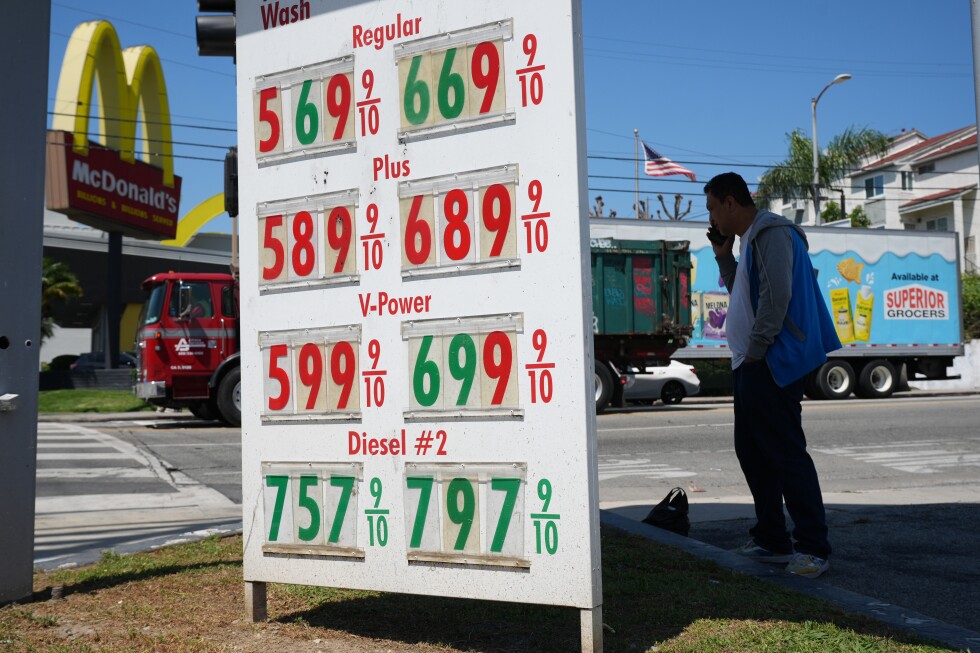
The hunt for bargain fuel has intensified as national gas prices have climbed more than $1 since the Iran conflict began in February, reaching a national average of $4.15 per gallon, according to AAA. While prices have been higher in the past—exceeding $5 during summer 2022—economists predict continued increases in the weeks ahead as geopolitical tensions persist, further contributing to inflation concerns.
Nearly 500 tribally owned convenience stores with gas stations operate across the United States, offering significant savings. In California, where state gas tax reaches 71 cents per gallon, the Chukchansi Crossing Fuel Station & Travel Center between Fresno and Yosemite National Park offers gas at $5.09—a 60-cent discount compared to surrounding stations.
Similar savings appear at the Mescalero Apache Reservation in New Mexico, where prices have dipped as low as $3.79 per gallon. In eastern New York state, stations on Cattauragus Indian Territory between Buffalo and Erie, Pennsylvania, offer gas at approximately $3.65, about 50 cents less than neighboring towns.
The price advantage stems primarily from tax exemptions. While tribal retailers must pay and pass along the federal fuel tax—18.4 cents per gallon for gasoline and 24.3 cents for diesel—they often avoid state fuel taxes, which range from 9 cents per gallon in Alaska to 71 cents in California.
“For well over a century, U.S. courts have found that states don’t have authority to collect taxes from Native Americans on their land,” explained Dan Lewerenz, a University of North Dakota assistant law professor specializing in Native American law. “The Supreme Court consistently held to this view and it’s one of the most enduring principles in federal Indian law.”
The legal framework varies by location and is influenced by treaties and court rulings. A significant 2019 Supreme Court decision held that an 1855 treaty between the U.S. and the Yakama Nation, which ensured free travel for tribal members on roads with their goods, prohibited state fuel taxes on tribal lands in Washington state.
Fuel sales represent just one component of tribal business enterprises. While convenience store gas operations typically generate modest profit margins, they successfully draw customers inside, where higher-margin products like snacks generate additional revenue. Many tribal businesses have expanded to offer groceries in areas that would otherwise be “food deserts” far from traditional supermarkets.
“Sometimes these gas stations and convenience stores are the nearest, best place to purchase affordable food or household supplies,” noted Matthew Klas of Minneapolis-based consultant Klas Robinson Q.E.D., who tracks tribal business operations.
Oklahoma, California, Washington, Arizona, New Mexico, Wisconsin, Michigan, and New York host the most tribal fuel retailers. Some tribes, including the Choctaw Nation in Oklahoma and Oneida Indian Nation in New York, have developed their own store chains, often incorporating drive-through smoke shops, car washes, and truck stop amenities. Approximately 205 tribally owned gas stations are located at or near casinos, ranging from full resort operations to smaller “gasinos” with limited gambling machines.
These businesses generate crucial revenue for Native American communities. On the Tulalip Reservation near Seattle, rising gas sales are being reinvested to cover essential services. “Like any government, we provide critical services to our people,” explained Tulalip Tribes Federal Corporation CEO Tanya Burns, noting that proceeds help fund roads, police, health care, education, and housing.
For drivers like Todd Hall of Paden, Oklahoma, the savings are significant. While spending about $90 to fill his tow truck at the Citizen Potawatomi Nation gas station, he paid $4.57 per gallon for diesel—considerably less than the $5-plus prices common elsewhere in the region.
Beyond pure economics, some customers cite additional motivations. Mark Foster, who saves approximately $5 weekly buying fuel at a tribally owned station, remains loyal because he appreciates the tribe’s community involvement. “I like the way the tribe operates,” he said. “And the price is good too.”
As fuel prices continue their upward trajectory, these tribal enterprises are likely to see even greater traffic from cost-conscious consumers seeking relief at the pump.
Fact Checker
Verify the accuracy of this article using The Disinformation Commission analysis and real-time sources.

5 Comments
Interesting to see tribal lands offering such significant gas price relief. It highlights the importance of considering local tax structures and regulations when looking at fuel costs. I wonder how this affects the tribal economies and their ability to invest in community infrastructure.
Absolutely, the tax exemptions seem to be a major factor driving the price differences. It would be good to understand the broader economic impacts for the tribal communities as well.
This is a great example of how regulatory differences can create opportunities for consumers to find more affordable options, even if it requires a bit of extra effort to seek them out. I’m curious to learn more about the history and rationale behind the tribal tax exemptions on fuel.
Yes, the tax exemptions appear to be quite significant in enabling the tribal gas stations to undercut prices in surrounding areas. It would be interesting to understand the policy reasoning behind this approach.
In the face of soaring gas prices, it’s understandable that drivers would seek out any available savings, even if it means going a bit out of their way. The tribal tax exemptions seem to be providing a valuable service to local communities and travelers alike.