


Listen to the article
Tokyo Transit Giant Tapped to Transform Honolulu’s Struggling Rail Project
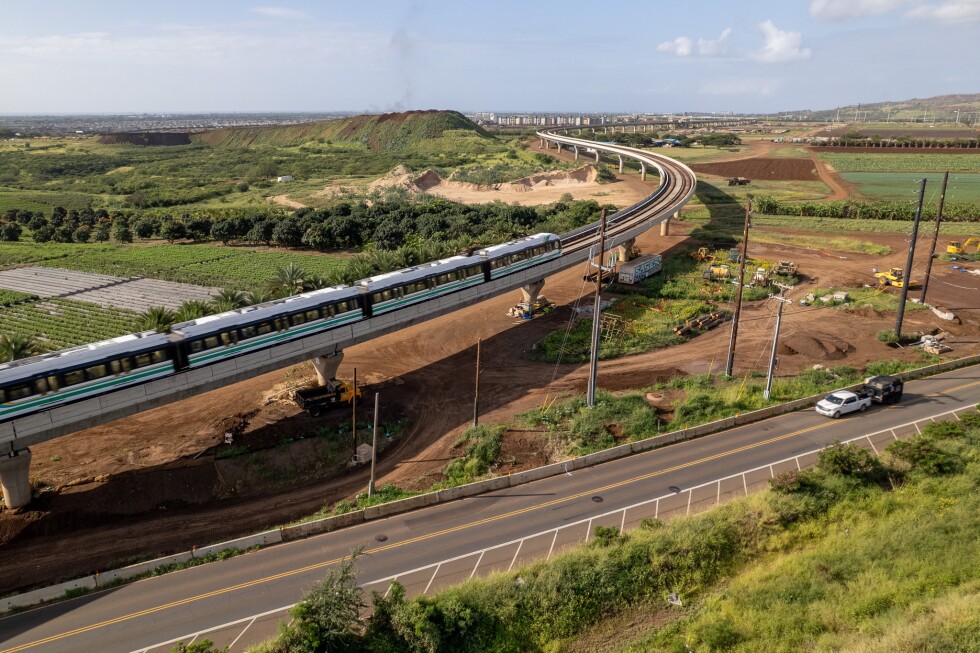
Step outside a train station in Tokyo, and you’ll find yourself immersed in vibrant neighborhoods filled with shopping malls, bustling food courts, and lively public spaces. By contrast, disembark at a Honolulu Skyline station, and you’re likely to encounter little more than a dirt road and a “No Trespassing” sign—not even a public restroom.
This stark difference has prompted the State of Hawaii to pursue a partnership with Tokyo-based railroad conglomerate Tokyu Group, which brings a century of expertise in transit-oriented development. The goal is to help Honolulu’s troubled Skyline rail project attract riders, develop affordable housing, and enhance quality of life for residents who are funding the $10 billion rail line.
Governor Josh Green’s administration is currently negotiating a memorandum of understanding with the Japanese company best known for transforming empty land into Tokyo’s Shibuya ward—home to the famous Shibuya Scramble pedestrian crossing, one of the world’s busiest intersections.
“It kind of knocked my socks off—to see what can be done with serious investment and serious planning,” Green said after meeting with Tokyu executives during a trip to Tokyo shortly after taking office. “I thought I was going there originally to talk about tourism. What I realized after several meetings in Japan was that I was actually talking about partnerships.”
The agreement with Tokyu is part of Green’s broader initiative to strengthen economic ties with Japan. The strategy includes not only seeking Tokyu’s development expertise but also attempting to tap into a $550 billion pledge the Japanese government has made to invest in U.S. infrastructure. Green has written to U.S. Commerce Secretary Howard Lutnick requesting funds for infrastructure development along Hawaii’s rail line.
Public response to the Skyline has been tepid, with the system attracting just 11,000-12,000 daily weekday riders—far fewer on weekends. Officials hope ridership will reach 84,000 daily passengers once the extension to Ala Moana Center is completed.
To help boost the project, Green established the Governor’s Advisory Committee on Transit-Oriented Development (TOD) in July 2024. The committee includes Tokyu’s transit expert Masafumi Ota; Lori Kahikina, executive director of the Honolulu Authority for Rapid Transportation; state planning director Mary Alice Evans; and prominent local developers. Paul Yonamine, chairman emeritus of Central Pacific Bank and former president of IBM Japan, chairs the committee.
Tokyu’s initial proposal, presented in an 83-slide presentation, outlines creating “ensen”—high-density, mixed-use neighborhoods built near stations with bus connections extending to suburban areas. The plan particularly focuses on the western stations at Honoluliuli, Keoneae, and Kualakaa as integration points with development plans.
“They know how to do things right,” said developer Stanford Carr, who is leading plans to redevelop land around Honolulu’s Aloha Stadium. “We’re very fortunate to have them participating.”
The contrast between Hawaii’s stations and their Japanese counterparts is striking. A recent visit to the Skyline’s Honouliuli station revealed only a parking lot, a dirt road with a no-trespassing sign, and complete silence except for the distant sound of a reversing truck. A Civil Beat reporter was the sole disembarking passenger.
Tokyo stations, conversely, are vibrant activity hubs. Shibuya, Tokyu’s crown jewel, has been called “arguably the most vibrant part of Tokyo.” But this wasn’t always the case—Shibuya’s terminal once served only about a dozen people daily, similar to Honouliuli today.
The World Bank highlights Tokyu as a case study in how governments can develop rail systems with transit-oriented development as a central component without overburdening taxpayers.
Regular Skyline riders like Matt Cavert, a professor at UH-West Oahu, see potential for improvement. “Having more places to eat closer to stations would be a plus,” he said, along with better pedestrian access to shopping centers and amenities at university stops. Brian Beland, a retired Marine, has a simpler request: public restrooms at the stations.
The initiative also includes Daiwa House Industry Co., Ltd., a Japanese modular home builder that recently completed an energy self-sufficient housing project in Toyota City, Japan. Daiwa House has Hawaii experience, having set up 50 modular homes for Maui wildfire victims.
Green sees this collaboration as a way to address housing shortages quickly and cost-effectively. Importantly, the plan has won support from Hawaii’s powerful construction trade unions. Andrew Pereira of Pacific Resource Partnership, representing the state’s largest construction union, noted that Daiwa’s high-quality homes are shipped flat in containers to be assembled by local contractors in Hawaii.
The administration is mindful of the mixed reactions to Japanese investment during Hawaii’s 1980s investment boom. While Japanese capital helped Hawaii transition from a plantation economy, it also created housing market inflation and cultural tensions. The infamous investor Genshiro Kawamoto became a cautionary tale after buying Kahala homes with briefcases of cash.
To avoid similar issues, the current plan envisions Tokyu working as a co-developer with local firms taking the lead. The memorandum of understanding is expected to be aspirational, with neither party making financial commitments initially.
“I like the idea of partnering—if I’m going to partner with international partners—with Japan,” Green said, citing Hawaii’s deep cultural and historical ties to Japan as additional motivation for the collaboration.
The partnership represents an ambitious attempt to transform Hawaii’s struggling rail system into a catalyst for community development, drawing on Japanese expertise while respecting local priorities and addressing Hawaii’s unique challenges.
Fact Checker
Verify the accuracy of this article using The Disinformation Commission analysis and real-time sources.

18 Comments
Negotiating a partnership with Tokyu Group to help transform Honolulu’s rail project is an intriguing approach. Their century of experience in transit-oriented development could provide invaluable insights.
Agreed, Honolulu has a unique opportunity to learn from a global leader in this field. The potential to create a more integrated, community-focused transit system is exciting.
It’s encouraging to see Honolulu looking to international best practices, like Tokyo’s model, to improve its struggling rail project. Tapping into Tokyu Group’s expertise could be a smart move.
Absolutely, Honolulu would be wise to leverage Tokyu’s experience in creating vibrant, mixed-use neighborhoods around transit hubs. If they can adapt that approach successfully, it could be transformative for the city.
It’s impressive that Honolulu is looking to an international expert like Tokyu Group to help transform its struggling rail project. Their experience in transit-oriented development could be a real asset.
Agreed, Honolulu is wise to leverage global best practices rather than trying to reinvent the wheel. Tokyu’s model has proven successful, so it makes sense to explore how it could be applied in Hawaii.
The comparison between the stark, unwelcoming Honolulu stations and the lively, community-focused Tokyo stations is stark. Bringing in Tokyu Group’s expertise seems like a smart move to revitalize Honolulu’s system.
Agreed. Honolulu has a lot to learn from Tokyo’s success in creating transit hubs that are destinations in themselves, not just utilitarian transportation nodes.
The comparison between the Honolulu and Tokyo station experiences is stark. Bringing in Tokyu Group’s expertise to create more vibrant, community-oriented transit hubs in Honolulu seems like a smart move.
Absolutely, if Honolulu can replicate even a fraction of the lively, mixed-use development Tokyo has achieved around its stations, it would be a huge win for the city and its residents.
Interesting to see Japan’s expertise in transit-oriented development being leveraged to improve Honolulu’s struggling rail system. Their experience in creating vibrant, mixed-use neighborhoods around stations could be a real game-changer.
Absolutely, Japan’s model of seamlessly integrating transit with commercial and residential development is quite impressive. If Honolulu can emulate that, it could really transform the city’s rail infrastructure.
$10 billion is a huge investment for Honolulu’s rail project. Partnering with an experienced Japanese firm like Tokyu Group could help ensure that investment pays off by creating a vibrant, well-used system.
Absolutely, maximizing the return on that major infrastructure investment should be the top priority. Tokyu’s track record in transit-oriented development is very impressive.
I’m curious to see how the partnership between Honolulu and Tokyu Group unfolds. The potential to revitalize Honolulu’s rail system and surrounding areas is substantial, but executing on that vision will be critical.
Definitely, the details of the agreement and implementation will be key. Honolulu will need to carefully adapt Tokyu’s approach to its own local context and needs.
Transforming empty land into bustling, mixed-use neighborhoods around stations is exactly what Honolulu’s rail system needs. Tapping into Tokyu’s expertise in this area could be a game-changer.
Agreed, Honolulu has a unique opportunity here to learn from Tokyo’s model and create a truly integrated, community-focused transit network.