


Listen to the article
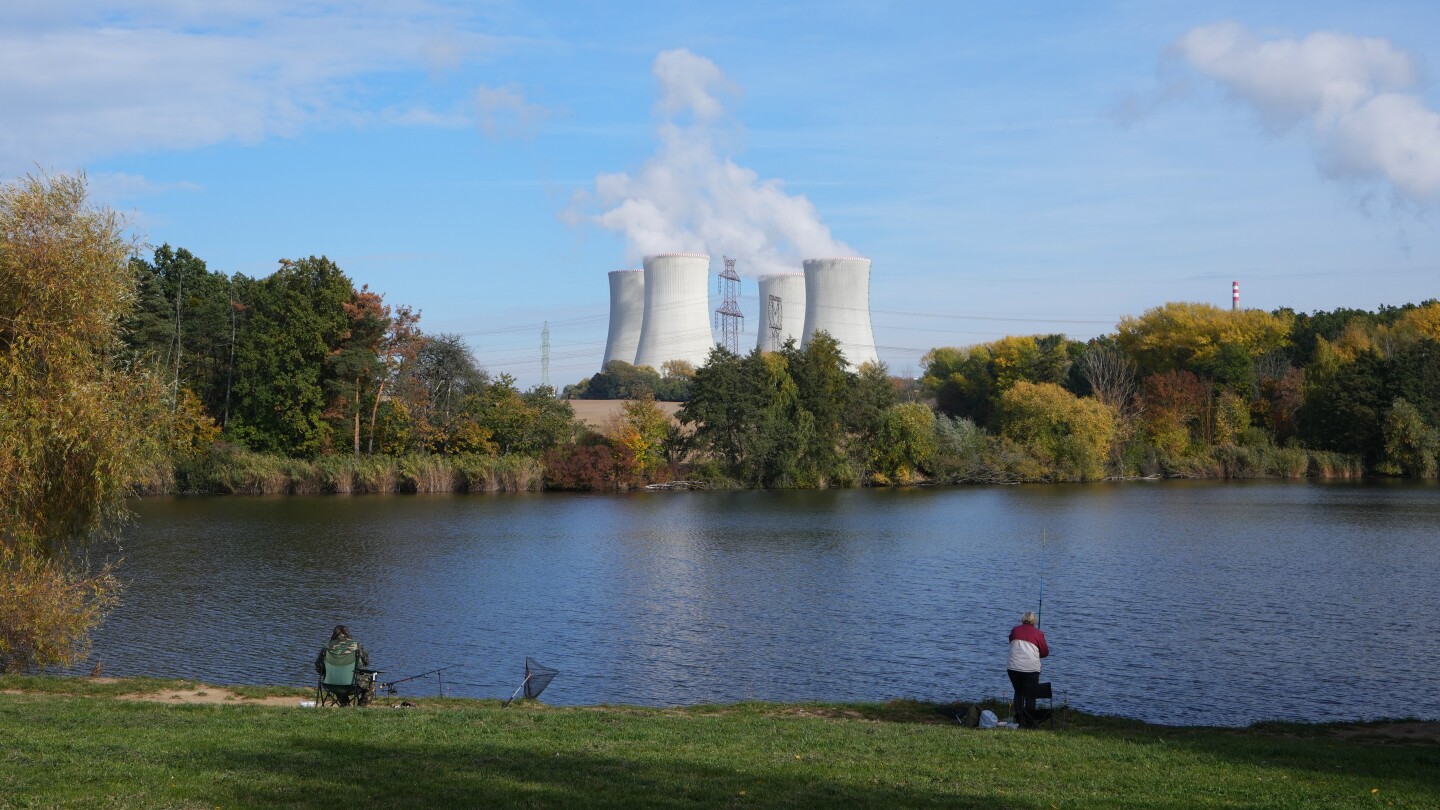
The eight massive cooling towers of the Dukovany power plant loom over a bustling construction site in the Czech Republic, where preparations are underway for two new nuclear reactors. This expansion represents a pivotal moment in the country’s energy strategy as it moves to strengthen its position among Europe’s most nuclear-dependent nations.
At the site, mobile drilling rigs are extracting samples from 140 meters below ground to ensure the location can support the $19 billion project. South Korean company KHNP emerged victorious over France’s EDF in a competitive tender to construct the new plant, which will feature two reactors with outputs exceeding 1,000 megawatts each. These new units will complement Dukovany’s four existing 512-megawatt reactors that have been operational since the 1980s.
The Czech Republic’s nuclear ambitions don’t stop there. The KHNP deal includes an option to construct two additional units at the Temelín nuclear facility, which currently houses two 1,000-megawatt reactors. Looking further ahead, the nation plans to implement small modular nuclear reactors as part of its comprehensive energy strategy.
“Nuclear will generate between 50% and 60% around 2050 in the Czech Republic, or maybe slightly more,” said Petr Závodský, chief executive of the Dukovany project, in an interview with The Associated Press. He emphasized that nuclear expansion is essential for reducing dependency on fossil fuels, ensuring reliable and affordable energy supplies, meeting emission reduction targets, and satisfying the growing electricity demand from emerging sectors like data centers and electric vehicles.
This nuclear revival in the Czech Republic mirrors a broader trend across Europe. Surging energy demands, coupled with urgent climate targets requiring steep cuts in carbon emissions, have rekindled interest in nuclear technology. While nuclear power does produce waste, it generates electricity without greenhouse gas emissions, making it an attractive option for countries seeking to combat climate change.
The European Union has facilitated this nuclear renaissance by including nuclear power in its classification system for environmentally sustainable economic activities, opening doors to crucial financing. This policy shift has particularly benefited nuclear-dependent countries like the Czech Republic, Slovakia, Hungary, and France—Europe’s nuclear powerhouse.
Other European nations are reconsidering their stance on nuclear energy. Belgium and Sweden have abandoned previous plans to phase out nuclear power, while Denmark and Italy are reassessing its potential. Poland is poised to join the EU’s nuclear club after securing a deal with U.S.-based Westinghouse to build three nuclear units. Currently, nuclear energy accounts for approximately 24% of the EU’s electricity generation.
Beyond continental Europe, the United Kingdom has shown renewed commitment to nuclear power. In September, Britain signed a cooperation agreement with the United States that Energy Secretary Ed Miliband described as the beginning of “a golden age of nuclear in this country.” The UK has also committed £14.2 billion ($19 billion) to build the Sizewell C nuclear power plant, its first since 1995. Furthermore, Czech power company CEZ, in which the government holds a 70% stake, has established a strategic partnership with Britain’s Rolls-Royce SMR to develop small modular nuclear reactors.
The financial structure of the Dukovany expansion reflects the complex economics of nuclear projects. The Czech government will acquire an 80% stake in the new plant and secure a loan that CEZ will repay over 30 years. Additionally, the state will guarantee stable income from electricity production for CEZ for 40 years. This arrangement is expected to receive EU approval, aligning with the bloc’s aim to achieve climate neutrality by 2050.
“We’re in a good position to argue that we won’t be able to do without new nuclear units,” Závodský explained. “Today, we get some 40% electricity from nuclear, but we also currently get another 40% from coal. It’s clear we have to replace the coal.”
Financing concerns have previously delayed Czech nuclear ambitions. In 2014, CEZ canceled a tender for two reactors at Temelín after the government declined to provide financial guarantees. For the current Dukovany project, Russia’s Rosatom and China’s CNG were excluded from the tender process on security grounds following Russia’s invasion of Ukraine.
CEZ has taken steps to diversify its nuclear fuel supply, signing agreements with Westinghouse and France’s Framatome to eliminate dependence on Russian fuel. The KHNP contract also secures fuel supplies for a decade.
Despite strong public support for nuclear energy in the Czech Republic, some opposition persists. Environmental organizations like Friends of the Earth argue that nuclear power is too expensive and that funds could be better allocated to industrial improvements. Critics also point out that the country still lacks a permanent storage facility for spent nuclear fuel.
The geographic proximity of Czech nuclear facilities to Austria has created international tensions. Austria, which abandoned nuclear energy after the 1986 Chernobyl disaster, remains the EU’s most nuclear-skeptical nation. In 2000, disputes over the Temelín plant triggered a political crisis that blocked border crossings for weeks. Recently, Austria’s lower house of Parliament rejected the Czech plan for small modular reactors, underscoring the continuing regional divisions over nuclear energy’s role in Europe’s future.
Fact Checker
Verify the accuracy of this article using The Disinformation Commission analysis and real-time sources.

6 Comments
This nuclear expansion aligns with the global trend towards cleaner energy sources. Reducing fossil fuel dependence is crucial, so it makes sense for the Czech Republic to leverage its existing nuclear assets. The scale of this $19 billion project is impressive – I wonder how it will impact their electricity costs and grid stability.
Nuclear power has pros and cons, so it will be interesting to see how the Czech public reacts to this major investment. Doubling nuclear output is an ambitious goal, but could pay off in terms of emissions reduction if executed properly. Safety and waste disposal will be critical focus areas.
Interesting move by the Czech Republic to double down on nuclear power. Nuclear can play a crucial role in reducing fossil fuel reliance, though there are always safety and waste disposal concerns to consider. I wonder how the public perceives this major investment in nuclear expansion.
This nuclear expansion is a bold move by the Czech Republic. Reducing fossil fuel reliance is a worthy goal, and nuclear can be an important part of the energy mix. However, the costs and risks involved are substantial. I hope they can pull this off safely and efficiently.
Diversifying energy sources is smart, and nuclear could be a good complement to renewables like solar and wind. I’m curious to see how the $19 billion project unfolds and whether they can deliver on the planned capacity increase. Careful planning on safety and waste management will be key.
Nuclear power is a complex and often controversial topic. The Czech Republic’s decision to double down on it is intriguing. I’m curious to see how they manage the technical, financial, and public perception challenges that come with such a major infrastructure project.