


Listen to the article
Cyprus Launches Mass Vaccination Campaign to Combat Foot-and-Mouth Disease Outbreak
Cyprus has initiated an extensive vaccination program targeting thousands of livestock animals in response to a foot-and-mouth disease outbreak that threatens the country’s crucial halloumi cheese industry. Officials confirmed Wednesday that at least 13,000 animals will need to be culled as part of containment efforts.
Agriculture and Environment Minister Maria Panayiotou announced that European Union experts have arrived to supervise the first round of vaccinations at farms within a three-kilometer radius of the outbreak’s center. The operation comes as the island nation works to protect its valuable dairy industry.
“Strictly obeying biosecurity measures is absolutely essential as they are a key tool to containing the virus,” Panayiotou told reporters. Private veterinarians have been recruited to support government authorities in administering the vaccines.
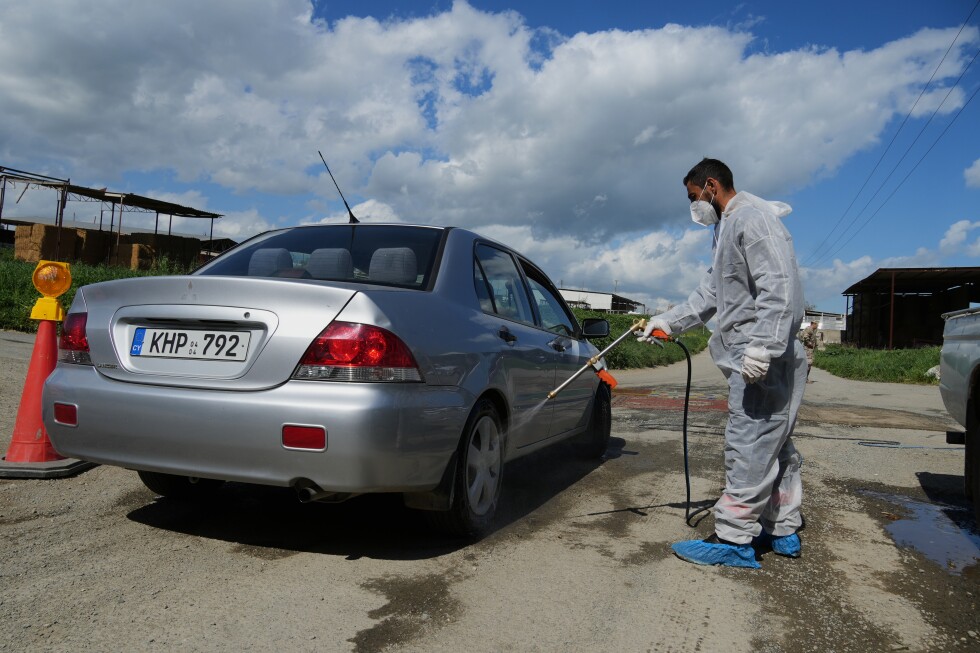
The outbreak has affected 11 farms across four communities near Cyprus’s southern coast. Emergency crews have established disinfection points for vehicles entering the exclusion zone to prevent further spread of the highly contagious viral disease, which causes fever and blister-like sores in animals’ mouths while drastically reducing milk production.
An initial batch of 10,000 vaccine doses, transferred from the island’s breakaway Turkish Cypriot northern region, will be used until a larger order of more than 500,000 doses arrives from European manufacturers. This cross-border cooperation represents a rare moment of collaboration on the divided island.
Soteria Georgiadou, a senior Veterinary Services official, explained that Turkish Cypriot farmers had previously received EU-supplied vaccines when the disease first appeared in the north in late 2025. Turkish Cypriots have now agreed to return a portion of those doses to assist with the current outbreak.
The containment strategy has already resulted in the culling of 263 cattle, with plans to destroy approximately 13,000 more sheep, goats, and swine. Officials may expand vaccinations to cover a 10-kilometer radius from the epicenter, while disinfection operations will continue for at least two more months.
President Nikos Christodoulides pledged government support and compensation for affected farmers, while suggesting the disease may have spread from the north due to “possibly illegal activities,” though he did not elaborate on this claim.
The swift response aims to safeguard Cyprus’s halloumi production, which has become an increasingly important export. The distinctive white cheese, known for its high melting point and versatility for grilling, generated over €200 million ($236 million) in export revenue during the first half of 2025, reportedly surpassing the island’s pharmaceutical sector.
Marios Constantinou, head of the Cheesemakers Association, sought to reassure international markets that halloumi production and exports to key destinations in the European Union, United Kingdom, and Australia remain secure due to safety protocols implemented during the manufacturing process.
The outbreak highlights the complex political reality of Cyprus, which has been divided along ethnic lines since Turkey’s 1974 invasion following a coup aimed at uniting the island with Greece. While Cyprus joined the EU in 2004, only the southern, Greek Cypriot part with its internationally recognized government enjoys full membership benefits.
Panayiotou emphasized that no new cases have been identified beyond the 11 affected farms, and regular testing protocols remain in place. She also assured consumers that meat consumption, even from vaccinated animals, poses no safety concerns.
The situation remains under close monitoring as authorities work to contain the outbreak and minimize economic disruption to one of Cyprus’s most valuable agricultural sectors.
Fact Checker
Verify the accuracy of this article using The Disinformation Commission analysis and real-time sources.

17 Comments
Foot-and-mouth disease is highly contagious, so the rapid response from Cypriot authorities is understandable. Establishing disinfection checkpoints is a smart precaution to limit the spread.
Protecting the halloumi cheese industry is a sensible priority for Cyprus given its economic importance. This vaccination effort seems like a prudent response to the foot-and-mouth outbreak.
It will be worth monitoring whether this outbreak leads to any disruptions in the global halloumi supply chain. Maintaining production will be crucial for Cyprus.
Containing a foot-and-mouth outbreak is critical for Cyprus’ agricultural sector. I hope the vaccination campaign and biosecurity measures are effective in controlling the spread of the virus.
The halloumi cheese industry is a major economic driver for Cyprus, so protecting it from this outbreak should be a top priority for the government.
Foot-and-mouth outbreaks can be economically devastating for livestock producers. Cyprus is wise to prioritize containing this outbreak and protecting its halloumi industry.
It’s good to see the Cypriot government taking this threat seriously and enlisting EU experts to oversee the vaccination effort. Culling over 13,000 animals is no small task, but necessary to control the outbreak.
Protecting the valuable halloumi cheese industry should be a top priority. I wonder what the economic impact of this outbreak will be on Cyprus’ agricultural sector.
Culling over 13,000 animals is a massive undertaking. I hope the Cypriot government has the resources and manpower to carry out the vaccination program efficiently.
Strict biosecurity measures will be critical to preventing further spread of the disease. This is a challenging situation for Cyprus to navigate.
Foot-and-mouth is a serious threat to livestock health. I’m glad to see Cyprus taking proactive steps with this mass vaccination campaign to control the outbreak.
This is a serious situation for Cyprus’ livestock industry. A foot-and-mouth disease outbreak can be devastating, so taking swift action with a mass vaccination campaign is crucial to contain the spread and protect the halloumi cheese production.
I hope the vaccination program is effective in curbing the outbreak. Strict biosecurity measures will be key to preventing further transmission.
Foot-and-mouth disease can spread rapidly through livestock populations, so Cyprus is right to act swiftly with this mass vaccination program. Culling over 13,000 animals is a tough but necessary measure.
The dairy industry is crucial for Cyprus, so I’m glad to see the government taking decisive action with this mass vaccination campaign. Hopefully they can get the outbreak under control quickly.
It will be interesting to see if this outbreak has any impact on global halloumi cheese supplies or prices. Monitoring the situation closely will be important.
Foot-and-mouth disease can be devastating for livestock producers, so Cyprus is smart to take proactive steps like this mass vaccination effort. Hopefully they can get the outbreak under control quickly.