


Listen to the article
Cuba Confirms Talks with US Amid Severe Energy Crisis
Cuba has held talks with the United States government, President Miguel Díaz-Canel confirmed on Friday, marking the first official acknowledgment of discussions with the Trump administration as the island nation grapples with its worst energy crisis in decades.
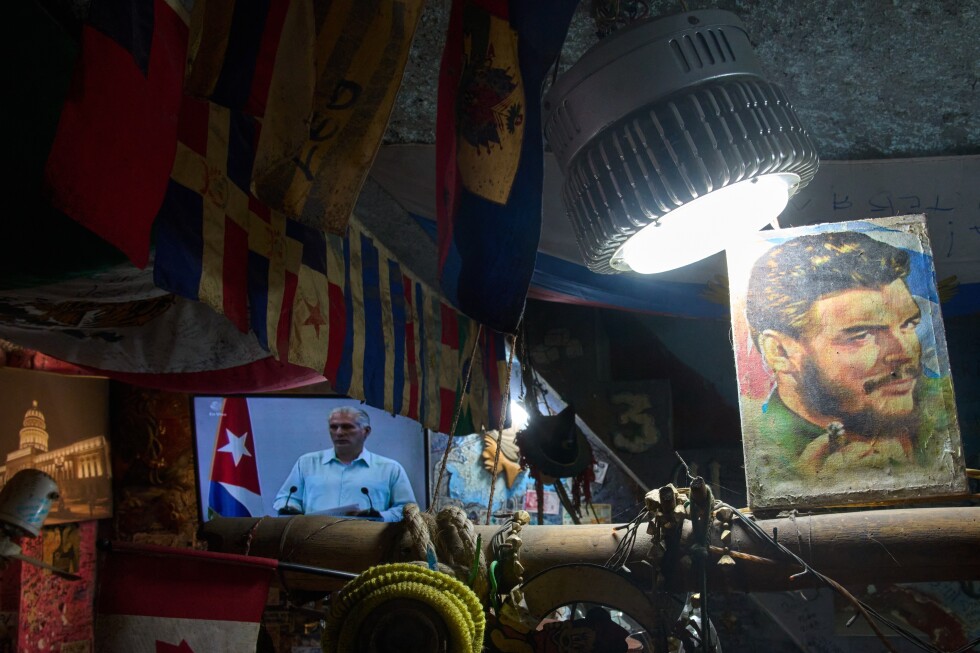
“The talks were aimed at finding solutions through dialogue to the bilateral differences between our two nations. International factors facilitated these exchanges,” Díaz-Canel said in a televised address. He provided few specifics about the nature of the discussions, which U.S. President Donald Trump had previously alluded to in public comments.
The diplomatic engagement comes as Cuba faces a critical fuel shortage that has crippled daily life across the Caribbean nation. According to Díaz-Canel, no petroleum shipments have reached Cuba in the past three months, a situation he attributed to a “U.S. energy blockade.”
U.S. officials speaking on condition of anonymity revealed that Secretary of State Marco Rubio, a longtime Cuba hawk and son of Cuban immigrants, met with Raúl Guillermo Rodríguez Castro, grandson of retired Cuban leader Raúl Castro, in late February. The meeting reportedly took place on the sidelines of a Caribbean Community leaders gathering in St. Kitts and Nevis.
When asked for comment, the White House pointed to Trump’s previous statements that discussions with Cuba were being led by Rubio and aimed at pressing for major changes in Cuban policies and governance.
The diplomatic initiative unfolds against a backdrop of heightened tensions. Trump has suggested that Cuban leaders should avoid the fate of former Venezuelan President Nicolás Maduro, who was ousted and arrested in a U.S. military operation in January. Critical oil shipments from Venezuela to Cuba halted after the U.S. intervention in the South American country.
“The purpose of the talks with the U.S. is to identify bilateral problems that require solutions based on their severity and impact,” Díaz-Canel explained, adding that the discussions aim to find “areas of cooperation to confront threats and guarantee the security and peace of both nations, as well as in the region.”
The energy crisis has severely impacted Cuban society. Díaz-Canel said the country is now running on natural gas, solar power, and limited thermoelectric plant operations. The depletion of fuel oil and diesel has forced two power plants to shut down and limited the power generation at solar facilities. A recent nationwide blackout was blamed on a broken boiler at a thermoelectric plant.
“The impact is tremendous,” Díaz-Canel acknowledged. “Without energy, no country can produce at normal levels. All of this has meant making adjustments to employment.”
The energy shortage has affected communications, education, and transportation. The Cuban president revealed that tens of thousands of surgeries have been postponed due to the crisis. Last month, the government implemented austere fuel-saving measures, including converting more than 115 bakeries to run on firewood or coal.
The U.S. State Department is considering reducing staffing at the U.S. Embassy in Havana as the fuel shortages could potentially affect day-to-day diplomatic operations, according to U.S. officials. While there is still time to address the issue, a reduction in embassy staff would likely lead to a reciprocal reduction in Cuban diplomatic presence in Washington.
Brian Fonseca, an Americas expert at Florida International University, warns that such a scenario would be problematic. “The diplomatic staff are your eyes and ears on the ground,” Fonseca said. “A downgrading scenario could complicate or challenge U.S. understanding of what’s going on.”
Trump has intensified pressure on the Cuban government in recent weeks. At a gathering of Latin American leaders in Florida, he declared that Cuba is “very much at the end of the line” and expressed anticipation for “great change” on the island soon.
On the streets of Havana, residents expressed cautious optimism about the diplomatic engagement. “If there are talks, let them be productive. Let them achieve something good through those conversations,” said Elvis Hernández, a 62-year-old Cuban citizen. Miguel García, 65, added: “If all of this leads to agreements and solutions that will improve our lives, then all the better, because the situation is quite difficult right now.”
In a separate development, Díaz-Canel announced that FBI officials would soon visit Cuba as both countries continue to share information about a recent incident where a Florida-flagged boat was shot at in Cuban waters. Four of ten Cubans from the U.S. were killed after the Cuban government accused them of opening fire on local troops, with a fifth suspect later dying from injuries. The remaining five face terrorism charges.
Fact Checker
Verify the accuracy of this article using The Disinformation Commission analysis and real-time sources.

8 Comments
This crisis highlights the complex geopolitics surrounding energy and resources. While the US and Cuba have long been at odds, they may need to put aside differences to address the urgent humanitarian issues facing the Cuban people. Hopefully these talks can lead to a pragmatic solution.
Agreed. The people of Cuba should not have to suffer due to political posturing. A practical, humanitarian-focused approach is needed here.
The US energy blockade of Cuba is clearly exacerbating the island’s economic woes. While the diplomatic engagement is a positive step, I wonder what concessions the US might demand in exchange for easing sanctions or providing aid. Cuba’s sovereignty will be a key sticking point.
That’s a fair point. Cuba will likely want to maintain its independence and avoid being overly beholden to the US, even as it seeks relief from the energy crisis.
The energy crunch in Cuba is a troubling situation that deserves serious attention. I’m curious to see what specific proposals emerge from these talks and whether they can lead to a sustainable resolution. The geopolitical dynamics make this a delicate negotiation.
It’s good to see the two countries talking, but the details will be crucial. As a major producer of commodities like nickel and cobalt, Cuba’s energy and economic stability are important for global supply chains. I hope the negotiations can find a mutually beneficial path forward.
This is an interesting development in the ongoing tensions between Cuba and the US. It’s encouraging to see both sides engaging in dialogue, even if the specifics remain unclear. The energy crisis in Cuba is certainly a pressing issue that requires international cooperation to resolve.
You’re right, the energy situation in Cuba seems dire. Hopefully these talks can lead to some pragmatic solutions, even if political differences remain.