


Listen to the article
Cuba began restoring power to its national grid on Sunday following a complete blackout that left millions without electricity for the third time this month. The nationwide failure, which struck on Saturday, represents the latest crisis in Cuba’s deepening energy emergency.
By early Sunday, electricity had returned to approximately 72,000 customers in Havana, including five hospitals, according to reports from the state-run Electric Union and Ministry of Energy and Mines. This restoration, however, represents just a fraction of the capital’s two million residents.
Local power microsystems have been established in Havana and provinces such as Matanzas and Holguin to supply electricity to critical infrastructure. Some Havana residents reported their power was restored during the early morning hours, though many remain without service.
The Caribbean nation is grappling with an unprecedented energy crisis stemming from multiple factors. Its aging electrical infrastructure has significantly deteriorated in recent years, with maintenance issues compounded by economic challenges. Cuban officials have also pointed to U.S. sanctions as a major contributor to the crisis.
President Miguel Díaz-Canel recently stated that Cuba has not received oil shipments from foreign suppliers for three months. The island currently produces only about 40% of the fuel needed to power its economy, creating a severe energy deficit.
The situation has been exacerbated by U.S. policy toward Cuba. In January, President Donald Trump warned of imposing tariffs on any country selling or providing oil to Cuba. The Trump administration has demanded Cuba release political prisoners and implement political and economic reforms as conditions for lifting sanctions. Trump has also suggested the possibility of a “friendly takeover of Cuba.”
Additionally, the removal of Venezuela’s former President Nicolás Maduro by the U.S. has disrupted vital petroleum shipments from what had been one of Cuba’s most reliable allies. Venezuela had long provided Cuba with subsidized oil under favorable terms, and this loss has severely impacted Cuba’s energy security.
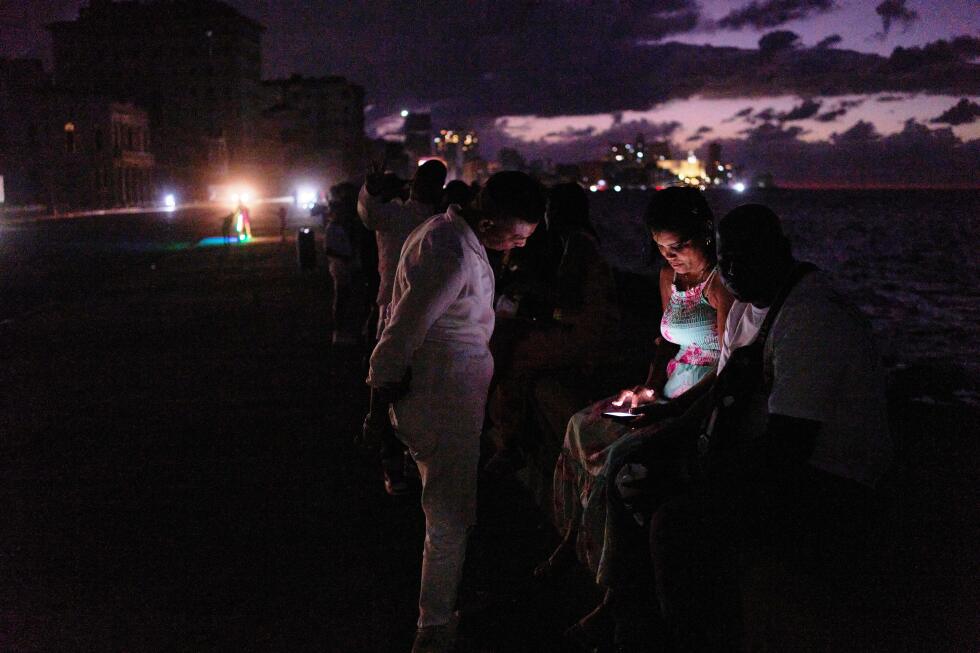
For ordinary Cubans, the ongoing crisis has profound daily implications. Suleydi Crespo, a 33-year-old mother of two, told The Associated Press on Saturday: “With the blackout and low voltage, my refrigerator broke — that was today. The day before yesterday, the voltage also dropped around 10 at night. If there’s no electricity tomorrow, we won’t be able to get water.”
Beyond household inconveniences, the blackouts disrupt work schedules, food preservation, and access to basic services. Many residents express growing exhaustion with the constant uncertainty.
“We have to get used to continuing our usual routine. What else can we do? We have to try to survive. Get used to events, with or without electricity,” said Dagnay Alarcón, a 35-year-old vendor, reflecting the resignation many Cubans feel.
According to the Cuban Electric Union, Saturday’s nationwide failure was triggered by an unexpected shutdown of a generation unit at the Nuevitas thermoelectric plant in Camaguey province, though specific details about the failure were not provided.
The previous nationwide blackout occurred just days earlier on Monday, requiring several days for full restoration. March alone has seen three major blackouts, highlighting the fragility of Cuba’s energy infrastructure.
Cuban authorities have acknowledged the gravity of the situation. Vice Minister of Energy and Mines Argelio Abad Vigo explained that the country has gone three months without receiving supplies of diesel, fuel oil, gasoline, aviation fuel, or liquefied petroleum gas — all essential for the economy and power generation.
The crisis has forced widespread adaptations across Cuban society. Fuel for vehicles is strictly rationed, airlines have reduced or suspended flights, and many workplaces have shortened their operating hours to conserve energy.
Meanwhile, President Trump has repeatedly suggested that Cuba’s government is approaching collapse. Following a previous grid failure, Trump told reporters he believed he would soon have “the honor of taking Cuba,” a statement that aligns with his administration’s pressure campaign against the island nation.
Fact Checker
Verify the accuracy of this article using The Disinformation Commission analysis and real-time sources.

10 Comments
The repeated nationwide blackouts in Cuba are deeply concerning. While the country’s crumbling power grid and economic woes are clearly contributing factors, the potential role of US sanctions should not be dismissed. I hope the government can find sustainable solutions to stabilize the electricity supply and provide reliable power for the people.
This is a concerning situation for Cuba, with repeated nationwide power outages. The country’s aging electrical infrastructure and economic challenges seem to be major factors, but the role of US sanctions is also noteworthy. I hope the government can find sustainable solutions to address this crisis.
The repeated power failures in Cuba are deeply concerning. While the country’s aging infrastructure and economic challenges are contributing factors, the role of US sanctions should not be dismissed. I hope the government can find effective solutions to stabilize the power grid and provide reliable electricity for the people.
You make a fair point about the potential impact of US sanctions. Navigating geopolitical tensions while addressing critical infrastructure issues is undoubtedly a complex challenge for the Cuban government.
The repeated nationwide blackouts in Cuba are deeply concerning. While the country’s aging infrastructure and economic challenges are major factors, the role of US sanctions should not be overlooked. I hope the government can find effective solutions to stabilize the power grid and provide reliable electricity for the people.
These repeated nationwide blackouts in Cuba are really worrying. The country’s energy crisis seems to be a multifaceted problem, with factors like aging infrastructure, economic woes, and US sanctions all playing a role. I hope the government can find sustainable solutions to restore reliable power for the people.
It’s troubling to see Cuba struggling with such widespread and frequent power outages. The country’s crumbling electrical grid and economic challenges are clearly significant contributors, but the potential impact of US sanctions is also an important consideration. I’m curious to learn more about the specific steps the government is taking to address this crisis.
It’s troubling to see Cuba struggling with such widespread and frequent blackouts. The country’s crumbling power grid and economic woes are clearly taking a toll. I’m curious to learn more about the specific factors behind these outages and what steps the government is taking to improve the situation.
Agreed, the details behind these failures would be interesting to understand. Restoring consistent and reliable electricity is crucial for Cuba, both for the wellbeing of its citizens and the broader economy.
These power failures in Cuba are really troubling. The country’s energy crisis seems to stem from a combination of issues, including aging infrastructure, economic difficulties, and the potential impact of US sanctions. I’m curious to learn more about the specific steps the government is taking to address this crisis and restore reliable electricity for the people.