


Listen to the article
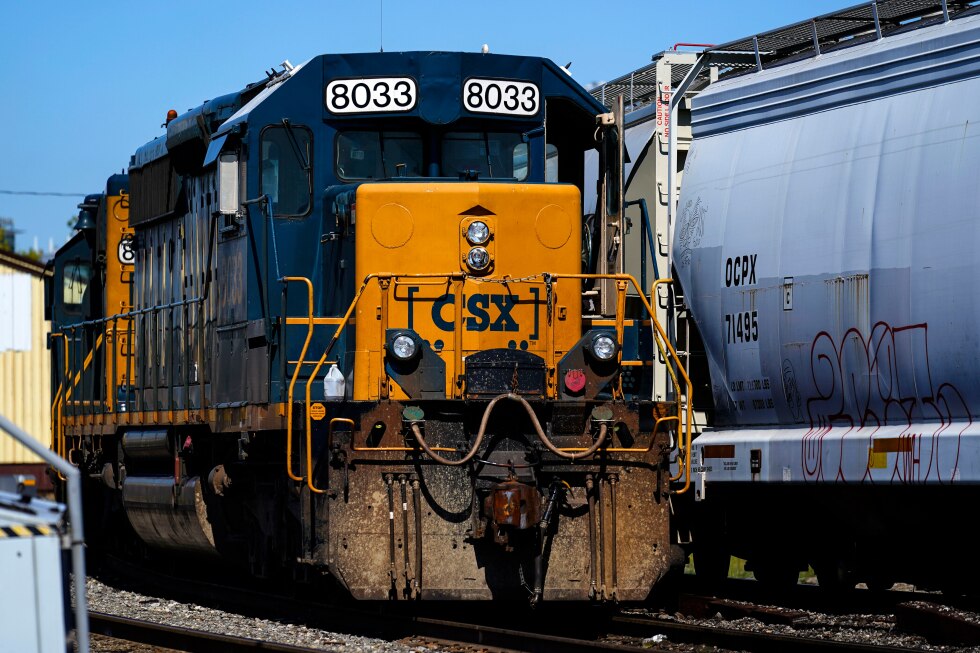
CSX Corporation reported a 2% drop in fourth-quarter profit on Thursday as the railroad contended with weak demand and absorbed severance costs from layoffs implemented by new CEO Steve Angel last fall.
The Jacksonville, Florida-based freight rail giant posted earnings of $720 million, or 39 cents per share, down from $733 million, or 38 cents per share, in the same period a year earlier. Revenue declined 1% to $3.51 billion.
Approximately $50 million in one-time costs reduced profits by 2 cents per share. Excluding these expenses, the results would have aligned with analysts’ expectations of 41 cents per share, according to FactSet Research.
“This has been a challenging year for CSX and for our industry overall, with subdued demand and limited growth opportunities,” Angel acknowledged in the quarterly earnings call.
The railroad industry faces significant transformation with Union Pacific’s proposed $85 billion acquisition of Norfolk Southern looming on the horizon. If approved, the merger would create a transcontinental railroad giant controlling nearly half of all U.S. freight rail traffic and potentially shortening delivery times by more than a day by eliminating handoffs between railroads in the central United States.
Angel downplayed immediate concerns about the potential merger, noting that the Surface Transportation Board hasn’t yet begun its formal review. Industry analysts widely believe that CSX and BNSF Railway would face a competitive disadvantage if the deal proceeds. For now, CSX is focusing on improving delivery times through cooperative agreements rather than pursuing its own merger.
Looking ahead to 2024, Angel projected modest economic growth amid persistent market uncertainty, forecasting only low single-digit revenue growth for CSX. The railroad has withdrawn previously established performance targets for 2027, signaling a more cautious outlook.
“The focus is just making sure that we can be as competitive as we can. But at the end of the day, we can create value by running CSX better every day,” Angel emphasized.
The fourth quarter brought operational improvements after CSX completed two major infrastructure projects that had disrupted its network throughout much of 2023. The railroad finished extensive tunnel renovations in Baltimore and completed repairs to infrastructure damaged by Hurricane Helene. These completions helped CSX raise its trains’ average speed to 19.6 mph during the quarter while delivering 87% of shipments on time.
The Baltimore tunnel project represents a strategic advancement, enabling CSX to begin double-stacked container service—hauling metal shipping containers stacked two high—across its network this year. This capability should improve efficiency and capacity on key routes. However, competitor Norfolk Southern announced a similar double-stacked service in the eastern United States earlier this week, potentially diminishing CSX’s competitive advantage.
The railroad industry continues to face headwinds from uneven consumer demand, inflationary pressures, and shifting supply chain patterns. CSX, as one of North America’s largest railroads operating throughout the eastern United States, remains a key barometer for domestic freight movement and industrial activity.
The company’s performance reflects broader economic trends affecting transportation and logistics sectors, with companies throughout the supply chain adapting to persistently challenging market conditions. As interest rates remain elevated and consumer spending patterns evolve, freight railroads like CSX must balance operational efficiency with strategic investments to maintain competitiveness in an increasingly consolidated industry.
Fact Checker
Verify the accuracy of this article using The Disinformation Commission analysis and real-time sources.

9 Comments
The railroad industry is facing significant transformation, and it will be interesting to see how companies like CSX adapt. Efficient and reliable rail transportation is crucial for many sectors.
The railroad industry is a key barometer for the broader economy. The drop in CSX’s profits suggests lingering weakness in shipping demand, which could have wider implications.
Railroad companies like CSX play a vital role in the broader supply chain. It’s concerning to see the industry facing headwinds, but I’m hopeful they can adapt and find ways to remain competitive.
It’s interesting to see how the railroad industry is facing challenges with weak demand and industry consolidation. Curious to see how CSX navigates these headwinds and if they can find new growth opportunities.
The railroad industry is undergoing significant transformation, with the proposed Union Pacific-Norfolk Southern merger. It will be important to monitor how this impacts freight delivery times and competition.
You raise a good point. The proposed merger could significantly reshape the industry landscape, so it will be crucial to see how regulators evaluate the potential impacts on customers and competition.
The severance costs and weak demand seem to have taken a toll on CSX’s bottom line. It will be interesting to see if the new CEO can implement strategies to improve operational efficiency and find new revenue streams.
Layoffs and severance costs are never easy, but it’s understandable that CSX is trying to optimize its operations in the face of challenging market conditions. Curious to see if the changes pay off.
Agreed. Streamlining operations is important, but the human impact of job losses should also be considered. Striking the right balance will be crucial for CSX’s long-term success.