


Listen to the article
The Federal Aviation Administration announced Friday that anti-drone lasers used near the southern border by the U.S. military and Department of Homeland Security are safe and won’t require airport closures, following a comprehensive review triggered by controversial airspace shutdowns in Texas earlier this year.
The FAA and Department of Defense have formalized a new agreement outlining safety precautions they claim will protect air travelers whenever these counter-drone lasers are deployed. However, specific details about these safeguards were not immediately disclosed, and the FAA did not respond to requests for additional information about the agreement’s provisions.
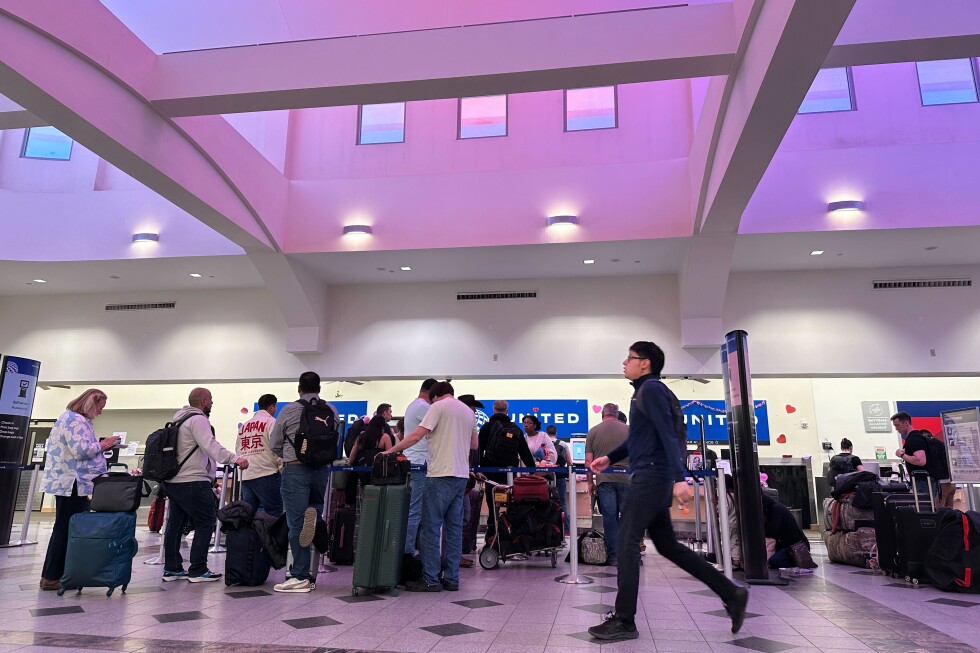
The review was prompted by an incident in early February when airspace around El Paso International Airport was shut down for several hours after another federal agency deployed a counter-drone laser without notifying aviation regulators. The closure caused significant disruption, forcing many travelers to rebook flights and creating logistical challenges for airlines operating in the region.
A second, more limited airspace restriction was implemented later in February following an incident where the military used a laser to shoot down what it described as a “seemingly threatening” drone near Fort Hancock, approximately 50 miles southeast of El Paso. The drone was later identified as belonging to U.S. Customs and Border Protection, highlighting coordination issues between federal agencies.
A demonstration of the counter-drone technology conducted in May at White Sands Missile Range in New Mexico apparently convinced FAA officials that the systems could be operated safely within the national airspace.
“We will continue working with our interagency partners to ensure the National Airspace System remains safe while addressing emerging drone threats,” FAA Administrator Bryan Bedford said in the statement.
The use of these defense systems comes in response to the growing problem of drone activity along the U.S.-Mexico border. Mexican drug cartels frequently deploy unmanned aircraft for drug deliveries and surveillance of law enforcement operations. Officials testified to Congress last summer that more than 27,000 drones were detected within 1,600 feet of the southern border during just the last six months of 2023 alone.
The threat posed by unauthorized drones has taken on greater urgency as armed drones have become increasingly common in global conflicts, including the wars in Ukraine and the Middle East, demonstrating their potential for carrying out devastating attacks.
U.S. Army Brigadier General Matt Ross emphasized the importance of the agreement for national security. “By working hand-in-hand with the FAA and our interagency partners, the Department of War is proving that these cutting-edge capabilities are safe, effective, and ready to protect all air travelers from illicit drone use in the national airspace,” Ross said.
While the announcement signals improved cooperation between federal agencies, some lawmakers remain concerned about safety issues. Democratic senators who raised questions following the February incidents have indicated they need more detailed information before they can be confident in the safety of these counter-drone operations. The FAA has yet to hold a requested briefing for Congress on the matter.
Representative Rick Larsen, the ranking Democrat on the House Transportation and Infrastructure Committee, stressed the importance of continued cooperation, saying, “It is absolutely critical that meaningful interagency collaboration continues — the FAA must be at the table whenever any counter-UAS (Unmanned Aircraft System) is deployed that could impact the safety of our national airspace.”
The federal government is also taking broader measures to address drone threats nationally. It has already allocated more than $250 million to help states prepare drone response capabilities ahead of this summer’s World Cup matches and celebrations for the country’s 250th anniversary. An additional $250 million in grants is scheduled to be distributed later this year to further strengthen the nation’s drone defense infrastructure.
As unauthorized drone activity continues to present evolving security challenges, the coordination between aviation safety regulators and security agencies will remain crucial to balancing security needs with safe air travel operations.
Fact Checker
Verify the accuracy of this article using The Disinformation Commission analysis and real-time sources.

9 Comments
The use of counter-drone lasers along the border is an intriguing technological development. I’m curious to learn more about how this system will be implemented and what specific safeguards are in place to ensure the safety of air travel in the region.
Yes, the details around the safety precautions will be crucial. Transparent communication from the authorities on this issue will be important to build public confidence.
Interesting development on the use of counter-drone lasers along the southern border. I’m curious to see what safety precautions the FAA and DoD have put in place to protect air travel. Hopefully this tech can be used effectively without disrupting commercial flights.
Indeed, the details on the safety measures will be important. Balancing security needs and aviation safety is always a challenge.
The use of counter-drone lasers highlights the growing threat of small drones near critical infrastructure and sensitive areas. I’m glad the authorities are taking steps to address this, but the public will want assurance that air travel won’t be compromised.
Absolutely, drone security is a complex issue that requires a delicate balance. Transparency around the safety protocols will be key to gaining public trust.
This is an interesting step in addressing the growing drone threat along the southern border. The FAA and Pentagon seem to believe the counter-drone lasers can be used safely, but I hope they provide more specifics on the safety protocols to reassure the public.
As the demand for drone technology increases, so too does the need for robust counter-measures. This FAA and Pentagon approval seems like a reasonable step, but I hope the details of the safety precautions are made public to allay any concerns.
Agreed. With the growing prevalence of drones, effective counter-measures are necessary. But the public deserves to understand how their air travel will be protected.