


Listen to the article
A turf war has erupted between Illinois and Indiana over the future home of the Chicago Bears, with both states making competitive bids to host one of the NFL’s most storied franchises.
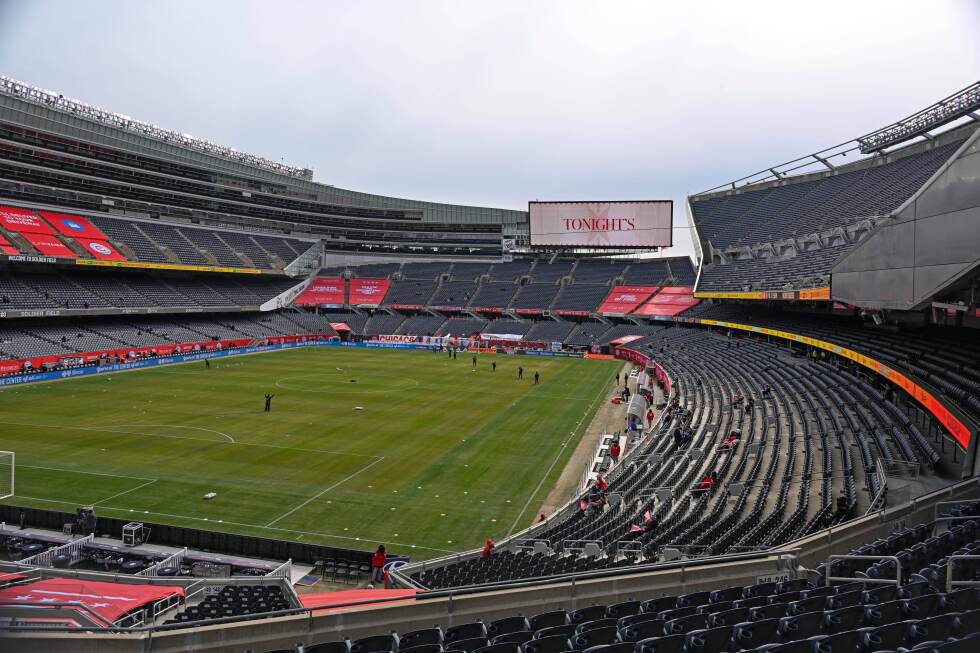
The Bears, who have played at Chicago’s Soldier Field for half a century, are exploring options to leave their historic lakefront home. Indiana lawmakers recently approved legislation to finance and build a domed stadium in Hammond, approximately 25 miles from downtown Chicago, in an aggressive attempt to lure the team across state lines.
Illinois has countered with its own legislative package that would provide substantial tax breaks to “megaprojects” of at least $100 million. This would encompass the Bears’ proposal to develop a complex in Arlington Heights, a northwest Chicago suburb located a similar distance from Soldier Field as the proposed Hammond site.
Critics of the Illinois plan point to the state’s already high property taxes and note that taxpayers are still paying off hundreds of millions in debt from Soldier Field’s renovation two decades ago.
The Chicago Bears franchise carries significant cultural and economic weight in the region. Founded in Decatur, Illinois in 1920 and based in Chicago for 105 years, the team is one of only two remaining NFL founding members. With nine championships (including one Super Bowl victory), the Bears rank second only to the rival Green Bay Packers in NFL titles. Forbes values the franchise at approximately $8.9 billion, placing it among the most valuable teams in the league.
The team’s desire to leave Soldier Field stems from several practical limitations. With just 61,500 seats, it’s the smallest stadium in the NFL. Unlike many NFL franchises, the Bears have always rented their facilities – first at Wrigley Field (1921-1970) and then at Soldier Field, which is maintained by the Chicago Park District.
Team ownership has long expressed interest in owning their stadium, which would give them control over operations, scheduling, and revenue streams from tickets, concessions, parking, and naming rights. Additionally, Soldier Field’s open-air design limits its use during Chicago’s harsh winters and prevents it from hosting marquee indoor events like Super Bowls, NCAA Final Fours, or major entertainment spectacles.
The interstate competition has intensified existing cultural and political tensions between Democratic-leaning Chicago and more conservative Indiana. These divisions deepened last year when Indiana established a commission to study potential boundary changes that would incorporate some central Illinois counties whose voters have approved secession from the Chicago region.
The Bears’ relocation saga has unfolded over several years. In 2023, the team purchased a 326-acre former horse racing track in Arlington Heights for approximately $200 million, envisioning a $5 billion development with a domed stadium and surrounding campus featuring housing, hotels, and retail space. By 2024, the Bears had pivoted to offering a $5 billion plan for an enclosed stadium adjacent to Soldier Field, but this proposal gained little traction with Illinois lawmakers.
Indiana’s proposal establishes the Northwest Indiana Stadium Authority to finance, construct, and lease a domed stadium near Wolf Lake in Hammond. Signed into law by Governor Mike Braun on February 26, the plan would require the Bears to agree to a 35-year lease. Construction costs would be covered by state borrowing, repaid through increased local hospitality taxes.
Illinois’ competing legislation would freeze property taxes at pre-construction values for developments of at least $500 million (or as low as $100 million depending on job creation) for up to 45 years. Developers would make negotiated annual payments in lieu of taxes to local governments and receive sales tax exemptions on building materials for up to 15 years.
Opponents of the Illinois plan argue it would shift tax burdens to homeowners and other businesses. Governor JB Pritzker has defended the proposal, stating it would encourage development on underutilized land while ensuring increased revenue for local governments.
Meanwhile, Illinois taxpayers continue to pay for Soldier Field’s last major renovation. The 2001 project cost $587 million, with public financing covering $399 million. The remaining debt with interest stands at $467 million, according to state forecasters.
The Bears’ current lease at Soldier Field runs through 2033, with an annual payment of $7 million. Breaking this agreement would cost the team a penalty of $10.5 million for each remaining year on the lease.
Fact Checker
Verify the accuracy of this article using The Disinformation Commission analysis and real-time sources.

12 Comments
This is a high-stakes game of chicken between the two states. While Illinois may have the advantage of the Bears’ long history in Chicago, Indiana’s offer of a brand new domed stadium could be hard to pass up, especially if the taxpayer-funded deal is lucrative enough.
It will be fascinating to see how this plays out. The Bears are such an iconic franchise, so both states will be pulling out all the stops to secure their future home.
The tug-of-war between Illinois and Indiana over the Chicago Bears is an interesting development. Fans will be keen to see where the historic franchise ends up – Soldier Field holds a lot of nostalgia, but a new state-of-the-art stadium could also be appealing.
Agreed, the decision will likely come down to which state can offer the best financial package to the Bears organization. Infrastructure and fan access will also be key factors.
While I understand Illinois’ desire to keep the Bears, I’m not sure taxpayer-funded incentives are the best approach. Perhaps the team should consider privately financing a new stadium, or at least requiring a larger contribution from the state. Fans deserve a first-class facility, but not at the expense of other public priorities.
That’s a fair perspective. Taxpayer subsidies for professional sports teams are always controversial. The Bears should explore all options to ensure a win-win outcome for the franchise and the community.
This is a high-stakes game of chicken between the two states. While Illinois may have the advantage of the Bears’ long history in Chicago, Indiana’s offer of a brand new domed stadium could be hard to pass up, especially if the taxpayer-funded deal is lucrative enough.
It will be fascinating to see how this plays out. The Bears are such an iconic franchise, so both states will be pulling out all the stops to secure their future home.
From a business perspective, the Bears must be weighing the pros and cons of each location carefully. Soldier Field has sentimental value, but a new stadium in Indiana could offer more revenue opportunities. This is a tough decision with major implications for the team and its fans.
You raise a good point. The Bears will need to balance their emotional ties to Chicago with the practical realities of securing the best long-term deal for the franchise.
From a business perspective, the Bears must be weighing the pros and cons of each location carefully. Soldier Field has sentimental value, but a new stadium in Indiana could offer more revenue opportunities. This is a tough decision with major implications for the team and its fans.
You raise a good point. The Bears will need to balance their emotional ties to Chicago with the practical realities of securing the best long-term deal for the franchise.