


Listen to the article
A cloud of uncertainty hangs over Cuba following U.S. President Donald Trump’s recent comments suggesting “imminent action” against the island’s government, leaving many Cubans anxiously wondering what might come next.
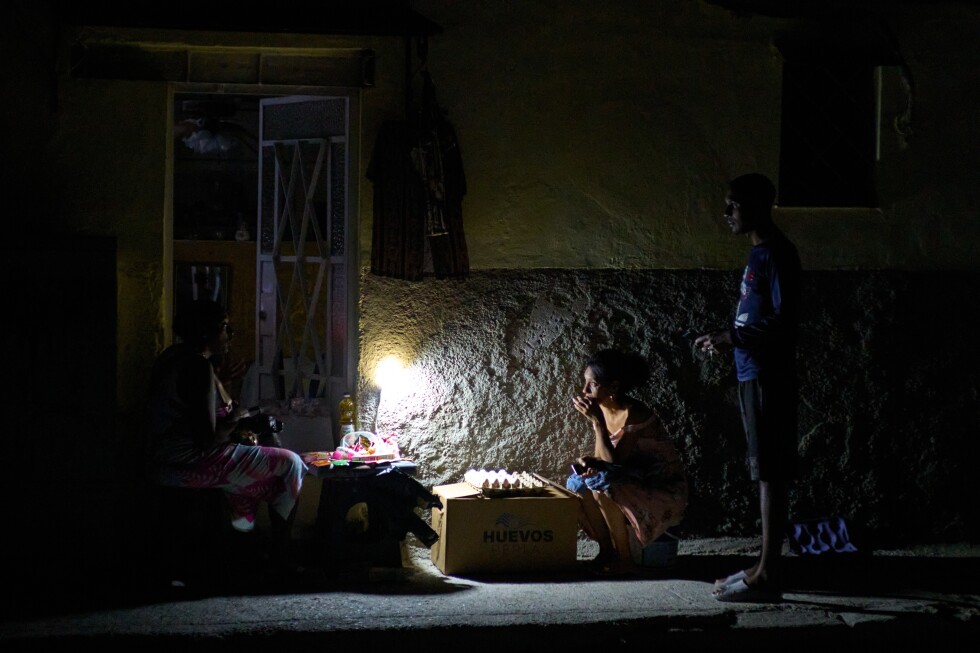
The escalating tensions between Washington and Havana have intensified as Trump’s administration has employed aggressive measures to cut off Cuba from vital oil shipments, aiming to force regime change. The resulting energy crisis has devastated everyday life for ordinary Cubans, with island-wide blackouts, severe gasoline shortages, crippled healthcare services, and drastically reduced public transportation.
“Cuba is waiting for Trump and Marco Rubio, because we can’t wait any longer. It’s too much — there is a lot of repression, there is a lot of hunger,” said Matilde Visoso, a 64-year-old homemaker caring for a sick daughter. “Cuba is in tears.”
According to anonymous U.S. officials familiar with sensitive diplomatic discussions, the Trump administration is seeking the removal of President Miguel Díaz-Canel while conducting negotiations with the Cuban government. Secretary of State Marco Rubio has echoed these sentiments, stating that Cuba’s socialist economic model needs to “change dramatically.”
The pressure campaign against Cuba follows the administration’s January military operation that captured then-Venezuelan President Nicolás Maduro and the launch of joint U.S.-Israeli military strikes against Iran in late February, suggesting a broader pattern of assertive foreign policy actions.
President Díaz-Canel has responded defiantly to Trump’s statements, writing on social media that the U.S. government “publicly threatens” Cuba’s leadership almost daily with overthrow, but any aggression “will clash with an impregnable resistance.” The Cuban government also condemned Costa Rica’s decision to close its embassy in Havana, characterizing it as an “arbitrary decision” made under American pressure to isolate the island.
Not all Cubans share the same perspective on the unfolding situation. Jesús García, a 62-year-old doctor, expressed skepticism about the possibility of U.S. intervention, saying, “Americans can say whatever they want. The ones who decide what is done here in Cuba are the Cuban people.”
What unites most Cubans, however, is a profound sense of uncertainty and frustration. While many have grown accustomed to adapting to chronic crises, the current situation has pushed many to a breaking point as they demand answers from their increasingly cornered government.
Small relief has come in the form of aid shipments from activist groups and allied governments like Mexico. Cuban state television reported that five tons of medical equipment, solar panels, and other supplies recently arrived on the island. However, these shipments represent only a fraction of what is needed and fail to address the fundamental energy crisis.
María del Carmen Companioni, 51, summed up the sentiment of many ordinary Cubans caught between the political standoff: “Really, all of this has people very alarmed and in a bad state. No one knows what is going to happen.”
As blackouts persist and basic necessities remain scarce, Cubans are left to navigate not only their immediate survival needs but also the geopolitical uncertainty that could reshape their nation’s future.
Fact Checker
Verify the accuracy of this article using The Disinformation Commission analysis and real-time sources.

10 Comments
The energy crisis in Cuba is truly heartbreaking. While the government’s actions are concerning, the US must be very cautious about any potential intervention. Prioritizing humanitarian aid and supporting the Cuban people should be the focus, not regime change.
Well said. The situation is extremely delicate and any misstep could lead to disastrous consequences. Diplomacy and a nuanced approach are crucial at this time.
The US needs to tread carefully here. Regime change is a dangerous path that often leads to more instability and suffering. I hope they can find a way to provide humanitarian aid and support for the Cuban people without escalating tensions further.
Agreed, the focus should be on alleviating the energy crisis and improving conditions for ordinary Cubans, not pursuing regime change. A measured, diplomatic approach is critical.
The situation in Cuba is deeply concerning, with the energy crisis causing immense hardship for the people. However, any US intervention must be approached with great caution to avoid further destabilization. The priority should be on providing humanitarian aid and supporting a peaceful, diplomatic resolution.
I agree, the wellbeing of the Cuban people should be the top priority. Diplomacy and international cooperation will be crucial in finding a constructive way forward.
This is a worrying development. The Cuban people are clearly facing immense hardship, but any unilateral action by the US risks making the situation even worse. I hope all sides can come together to find a peaceful solution that puts the needs of Cubans first.
This is a very delicate situation unfolding in Cuba. While the energy crisis and repression are concerning, any intervention by the US must be handled carefully to avoid further destabilization. I hope all parties involved can find a peaceful resolution that prioritizes the wellbeing of the Cuban people.
I agree, the situation is complex and any action must be considered with great caution. Dialogue and diplomacy should be the priority to address the challenges Cubans are facing.
This is a complex geopolitical issue with significant implications for the Cuban people. I hope the US and Cuban governments can find a way to engage constructively and address the pressing needs of Cubans without resorting to confrontation or unilateral action.