


Listen to the article
West African Cocoa Farmers Abandon Crops as Market Crisis Deepens
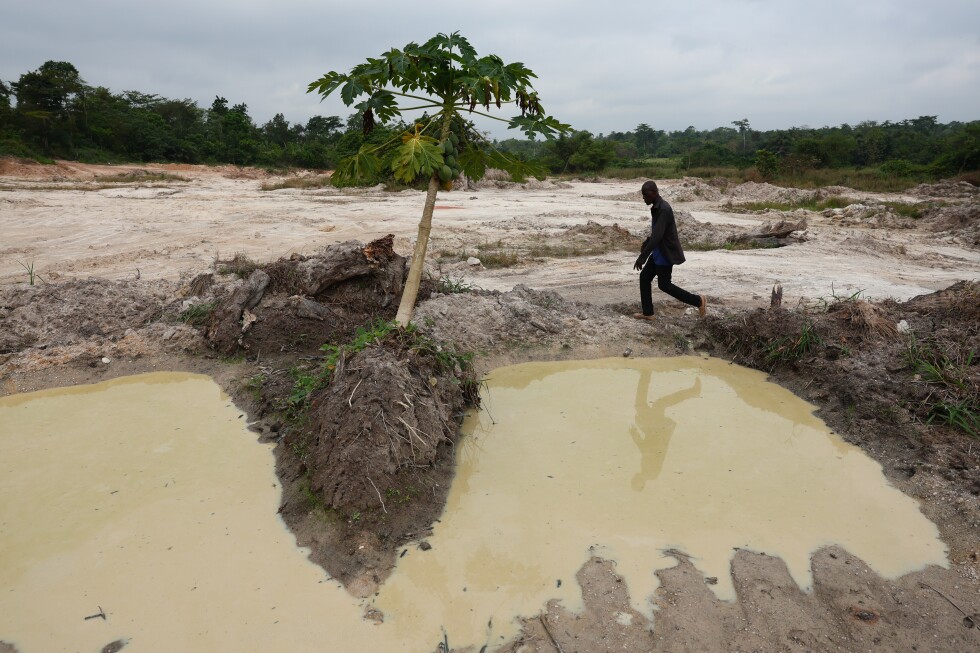
In the lush cocoa-growing region of Kona, Ghana, 52-year-old Manu Yaw Fofie faces an agonizing decision. Born into a family of cocoa farmers, the land he inherited should have secured his livelihood. Instead, collapsing cocoa prices have forced him to lease portions of his farm to illegal sand miners—a decision that will permanently destroy the soil’s fertility.
“If I keep this cocoa farm for the next 10 years, I would die a poor man,” Fofie said, explaining how his annual yield has plummeted from 300 bags during better years to just 50 bags expected in 2025.
Fofie’s predicament reflects a broader crisis unfolding across West Africa’s cocoa belt. Ghana and Ivory Coast, which together produce nearly 70% of the world’s cocoa supply, are witnessing unprecedented disruption in their signature export industry.
The crisis stems from a dramatic boom-and-bust cycle in global cocoa markets. Futures contracts soared to historic highs of over $12,000 per metric ton in 2024, only to crash to around $4,000 as supply outpaced demand. This market volatility has left warehouses in both countries filled with rotting cocoa beans while farmers who sold their harvest to government agencies remain unpaid for months.
Ivory Coast, the world’s leading producer, recently slashed the price it pays farmers by more than half to 1,200 CFA ($2.13) per kilogram for the 2026 season, after being forced to purchase excess supply earlier this year. Similarly, Ghana cut its fixed price by 28% to 41,392 cedis ($3,881) per metric ton in January, hoping to attract international buyers.
For farmers, these price reductions make cocoa cultivation barely viable. “Accepting the current price means my son will have to drop out of school,” said Mercy Amponsah, a 50-year-old Ghanaian cocoa farmer who traveled to Accra to protest the cuts.
The cocoa industry’s importance to these economies cannot be overstated. Cocoa exports represent 40% of Ivory Coast’s total export revenue and nearly 15% of Ghana’s. Both countries operate systems where government regulators set fixed prices at the beginning of each planting season, with beans sold through licensed buyers to shield farmers from market fluctuations.
However, this protective framework faltered when global prices collapsed. Edward Karaweh, former general secretary of Ghana’s General Agricultural Workers Union, noted that authorities were unprepared for a crisis of this magnitude. “Preparation allows you to mitigate the crisis. It is not that you prevent the crisis altogether,” he explained.
Climate change has compounded the farmers’ difficulties. In Ivory Coast, François N’Gbin pointed to blackened, dried-up cocoa pods on his trees, damaged by disease and insufficient rainfall. Like Fofie, he has turned to alternative income sources, renting part of his land to illegal gold miners before eventually obtaining a mining license to avoid legal issues.
“Today, gold is more profitable than cocoa,” N’Gbin said. “We get 1,500 CFA francs ($2.67) per gram of gold, and we’re about to negotiate an increase.”
This shift from cocoa cultivation to mining activities reflects growing desperation among farmers. According to Moussa Koné, president of the Ivorian cocoa farmers’ union, many farmers are leasing their land to gold miners because “cocoa is not selling, but farmers still need money to feed their families.”
The long-term implications of abandoning cocoa production are severe for both individual farmers and the regional economy. Mining activities, particularly unregulated operations, typically render land infertile and cause environmental degradation. Meanwhile, the reduction in cocoa output from West Africa could eventually trigger another cycle of scarcity and price increases in global markets.
While other cocoa-producing regions in South America and Asia have improved their production capacity, West Africa remains the dominant global supplier. Any significant disruption to this supply chain inevitably impacts chocolate manufacturers and consumers worldwide.
As governments scramble to stabilize their cocoa sectors through price adjustments and regulatory reforms, farmers like Fofie and N’Gbin are making difficult choices that will shape the future of West Africa’s agricultural landscape. For many, the golden age of cocoa farming appears to be waning, replaced by more immediately lucrative—but potentially more destructive—alternatives.
Fact Checker
Verify the accuracy of this article using The Disinformation Commission analysis and real-time sources.

15 Comments
This is a heartbreaking situation for cocoa farmers. Collapsing prices and rotting crops are forcing them to make extremely difficult choices that could have long-lasting consequences. More support is clearly needed.
Absolutely. Governments, NGOs, and the private sector must work together to find solutions that protect farmers’ livelihoods and the long-term sustainability of the cocoa industry.
The cocoa crisis is a complex challenge with no easy fixes. Diversifying crops, improving market access, and investing in sustainable farming practices could all play a role in stabilizing the industry.
The cocoa crisis is a sobering reminder of how commodity price volatility can devastate rural livelihoods. Exploring alternative crops and income sources is crucial for building more resilient food systems in West Africa.
Tragic to see cocoa farmers forced to abandon their crops or lease land to illegal miners. This crisis underscores the vulnerability of communities relying on a single cash crop. Innovative solutions are needed to support these farmers and stabilize the industry.
Well said. Governments, NGOs, and the private sector must work together to provide a comprehensive response – from market stabilization to agricultural diversification and sustainable farming practices.
Tough times for West African cocoa farmers. Declining prices and rotting crops are forcing difficult decisions like leasing land to illegal miners. Diversifying crops and finding alternative income sources may be the best path forward.
Agreed, the cocoa market volatility is taking a heavy toll on these farmers. Governments and aid organizations need to provide more support to help them adapt and transition to more sustainable options.
This is a cautionary tale about the dangers of over-reliance on a single commodity. Cocoa farmers in West Africa are facing an impossible choice – abandon their crops or destroy their land. Policymakers must act quickly to support these vulnerable communities.
Agreed. Promoting crop diversification, strengthening cooperatives, and improving access to finance and markets could all help build more resilient agricultural systems in the region.
The cocoa crisis highlights the vulnerability of farmers relying on a single cash crop. Encouraging crop diversification and value-added processing could help build more resilient agricultural communities in West Africa.
Excellent point. Diversification reduces risk and creates new economic opportunities. Investing in local cocoa processing facilities could also boost incomes for smallholder farmers.
The cocoa crisis highlights the need for greater investment in sustainable agriculture and value-added processing in West Africa. Empowering farmers to diversify their crops and incomes could be a game-changer.
Abandoning cocoa to lease land to sand miners is an incredibly difficult choice, but understandable given the dire economic situation. Sustainable solutions are needed to stabilize the cocoa market and support these vulnerable communities.
Agreed, this is a complex issue with no easy answers. Strengthening farmer cooperatives, improving access to finance, and promoting sustainable practices could all help address the root causes.