


Listen to the article
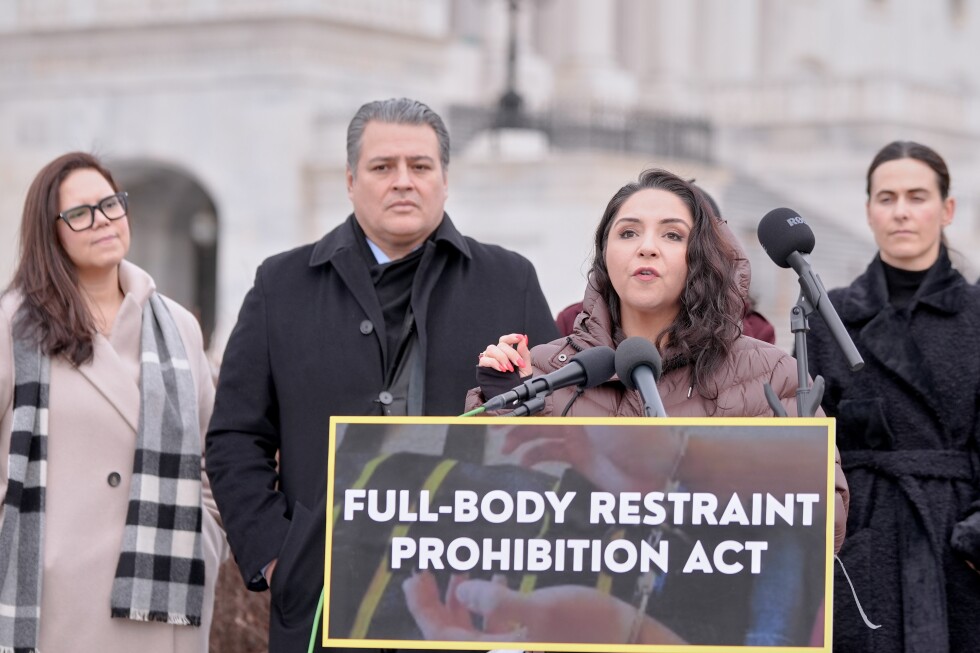
New legislation introduced in the House on Wednesday aims to prohibit the Department of Homeland Security from using a controversial full-body restraint device known as the WRAP, following revelations of its potentially dangerous application on immigration detainees.
The “Full-Body Restraint Prohibition Act,” sponsored by Representative Delia Ramirez (D-Illinois), would not only ban future purchases of the device but also establish oversight and reporting requirements for restraint practices within DHS agencies.
“The WRAP fuels destruction in our communities and human suffering,” Ramirez stated when announcing the legislation. “This legislation is an additional step to end the pain and violence caused by DHS.”
The bill comes in response to an Associated Press investigation that documented numerous instances where U.S. Immigration and Customs Enforcement (ICE) officials used the WRAP on detainees during deportation flights since 2020, sometimes keeping individuals restrained for hours at a time.
Manufactured by California-based Safe Restraints Inc., the WRAP has become the focus of several federal lawsuits alleging that improper use amounts to punishment or even torture. Civil rights advocates have expressed alarm that ICE isn’t properly tracking the device’s use as mandated by federal regulations for force incidents, making it difficult to determine how many people have been subjected to these restraints.
The AP investigation also identified twelve fatal cases over the past decade where local police departments or jail officials used the WRAP and subsequent autopsies determined that “restraint” contributed to the deaths.
Federal purchasing records reveal that DHS has spent $268,523 on these devices since late 2015, when procurement began during the Obama administration. However, approximately 91% of that spending occurred during the Trump administrations, with contracts extending through June 2025.
Charles Hammond, CEO of Safe Restraints Inc., defended the product in a statement, saying the WRAP was designed as a “safer, more humane, pain-free alternative to other restraint methods.” Hammond further cautioned that “eliminating The WRAP from these situations would not lead to safer outcomes; it would force the return to alternative restraints and tactics proven to cause pain, injury and even fatalities.”
The manufacturer confirmed creating a modified version specifically for ICE that included alterations to allow individuals to remain restrained during extended flights and bus transportation. However, the AP investigation found that ICE officials were deploying the device in situations far less severe than those recommended by the manufacturer.
Multiple detainees interviewed by journalists reported being placed in the WRAP after already being shackled, claiming officers used the additional restraint as punishment or intimidation for requesting attorney access or expressing fears about deportation to countries they had fled due to violence or torture.
When presented with these allegations, Hammond acknowledged that if people were being restrained while merely engaging in verbal protest rather than violent behavior, such use would be improper.
Internal concerns about the WRAP’s use had already been raised within DHS itself. A 2023 report by the department’s civil rights division expressed misgivings about the device, partly due to reports of deaths involving its use by local law enforcement agencies. Despite these internal warnings, ICE continued utilizing the restraint system.
The legislative push gained additional momentum when, following the AP’s October investigation, eleven Democratic senators sent a letter to senior immigration officials citing the reporting and expressing “serious human rights concerns” about ICE’s use of full-body restraints on deportation flights.
DHS has not responded to detailed questions from the AP regarding the WRAP’s use nor provided comment on the proposed legislation.
If enacted, the bill would represent a significant shift in detention and deportation practices, addressing concerns about both transparency and humane treatment of individuals in immigration custody.
Fact Checker
Verify the accuracy of this article using The Disinformation Commission analysis and real-time sources.

16 Comments
While the WRAP device may serve a legitimate security purpose, the reports of its misuse and potential to cause harm are alarming. This bill to restrict its application appears to be a measured response to protect detainee rights.
Agreed, finding the right balance between security needs and humane treatment is crucial. Careful implementation and ongoing monitoring will be key to the success of this legislation.
Prohibiting the use of full-body restraints except in the most extreme circumstances is a prudent move. Detainees deserve to be treated with basic dignity, even if they are in custody. Looking forward to seeing how this plays out.
Absolutely, protecting the rights and wellbeing of all individuals in custody should be a top priority. This legislation seems like a reasonable step in that direction.
Prohibiting the use of full-body restraints except in the most extreme circumstances is a prudent move. Detainees deserve to be treated with basic dignity, even if they are in custody. Looking forward to seeing how this plays out.
Agreed, the key will be in the implementation and ensuring proper training and accountability measures are in place. Protecting both detainee rights and officer safety is crucial.
Any legislation aimed at protecting vulnerable immigration detainees from excessive force or mistreatment deserves serious consideration. The details of this bill will be important to evaluate its potential effectiveness.
Agreed, this is a sensitive topic that requires a measured, evidence-based approach. Oversight and transparency will be key to ensuring the safety and dignity of those in custody.
While the WRAP device may have a legitimate security purpose, the reported abuses are concerning. This bill seems like a reasonable step to establish clear protocols and prevent unnecessary harm to detainees.
Striking the right balance between security needs and human rights is always a challenge in these situations. Hopefully this legislation can help find that middle ground.
The revelations around the use of the WRAP device on immigration detainees are quite disturbing. This legislation seems like a reasonable response to address those concerns and prevent future abuses.
Absolutely, any use of force or restraint devices on vulnerable populations needs to be heavily scrutinized. Oversight and clear guidelines are vital to upholding human rights.
Interesting to see this legislation proposed to restrict the use of full-body restraint devices by DHS. Protecting the rights and dignity of immigration detainees is important, though the practical implications will be worth following.
Agreed, oversight and reporting requirements could help ensure these devices are only used when absolutely necessary and in a humane manner.
The WRAP device seems concerning, especially reports of prolonged use causing suffering. Glad to see lawmakers taking action to address potential abuses. Proper restraint protocols are needed to balance security and human rights.
Definitely a complex issue with valid concerns on both sides. Hopefully this legislation can find the right balance through clear guidelines and accountability measures.