


Listen to the article
China’s Premier Warns of Tariffs’ “Severe Blow” to Global Economy as Trade Surplus Soars
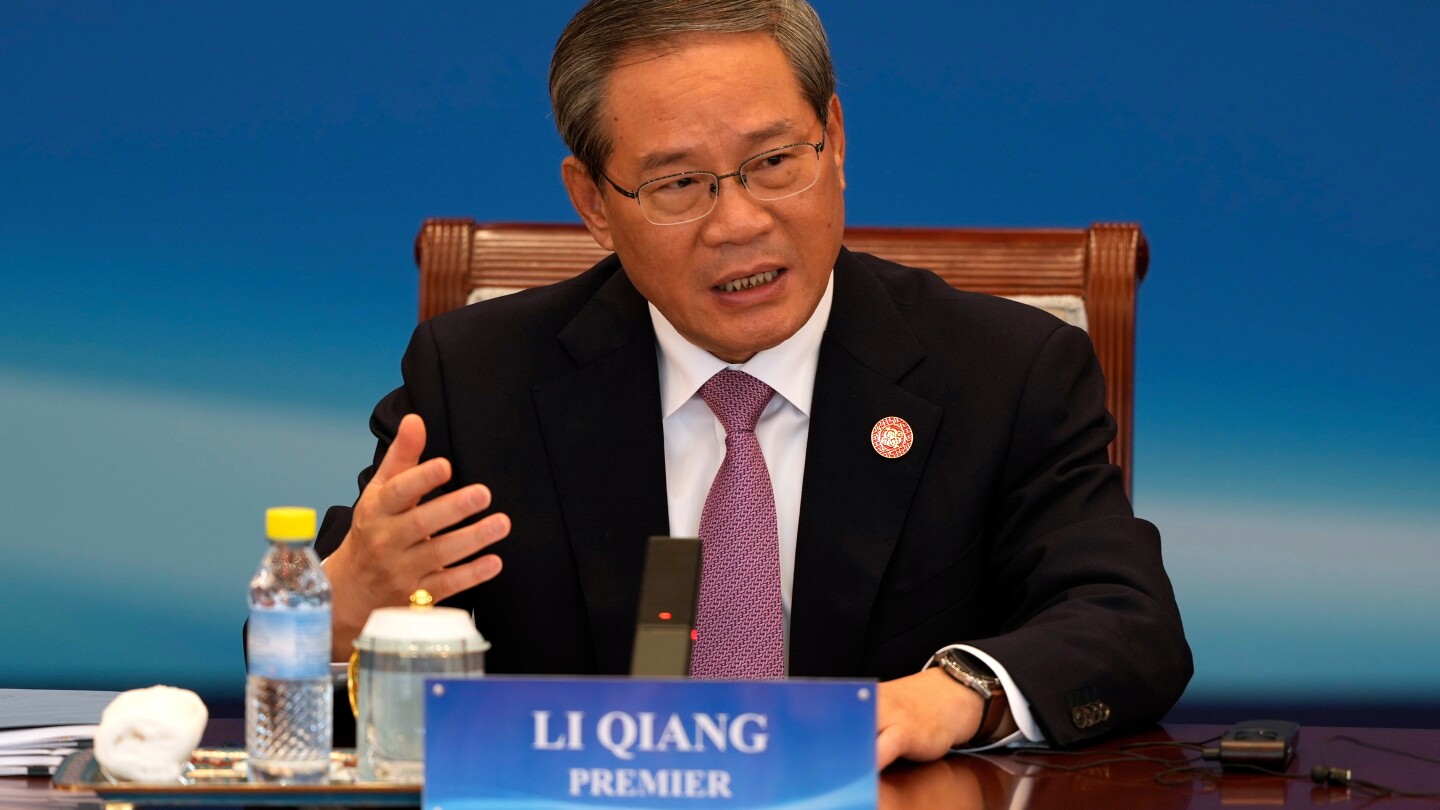
Chinese Premier Li Qiang delivered a pointed critique of rising global protectionism Tuesday, claiming that increased tariffs have inflicted a “severe blow” to the world economy, even as China’s own trade surplus has surpassed $1 trillion this year.
Speaking at a forum of international organizations in Beijing, Li avoided directly mentioning U.S. President Donald Trump or his administration’s tariff policies, but his message was clear. “Starting from the beginning of this year, we’ve seen the stick of tariffs being wielded around the world with growing restrictive measures on the economy and trade,” Li told representatives from the International Monetary Fund, World Bank, and World Trade Organization.
“As the situation has unfolded, the damaging consequences of tariffs hurting both others and oneself have become increasingly evident, and calls from all sides to uphold free trade have grown ever stronger,” the premier added.
Li’s comments came as Chinese leaders gathered for their annual Central Economic Work Conference, a key planning meeting that follows October discussions focused on China’s economic strategy for 2026-2030. The meetings underscore China’s continuing ambition to maintain its global manufacturing dominance while building a more resilient domestic economy driven by consumer spending and technological advancement.
Data released Monday by Chinese customs authorities revealed the uneven impact of international trade tensions on China’s economy. While exports to the United States plunged 29% in November compared to the previous year—marking the eighth consecutive month of decline—China’s overall exports rose 5.9% year-on-year. This divergence highlights China’s success in redirecting exports to alternative markets amid U.S. trade restrictions.
The resulting trade surplus has already exceeded $1 trillion in 2024, an extraordinary figure that could further inflame tensions with trading partners concerned about imbalances. This surplus comes despite multiple rounds of tariffs imposed by the Trump administration in recent years, suggesting the limitations of such measures in addressing trade imbalances.
Some relief may be on the horizon, however. Trade frictions between Beijing and Washington eased slightly after Trump and Chinese President Xi Jinping met in late October during a regional economic summit in South Korea. During those talks, the two leaders agreed to roll back certain retaliatory measures and extend a truce for one year, potentially creating space for more constructive engagement.
In his forum remarks, Li also emphasized the importance of “collaborative innovation” in technology, calling for an “open mind” and greater cooperation. This emphasis on technological development comes as investments in this sector are outpacing overall investment in China, reflecting Beijing’s strategic prioritization of high-tech industries amid global competition for technological supremacy.
China’s recent economic performance shows some signs of strain. The economy grew at a 4.8% annual pace in the last quarter, the slowest rate in a year. Despite this deceleration, most economists expect China to achieve its official 2024 growth target of about 5%, buoyed significantly by strong export performance.
The premier’s comments highlight the complex reality facing global trade. While China publicly advocates for free trade principles and criticizes protectionism, it continues to benefit from significant trade surpluses and maintains its own restrictions on foreign businesses in many sectors. Meanwhile, Western nations increasingly view economic security through a national security lens, particularly regarding advanced technologies and critical supply chains.
As the global economy navigates this period of realignment, the interplay between China’s export-driven growth model and increasing protectionist measures worldwide will likely remain a defining feature of international economic relations in the coming years.
Fact Checker
Verify the accuracy of this article using The Disinformation Commission analysis and real-time sources.

9 Comments
The premier’s warnings about the damaging effects of tariffs echo concerns expressed by many economists. Unilateral protectionism often backfires, hurting domestic consumers and businesses as much as foreign competitors. Hopefully constructive dialogue can find a better path forward.
The trade surplus highlights China’s economic strength, but the premier rightly notes the damaging effects of rising protectionism. Tariffs hurt consumers and businesses globally – we need to find ways to promote fair, open trade that benefits all.
The premier raises valid points about the downsides of protectionism. However, the US-China trade imbalance is a longstanding concern that will require concessions from both sides to address. Hopefully cooler heads can prevail and find a mutually beneficial path forward.
China’s massive trade surplus is clearly a source of tension, but the premier makes a valid point about the collateral damage from tariffs. Policymakers need to find ways to promote fair, mutually beneficial trade without resorting to counterproductive protectionist measures.
The premier’s remarks highlight the delicate balance between national economic interests and maintaining an open global trading system. Reducing trade barriers while addressing underlying imbalances is a challenge facing leaders on all sides of these disputes.
It’s not surprising the premier would criticize the impact of tariffs, given China’s massive trade surplus. But he makes a fair point – protectionism ultimately hurts consumers and businesses worldwide. Diplomacy and pragmatism will be key to resolving these trade disputes.
China’s huge trade surplus is undoubtedly a source of tension. But the premier is right that tariffs have inflicted collateral damage on the global economy. Policymakers need to find a smarter, more balanced approach to managing these complex trade relationships.
China’s massive trade surplus is concerning, though the premier’s criticism of tariffs is understandable. Finding the right balance between trade, jobs, and geopolitical tensions will be an ongoing challenge for policymakers worldwide.
Agreed, it’s a complex issue without easy solutions. Constructive dialogue and compromise will be key to resolving these trade disputes in a way that works for all parties.