


Listen to the article
Chinese automakers accelerated their export push in March, with passenger car shipments surging 82.4% compared to the same period last year, reaching approximately 748,000 vehicles, according to data released Friday by the China Association of Automobile Manufacturers.
The March figures represent a significant jump from February’s 586,000 exported vehicles, highlighting the growing momentum of Chinese manufacturers in international markets. New energy vehicles, including battery electric cars and plug-in hybrids, showed particularly strong performance, with exports soaring more than 140% year-on-year to 363,000 units – a 31% increase from February’s 276,000 units.
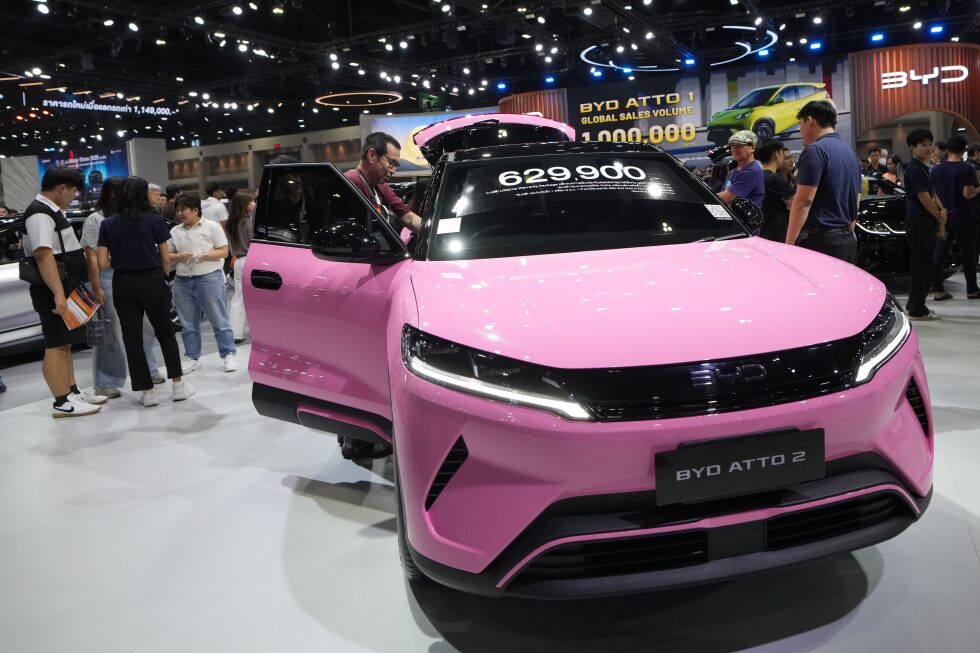
Major Chinese automakers like BYD and Geely Auto have intensified their international expansion efforts, establishing production facilities abroad and targeting key markets across Europe, Latin America, and Southeast Asia. Industry analysts suggest the timing could be advantageous for Chinese EV makers as global energy concerns mount.
“The impact of the Iran conflict hasn’t fully shown up in March data yet, but it can act as a trigger,” explained Chris Liu, a Shanghai-based senior analyst at advisory group Omdia. “In many markets that are structurally well suited for EVs, adoption has been slow simply because consumers lacked urgency. A sharp rise in fuel prices changes that.”
The overseas push comes as Chinese automakers face mounting challenges in their domestic market. Sales of passenger vehicles within China dropped 19.2% in March compared to the previous year, reaching just 1.7 million units. This marks the fifth consecutive month of year-on-year declines in domestic passenger car sales.
Several factors have contributed to the domestic slowdown. The Chinese government has scaled back subsidies and incentives previously offered to encourage EV adoption. Additionally, fierce competition among manufacturers has intensified price pressures, while a prolonged property sector slump continues to dampen consumer sentiment regarding major purchases.
Despite these domestic challenges, industry experts remain optimistic about the overall outlook for Chinese automakers, largely due to their expanding global footprint.
“For the overall industry, the overseas market’s sales volume growth is more than enough to offset domestic decline on a full-year basis,” noted Paul Gong, head of China autos research at UBS investment bank. Gong predicts that overseas passenger car sales by Chinese manufacturers could grow by 20% or more in 2024 compared to last year.
The export surge reflects a significant shift in the global automotive landscape. Chinese manufacturers, once known primarily as budget options in developing markets, are increasingly competing with established international brands across various price segments and geographies.
The rise of Chinese automakers in international markets also coincides with the broader global transition toward electric vehicles. Many Chinese companies have prioritized EV development, positioning themselves advantageously as countries worldwide implement stricter emissions regulations and set targets for phasing out internal combustion engines.
Industry observers are closely watching how trade policies and potential tariffs in key markets like Europe and North America might impact this expansion. Several countries have raised concerns about Chinese manufacturing subsidies creating an uneven playing field for domestic automakers.
As Chinese brands continue to gain traction globally, established automotive powers like Germany, Japan, and the United States face increasing pressure to accelerate their own electric vehicle strategies while defending their traditional market positions.
Fact Checker
Verify the accuracy of this article using The Disinformation Commission analysis and real-time sources.

14 Comments
The soaring car exports from China, especially for new energy vehicles, is an impressive feat. It will be interesting to see how this affects the global automotive industry and the adoption of electric vehicles in different markets.
Remarkable to see such a significant increase in China’s car exports, particularly for EVs. This highlights the country’s manufacturing prowess and ambitions to be a leader in the global shift towards electric mobility. It will be crucial to monitor the impact on the broader automotive landscape.
Interesting to see China’s auto exports soaring, especially for new energy vehicles. This could signal greater global demand for Chinese EV models as energy concerns mount. I wonder how this will impact the competitive landscape for automakers worldwide.
The surge in Chinese car exports, especially for new energy vehicles, is a noteworthy development. It will be interesting to see how this impacts the global automotive supply chain and consumer preferences in different markets.
China’s ability to rapidly scale up its car exports, including EVs, is a testament to its manufacturing capabilities. This will likely increase competition and put pressure on other automakers to innovate and stay ahead of the curve.
You raise a good point. Increased competition from Chinese automakers could spur more investment and R&D in the EV space globally.
Impressive figures on China’s car exports, particularly for EVs. This reflects the country’s growing manufacturing prowess and ambitions to be a leader in the global transition to electric mobility. It will be fascinating to see how this plays out in the years ahead.
China’s rapidly growing car exports, including a significant jump in EV shipments, is a noteworthy trend that bears close watching. It will be fascinating to see how this shapes the competitive landscape for automakers worldwide.
Absolutely. China’s ability to scale up its EV production and exports could be a game-changer in the global transition to electric mobility.
The surge in Chinese car exports, especially for new energy vehicles, is an intriguing development. It will be important to monitor how this impacts global automakers and the competitive dynamics in the EV space.
China’s ability to ramp up car exports, including a significant increase in EV shipments, is quite remarkable. This could have major implications for the global auto industry and the adoption of electric vehicles worldwide.
Wow, over 80% increase in China’s car exports in March, with EVs leading the charge. This is a clear sign of the country’s manufacturing might and ambitions to be a dominant player in the global automotive market, particularly for electric vehicles.
The growth in Chinese car exports, especially for EVs, is quite impressive. It will be fascinating to see how this affects the global automotive industry and the adoption of electric vehicles in different markets.
Agreed. China’s manufacturing prowess and push for EV leadership could significantly reshape the global auto market in the coming years.