


Listen to the article
Beijing imposed sanctions on 20 U.S. defense-related companies and 10 executives on Friday, a retaliatory move that comes one week after Washington announced a major arms sale to Taiwan worth more than $10 billion.
The sanctions include freezing the companies’ assets in China and prohibiting individuals and organizations from conducting business with them, according to a statement from the Chinese foreign ministry.
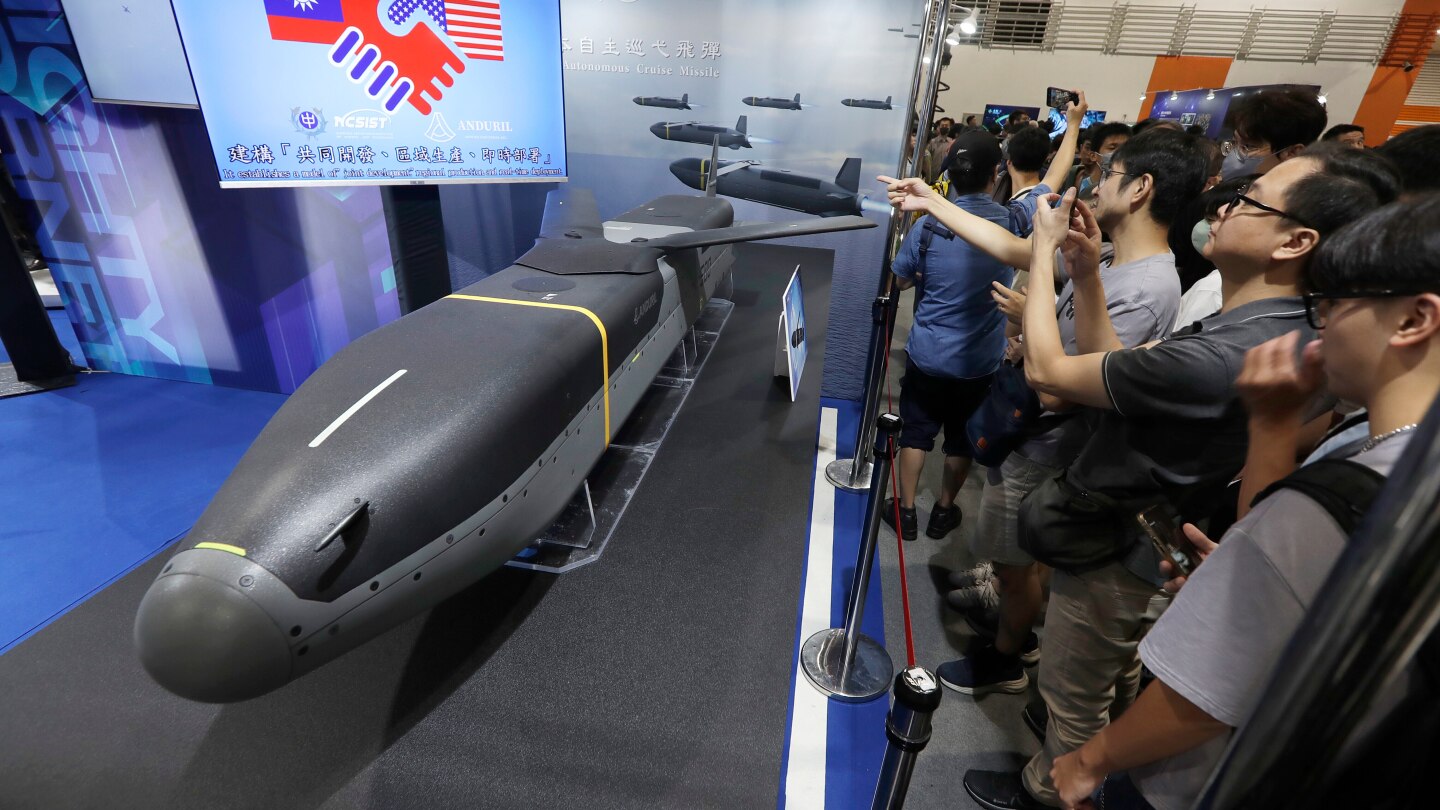
Among the targeted companies are major defense contractors Northrop Grumman Systems Corporation, L3Harris Maritime Services, and Boeing’s St. Louis operation. Palmer Luckey, founder of defense technology firm Anduril Industries, is one of the executives facing sanctions, which bar him from entering China and freeze any assets he may hold there.
The sweeping U.S. arms package to Taiwan, which still requires congressional approval, would be the largest weapons transfer to the self-ruled island if finalized. The proposed sale has triggered a forceful response from Beijing, which considers Taiwan part of its territory and has repeatedly vowed to bring it under mainland control, by force if necessary.
“We stress once again that the Taiwan question is at the very core of China’s core interests and the first red line that must not be crossed in China-U.S. relations,” the Chinese foreign ministry declared. “Any company or individual who engages in arms sales to Taiwan will pay the price for the wrongdoing.”
Chinese officials urged the United States to cease what they described as “dangerous moves of arming Taiwan,” arguing that such actions violate diplomatic agreements between the two powers.
The sanctions highlight the increasingly precarious position of Taiwan in the deteriorating relationship between the world’s two largest economies. Military analysts have identified the Taiwan Strait as one of the most dangerous flashpoints in U.S.-China relations, with potential to escalate into armed conflict.
In recent years, China has dramatically increased its military presence around Taiwan. The People’s Liberation Army conducts near-daily drills in the island’s vicinity, regularly deploying warships and fighter jets in what many security experts view as a campaign of intimidation and preparation for a potential blockade or invasion.
Taiwan has governed itself since 1949 when nationalist forces retreated to the island following defeat in China’s civil war. While the United States formally recognizes Beijing’s “One China” position, it maintains robust unofficial ties with Taipei and is legally obligated to assist Taiwan with its self-defense under the Taiwan Relations Act of 1979.
This weapons sale comes during an already tense period in U.S.-China relations, with ongoing disputes over trade practices, technology transfer restrictions, human rights issues, and territorial claims in the South China Sea. Both countries have engaged in tit-for-tat sanctions over the past several years, though the scale of this latest round signals Beijing’s particular sensitivity regarding Taiwan.
The targeted sanctions against specific defense companies represent China’s preferred method of expressing displeasure without disrupting broader economic ties. However, the move creates additional complications for U.S. companies with business interests in China, especially those with dual commercial and defense operations.
The timing of these sanctions also coincides with efforts by both countries to establish guardrails around their competition following the November meeting between President Biden and Chinese President Xi Jinping in San Francisco. Despite pledges to improve communication and manage differences, the Taiwan issue continues to frustrate efforts to stabilize the relationship.
As tensions mount, Taiwan has accelerated its own defensive preparations, including extending mandatory military service and increasing defense spending, while seeking to diversify its international partnerships beyond its traditional reliance on U.S. support.
Fact Checker
Verify the accuracy of this article using The Disinformation Commission analysis and real-time sources.

20 Comments
China’s decision to impose sanctions on US defense companies and executives is a clear sign of their determination to defend their claims over Taiwan. This move underscores the fragility of the situation and the potential for further escalation.
You’re right, the Taiwan issue is a major point of contention between the US and China. These sanctions demonstrate China’s willingness to use economic pressure to try to deter US support for Taiwan.
The sanctions on US defense companies and executives highlight the heightened tensions between the US and China over Taiwan. This issue is a major flashpoint, and both sides appear to be ratcheting up the pressure.
Absolutely, the Taiwan situation is a complex geopolitical challenge with high stakes for all involved. Careful diplomacy will be crucial to prevent further escalation between the US and China.
The US arms sale to Taiwan and China’s retaliatory sanctions highlight the delicate and high-stakes nature of the Taiwan issue. Both sides appear to be digging in, raising concerns about the potential for further escalation.
Absolutely, the Taiwan situation is a powder keg that could easily spark a major confrontation between the US and China. Careful diplomacy will be crucial to navigate this complex geopolitical challenge.
China’s sanctions on US defense companies and executives are a clear message that they will not back down on the Taiwan issue. This is a significant escalation that could have wider implications for US-China relations.
Yes, the Taiwan situation is a major flashpoint between the two superpowers. These sanctions demonstrate China’s willingness to use economic coercion to protect its interests.
This is a significant escalation in the tensions between the US and China over Taiwan. The sanctions on defense companies and executives suggest China is willing to use economic pressure to push back against US support for Taiwan.
You’re right, China is clearly drawing a firm line and using its economic leverage to retaliate. It will be crucial to see how the US responds to these sanctions.
The proposed $10 billion arms sale to Taiwan is a major move by the US, and China’s swift retaliation with these sanctions shows how high the stakes are on this issue. It will be important to closely monitor the unfolding situation.
Absolutely, the Taiwan question is at the heart of the US-China rivalry. These sanctions reflect China’s determination to defend its claims over the island.
Interesting to see China’s reaction to the massive arms sale to Taiwan. Clearly they view this as a major provocation and are hitting back with targeted sanctions. It will be important to follow how this develops between the US and China going forward.
I agree, the Taiwan issue is a highly sensitive one for China. They appear to be taking a very firm stance in response to the arms deal.
It’s not surprising to see China respond so aggressively to the US arms sale to Taiwan. The Taiwan question is a core national interest for Beijing, and they are using economic pressure to try to deter further US support for the island.
You make a good point. China views Taiwan as an integral part of its territory, so any US moves to bolster Taiwan’s defenses are seen as a serious threat by Beijing.
This is a significant development in the ongoing tensions between the US and China over Taiwan. China’s decision to sanction US defense companies and executives shows how seriously they are taking this issue.
You’re right, the Taiwan question is a major flashpoint. These sanctions suggest China is willing to use economic pressure to try to deter the US from supporting Taiwan.
The sanctions imposed by China on US defense companies and executives are a clear signal of their displeasure with the proposed arms sale to Taiwan. This underscores the high stakes and fragility of the situation.
Exactly, the Taiwan issue is a critical one for China and they are demonstrating their willingness to retaliate forcefully against any perceived challenges to their territorial claims.