


Listen to the article
President Touadéra Begins Controversial Third Term in Central African Republic
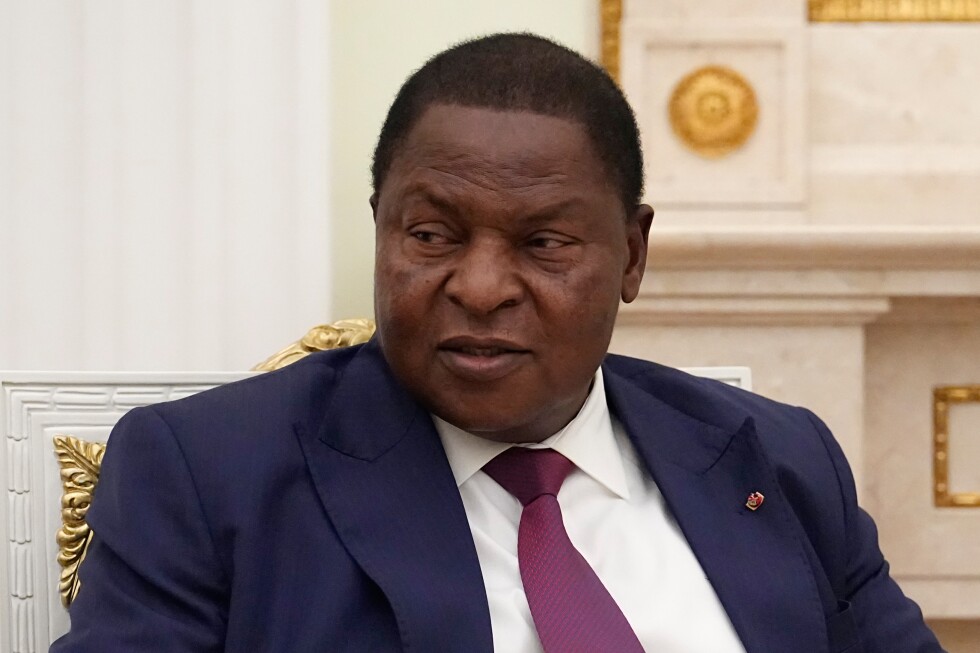
President Faustin-Archange Touadéra of the Central African Republic was sworn in for a third term on Monday, extending his leadership for seven more years following a contentious election that has deepened political divisions in the fragile nation.
The inauguration ceremony took place in the capital city of Bangui, with the presidents of Congo-Brazzaville and Comoros in attendance as regional witnesses to the transfer of power. In his address, Touadéra outlined ambitious goals for his new term, focusing on economic independence and resource management.
“We aspire to build a sovereign economy and ensure transparent management of our natural resources,” Touadéra declared during the ceremony.
The December election that secured Touadéra’s victory was marked by controversy after the country’s main opposition coalition boycotted the process. Their refusal to participate came in response to a 2023 constitutional referendum that removed presidential term limits and extended the term length from five to seven years—changes that critics argue were designed to consolidate Touadéra’s grip on power.
According to the Constitutional Council, Touadéra won with 77.9% of the vote, but opposition parties and civil society organizations have rejected these results, questioning their legitimacy.
“You have to be a fool to believe that,” said Frédéric Godoba, a civil society activist, reflecting widespread skepticism about the official results.
The Central African Republic, one of the world’s poorest nations despite its mineral wealth, has struggled with political instability and armed conflict since 2013, when predominantly Muslim Séléka rebels seized power and forced then-President François Bozizé from office. The ensuing violence between the Séléka coalition and anti-Balaka militias has led to thousands of deaths and displaced nearly a million people.
A 2019 peace agreement between the government and 14 armed groups temporarily reduced violence, though six groups eventually withdrew from the accord. The effectiveness of the agreement has been questioned as sporadic fighting continues in parts of the country.
President Touadéra’s government has notably pivoted away from traditional Western allies toward Russia in recent years. The Central African Republic was among the first African nations where the Wagner Group, a Russian private military company, established a significant presence. Wagner mercenaries have played a crucial role in protecting Touadéra’s government and training local forces, while gaining access to the country’s valuable natural resources, particularly gold and diamonds.
This Russian influence has raised concerns among Western governments and human rights organizations about the militarization of governance in the mineral-rich nation. United Nations experts have documented alleged human rights abuses committed by both Wagner personnel and government forces in their operations against rebel groups.
The country faces enormous challenges as it enters this new political chapter. With approximately 71% of its 5.5 million people living below the international poverty line, the Central African Republic continues to grapple with limited infrastructure, weak governance institutions, and the destabilizing presence of armed groups that control significant portions of territory outside the capital.
International observers will be watching closely to see if Touadéra’s third term brings the promised economic sovereignty and transparent resource management, or further entrenches the patterns of external influence and internal division that have characterized the nation’s recent history.
As regional stability remains precarious, the path forward for the Central African Republic under Touadéra’s extended leadership will likely have significant implications for the broader Central African region.
Fact Checker
Verify the accuracy of this article using The Disinformation Commission analysis and real-time sources.

7 Comments
The swearing-in of the president for a third term is a concerning development. I hope the international community closely monitors the situation and pushes for genuine democratic reforms and accountability in the CAR.
Interesting developments in the CAR. Extending presidential terms and term limits is a concerning trend we’ve seen in parts of Africa. I hope the country can find a path toward greater stability and economic independence, but this will require inclusive governance and respect for democratic norms.
The CAR’s mineral wealth, including gold, diamonds, and uranium, could be a great asset if managed properly. However, the history of resource conflicts in the region is troubling. I wonder what steps the government plans to take to ensure fair and responsible extraction.
Consolidation of power is always a concern, especially in fragile states like the CAR. I hope the president can find a way to bridge political divides and work toward sustainable development that benefits all citizens, not just those in power.
The boycott by the opposition coalition is understandable given the changes to the constitution. Free and fair elections are vital for any democracy. I hope the international community closely monitors the situation in the CAR going forward.
Economic independence is an admirable goal, but it will be a significant challenge given the CAR’s reliance on foreign aid and involvement of external actors in its internal affairs. I hope the president can navigate these complex dynamics effectively.
The management of natural resources is crucial for the CAR’s future, but transparency and equitable distribution of benefits will be essential. I wonder what specific policies the president has in mind to achieve this goal.