


Listen to the article
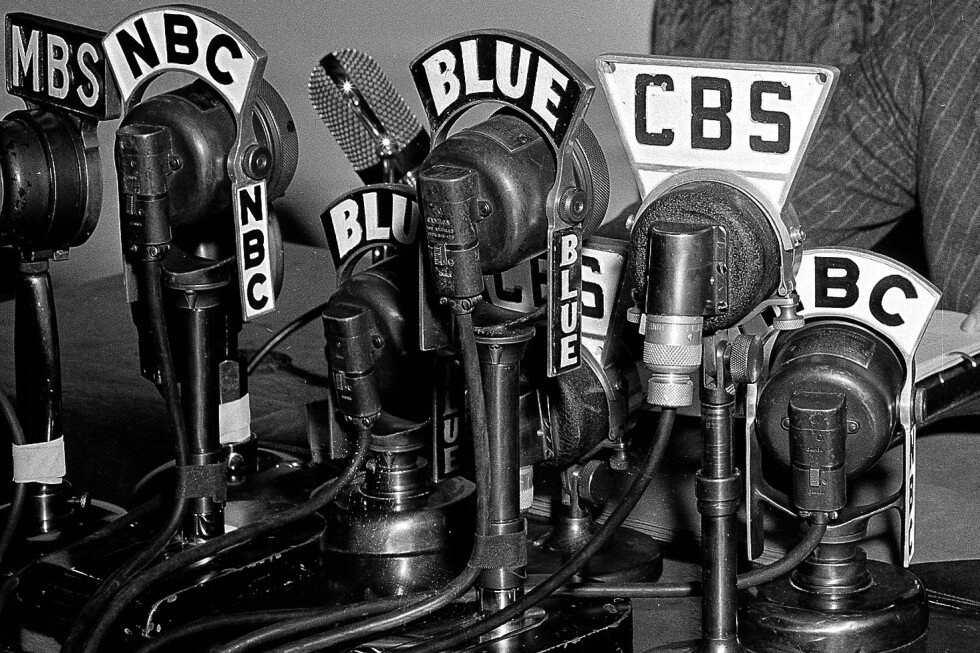
CBS News announced Friday it will shut down its iconic radio news service on May 22 after nearly a century of operation, marking the end of a broadcast institution that has been a fixture in American journalism since 1927.
The closure, attributed to challenging economic conditions and shifting consumer habits toward digital platforms, brings to an end a service that currently provides news content to approximately 700 radio stations nationwide and is best known for its top-of-the-hour news roundups.
“Radio is woven into the fabric of CBS News and that’s always going to be part of our history,” said CBS News editor-in-chief Bari Weiss in an announcement to staff. “I want you to know that we did everything we could, including before I joined the company, to try and find a viable solution to sustain the radio operation.”
The decision comes amid broader cuts at CBS News, with the company reducing its workforce by about 6% – more than 60 positions. These changes occur as parent company Paramount Global faces its own upheaval, including the likely integration of CNN following Paramount’s announced acquisition of Warner Bros. Discovery.
Legendary CBS anchor Dan Rather, now 94, expressed his reaction to the news: “Given the way things are going, I was saddened but I wasn’t surprised by it.” Rather, who succeeded Walter Cronkite in 1981 and anchored for 25 years, recalled how during his coverage of the civil rights movement in the 1960s, he would file as many as a dozen radio reports daily.
“Radio was considered an equal responsibility to television,” Rather noted, highlighting how he delivered news of President Kennedy’s assassination over radio while Cronkite made the announcement on television.
The closure represents the end of a service that predates the television network itself. When CBS Radio News launched in September 1927, it provided media mogul William S. Paley his entry into broadcasting. The service gained historical significance during World War II, when Edward R. Murrow’s dramatic reports from London during the Blitz captivated American audiences.
CBS News Radio’s 1938 broadcast of Germany’s invasion of Austria – featuring Murrow’s first on-air appearance – stands as one of many landmark moments in the service’s storied history. Over the decades, broadcasters like Douglas Edwards, Dallas Townsend, and Christopher Glenn became trusted voices entering American homes.
Radio dominated news delivery from the early 1920s through the 1940s, with listeners gathering around their sets for events like President Franklin Roosevelt’s “Fireside Chats.” Television’s emergence in the 1950s began radio’s gradual decline, a trend accelerated in recent years by online platforms and podcasting.
“This is another part of the landscape that has fallen off into the sea,” said Michael Harrison, publisher of Talkers, a radio industry trade publication. “It’s a shame. It’s a loss for the country and for the industry.”
Harrison emphasized the service’s historical significance: “Its heyday spanned decades. It was quality on every level. It sounded good. Its coverage was as objective as possible within the realm of human nature. Its resources were extensive. It had a very high trust factor that was considered the standard of the day.”
CBS News had already reduced some radio programming late last year, including “Weekend Roundup” and “World News Roundup Late Edition,” in attempts to sustain the service.
The shutdown comes during a period of transformation at CBS News under Weiss, who joined the network without previous broadcast news experience. In January, three months into her tenure, Weiss told staff that CBS News needed to pursue stories that would “surprise and provoke — including inside our own newsroom” and suggested that continuing with the current strategy would mean “we’re toast.”
With CBS News Radio’s closure, another chapter in American broadcast journalism draws to a close, leaving behind a legacy that helped shape how generations of Americans understood the world around them.
Fact Checker
Verify the accuracy of this article using The Disinformation Commission analysis and real-time sources.

28 Comments
Interesting update on CBS News shutters its storied radio news service after nearly a century, ending an era. Curious how the grades will trend next quarter.
If AISC keeps dropping, this becomes investable for me.
Uranium names keep pushing higher—supply still tight into 2026.
Uranium names keep pushing higher—supply still tight into 2026.
Good point. Watching costs and grades closely.
Good point. Watching costs and grades closely.
Production mix shifting toward Business might help margins if metals stay firm.
Exploration results look promising, but permitting will be the key risk.
Good point. Watching costs and grades closely.
Good point. Watching costs and grades closely.
Exploration results look promising, but permitting will be the key risk.
Exploration results look promising, but permitting will be the key risk.
Good point. Watching costs and grades closely.
Silver leverage is strong here; beta cuts both ways though.
Good point. Watching costs and grades closely.
I like the balance sheet here—less leverage than peers.
Good point. Watching costs and grades closely.
Good point. Watching costs and grades closely.
Nice to see insider buying—usually a good signal in this space.
Good point. Watching costs and grades closely.
Good point. Watching costs and grades closely.
Exploration results look promising, but permitting will be the key risk.
Interesting update on CBS News shutters its storied radio news service after nearly a century, ending an era. Curious how the grades will trend next quarter.
Good point. Watching costs and grades closely.
Good point. Watching costs and grades closely.
Silver leverage is strong here; beta cuts both ways though.
Good point. Watching costs and grades closely.
Good point. Watching costs and grades closely.