


Listen to the article
Holiday Shopping Shows Moderate Growth Amid Economic Concerns
Consumers have maintained steady spending during the first seven weeks of the holiday shopping season, though economic uncertainties are prompting more strategic purchasing behaviors, according to new data released Tuesday.
From November 1 through December 21, cash and credit card sales rose 4.2%, falling short of the 4.8% increase recorded during the same period last year, as reported by Visa’s Consulting & Analytics division. When adjusted for inflation, the growth appears more modest at 2.2%, compared to 3% in the previous year’s comparable timeframe.
“It’s certainly not a spectacular season,” said Michael Brown, Visa’s U.S. principal economist. “It’s sort of an average holiday season given concerns about macro economic growth, inflation. There’s still a lot of uncertainty among the consumer population.”
Meanwhile, Mastercard SpendingPulse tracked a 3.9% sales increase from November 1 through December 21, exceeding its season forecast of 3.6% but still below last year’s 4.1% growth for the same period. Michelle Meyer, chief economist at Mastercard Economics Institute, noted that shoppers “blended online and in-store shopping to find the best deals and maximize convenience.”
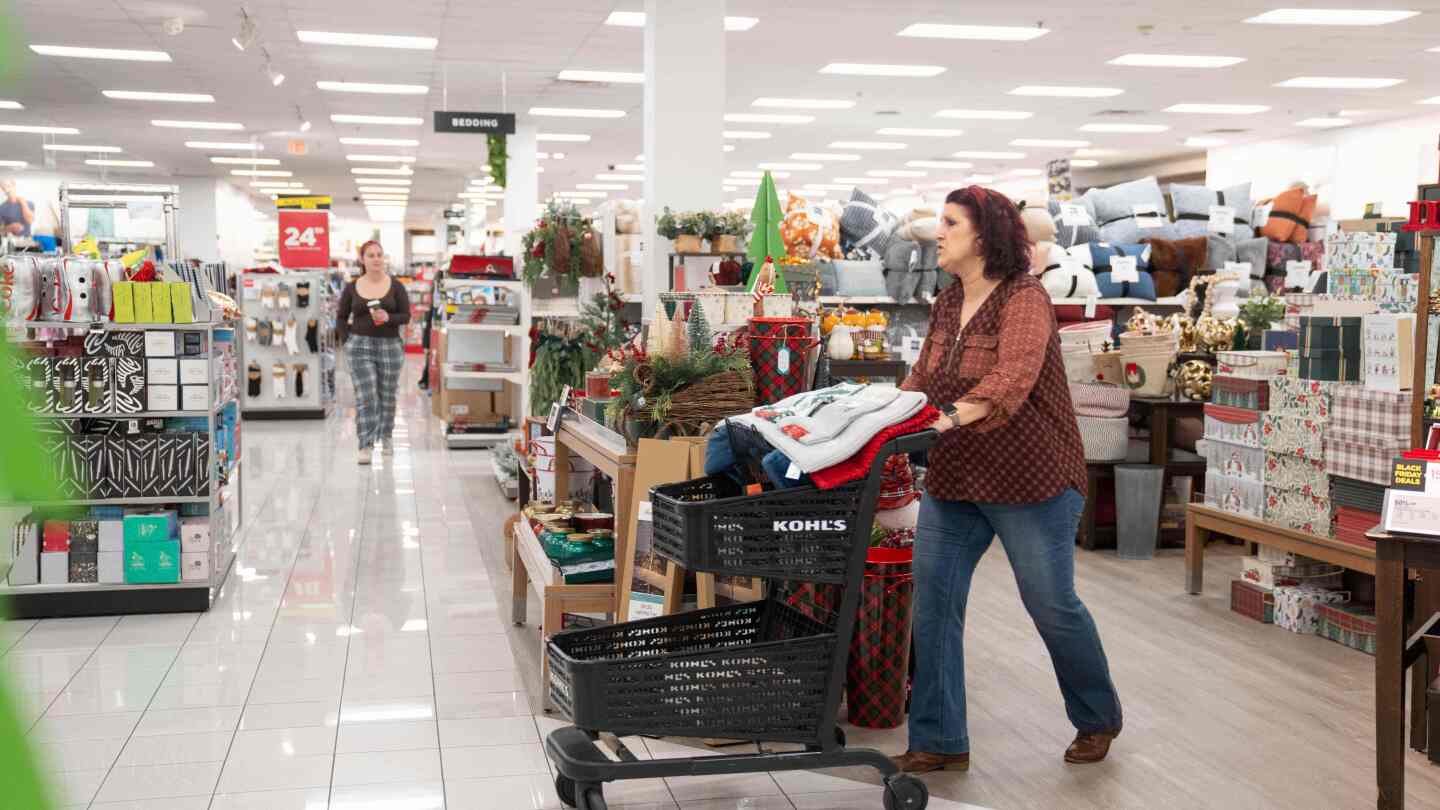
Retailers report that customers are prioritizing gift purchases while cutting back on holiday decorations. Many households continue to struggle with higher prices for groceries, rent, and tariff-affected imported goods. The recent Labor Department report showing a deteriorating employment picture has further dampened consumer sentiment.
The Conference Board’s latest reading indicates that consumer confidence fell in December, marking the fifth consecutive monthly decline as Americans expressed anxiety about high prices and the impact of sweeping tariffs implemented by the Trump administration.
Despite these concerns, shoppers remain resilient. Visa projects that when final figures are tallied, holiday sales will align with its prediction of a 4.6% increase between November and December. Several high-volume shopping days still remain, including the day after Christmas and the first Saturday following the holiday, according to Sensormatic’s retail traffic tracking.
RetailNext, which measures real-time foot traffic in physical stores, reported a 5.4% decline in customer traffic on “Super Saturday” compared to last year. This suggests that Americans are distributing their shopping trips across the final weeks before Christmas and adhering more strictly to shopping lists, according to Joe Shasteen, global manager of advanced analytics at RetailNext.
The overall data from Visa and Mastercard aligns with the National Retail Federation’s forecast, which projects November and December sales between $1.01 trillion and $1.02 trillion, representing growth of 3.7% to 4.2% over last year.
Analyzing consumer behavior this season has been particularly challenging following a 43-day federal government shutdown that interrupted the publication of key U.S. economic data, including retail sales reports. The Commerce Department recently revealed that sales at U.S. retailers and restaurants remained unchanged in October from September, with electric car sales declining after government subsidies expired.
E-commerce continues to grow at an accelerated pace, with Visa reporting a 7.8% increase in online sales during the first seven weeks of the holiday period. Mastercard SpendingPulse recorded an even stronger 7.4% surge in online purchases, compared to just 2.9% growth in physical stores. Nevertheless, in-store shopping remains dominant, accounting for 73% of holiday payment volume, according to Visa.
General merchandise stores, including major retailers like Target and Walmart, saw sales increase by 3.7%. Electronics emerged as the strongest category with 5.8% growth, partly driven by artificial intelligence-powered devices.
The impact of tariffs is evident in consumer purchasing patterns. Clothing and accessories sales accelerated to 5.3% growth from November 1 through December 21, compared to 4.1% last year, as this category was less affected by tariffs. In contrast, holiday home décor, which relies heavily on Chinese imports, recorded a minimal 0.8% increase.
The housing market’s continued weakness negatively impacted home improvement items, with building materials and garden accessories seeing just a 1% sales increase, according to Visa data.
Restaurant spending showed robust 5.2% growth, suggesting Americans continue to value experiential purchases like dining out, even amid economic concerns.
Fact Checker
Verify the accuracy of this article using The Disinformation Commission analysis and real-time sources.

10 Comments
The data on online and in-store blended shopping is interesting. It suggests consumers are trying to balance convenience and experience as they navigate the current economic landscape.
That’s a good point. Retailers will need to optimize their omnichannel strategies to cater to these shifting shopper preferences and behaviors.
Interesting to see how cautious consumers are navigating the holiday shopping season this year. It sounds like they’re being more strategic in their purchases due to economic uncertainties.
Yes, the moderate growth and inflation-adjusted slowdown indicates shoppers are being more selective. Curious to see how the full holiday season plays out.
The modest growth figures are a reminder that consumer confidence can be fragile, even during traditionally robust shopping periods. Retailers will need to be nimble and responsive to shifting trends.
Absolutely. Flexibility and a deep understanding of their customer base will be critical for retailers to navigate the uncertainties of the current economic climate.
This is a good reminder that economic conditions can have a major impact on consumer behavior, even during the typically robust holiday shopping period. Retailers will need to adapt to this more cautious mindset.
Absolutely. Shoppers are weighing their purchases more carefully, which could create challenges for some businesses. It will be important for them to find ways to appeal to this more conservative consumer base.
I’m curious to see how this holiday season compares to previous years in terms of the types of products and categories that see the strongest demand. Certain sectors may fare better than others.
That’s a great question. Analyzing the product-level data could provide valuable insights into the specific areas of consumer focus during this more cautious economic period.