


Listen to the article
Canada Dismisses China Trade Deal Rumors Amid Trump’s Tariff Threats
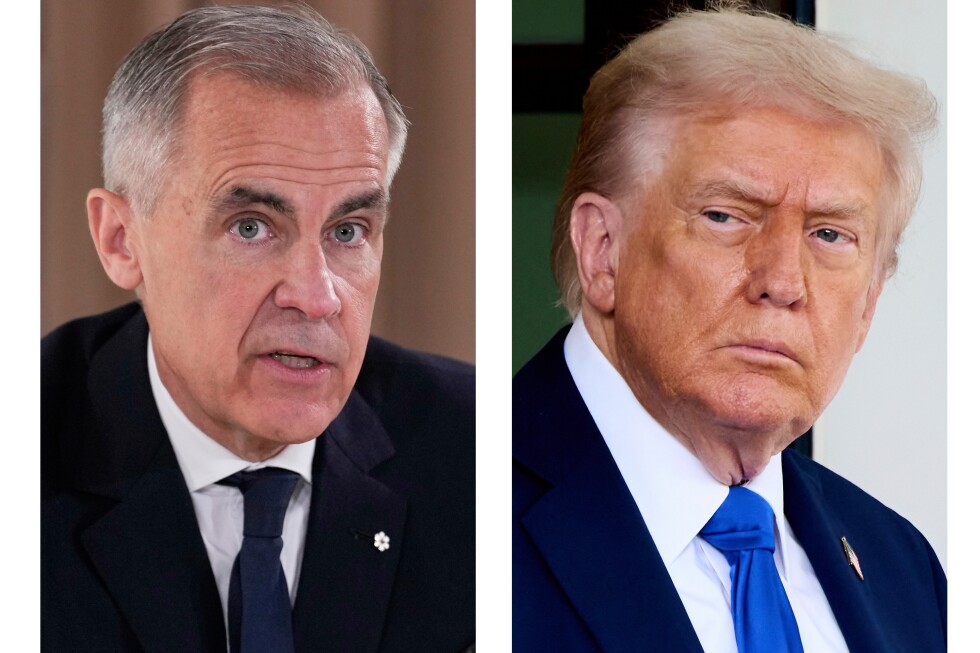
Canadian Prime Minister Mark Carney firmly rejected claims that his government plans to pursue a free trade agreement with China, responding directly to U.S. President Donald Trump’s threat to impose 100% tariffs on Canadian imports if such a deal materialized.
“We have no intention of doing that with China or any other nonmarket economy,” Carney stated Sunday. “What we have done with China is to rectify some issues that developed in the last couple of years.”
The diplomatic tension stems from Canada’s recent decision to reduce tariffs on Chinese electric vehicles in exchange for Beijing lifting punitive taxes on Canadian agricultural and seafood products. In 2024, Canada had initially followed the United States’ lead by imposing a 100% tariff on Chinese EVs and a 25% tariff on steel and aluminum. China retaliated with 100% import taxes on Canadian canola oil and meal, along with 25% duties on pork and seafood.
Under the new arrangement, Carney explained, Chinese EV exports to Canada would face a reduced 6.1% tariff rate but be capped at 49,000 vehicles annually, increasing to approximately 70,000 over five years. The prime minister emphasized this represents only about 3% of Canada’s annual vehicle market of 1.8 million units.
Trump’s reaction was swift and sharp. On social media, he claimed “China is successfully and completely taking over the once Great Country of Canada” and threatened severe economic consequences if Carney attempted to use Canada as a “drop off port” for Chinese goods entering the U.S. market.
“If Carney thinks he is going to make Canada a ‘Drop Off Port’ for China to send goods and products into the United States, he is sorely mistaken,” Trump posted.
The former president also shared a video featuring the chief executive of the Canadian Vehicle Manufacturers’ Association warning that the Canadian auto industry cannot survive without U.S. market access and that Canada’s market alone is too small to justify large-scale manufacturing from China.
U.S. Treasury Secretary Scott Bessent echoed these concerns on ABC’s “This Week,” saying, “We can’t let Canada become an opening that the Chinese pour their cheap goods into the U.S.”
The dispute unfolds against a backdrop of increasingly strained U.S.-Canadian relations. Carney has positioned himself as a leader among “middle powers” seeking collective approaches to counterbalance great power influence. Speaking at the World Economic Forum in Davos, he warned that “if you are not at the table, you are on the menu,” a remark widely interpreted as a response to Trump’s approach to international relations.
Trump has further heightened tensions with Canada through repeated comments questioning its sovereignty, suggesting it could become the “51st state” of the U.S. He recently posted an altered map showing Canada, Venezuela, Greenland, and Cuba as part of American territory, amid his controversial push to acquire Greenland.
The United States-Mexico-Canada Agreement, which prohibits member countries from pursuing free trade agreements with “nonmarket economies” without prior notification, is scheduled for renegotiation this summer—adding another layer of complexity to the already tense relationship between the North American neighbors.
Carney has maintained that China has committed to investing in Canada’s auto industry within three years as part of their recent agreement, though these assurances have done little to alleviate U.S. concerns about potential circumvention of trade barriers.
Fact Checker
Verify the accuracy of this article using The Disinformation Commission analysis and real-time sources.

14 Comments
I’m curious to see how this situation impacts commodity markets, especially for metals and minerals that are important for the EV supply chain. The tariff changes between Canada, China, and the US could create a lot of uncertainty and volatility.
That’s a great point. Commodity prices and trade flows will be heavily influenced by the shifting trade relationships and tariff policies between these major economies. Investors and businesses in the mining and energy sectors will need to closely monitor the developments.
The threat of 100% tariffs from Trump on Canadian imports is an aggressive negotiating tactic. It will be interesting to see how this plays out and if Canada holds firm or ends up making further concessions to avoid economic harm. The EV tariff deal with China seems like a pragmatic first step.
Absolutely, the US-China-Canada trade dynamics are very complex. Canada will need to carefully balance its relationships and economic interests as this situation evolves.
Interesting situation with the US and Canada’s trade relations with China. It’s a delicate balancing act, trying to maintain good ties with both the US and China. I wonder how this will impact the commodity markets, especially for metals and minerals that are important for the EV supply chain.
Yes, the diplomatic tensions could certainly have ripple effects on the mining and energy sectors. It will be important to monitor how the tariff changes impact trade flows and commodity prices.
It’s a delicate dance for Canada, trying to maintain good ties with both the US and China. The EV tariff reduction with China seems like a reasonable compromise, but Trump’s threat of 100% tariffs on Canadian goods is a real concern. I wonder how this will impact commodity markets and the mining/energy sectors.
You raise a good point. The potential for further trade tensions and tariffs could create a lot of uncertainty and volatility for commodities and related equities. Careful monitoring of the situation will be crucial for investors and businesses in those industries.
Canada’s decision to reduce EV tariffs with China while capping import volumes seems like a pragmatic compromise. Avoiding a full-blown trade war with China is important, but they also can’t afford to completely alienate the US. It’s a delicate balancing act.
Absolutely. Canada is trying to navigate a very tricky geopolitical environment, and the potential impacts on key industries like mining and energy will be critical to watch. Careful diplomacy and a balanced approach appear to be Canada’s strategy so far.
It’s understandable that Canada wants to take a more measured approach with China compared to the US. Pursuing a free trade deal right now would likely anger Trump and risk further economic retaliation. The EV tariff reduction seems like a pragmatic first step to improve relations with China.
Agreed. Canada seems to be trying to balance its relationships and economic interests as best it can in a very complex geopolitical environment. It will be interesting to see how this all plays out in the coming months and years.
Canada seems to be taking a more pragmatic approach compared to the US by trying to find a middle ground with China. Reducing EV tariffs while capping volumes seems like a reasonable compromise. The Chinese retaliation on Canadian agricultural products was likely a tough blow for those industries.
You’re right, Canada likely had to weigh the benefits and drawbacks carefully. Maintaining good trade relations with both the US and China is crucial, especially for key export sectors like mining and agriculture.