


Listen to the article
Canadian Prime Minister Mark Carney firmly rejected claims that he walked back his Davos comments during a phone call with U.S. President Donald Trump, insisting Tuesday that his stance on diversifying Canada’s trade partnerships remains unchanged.
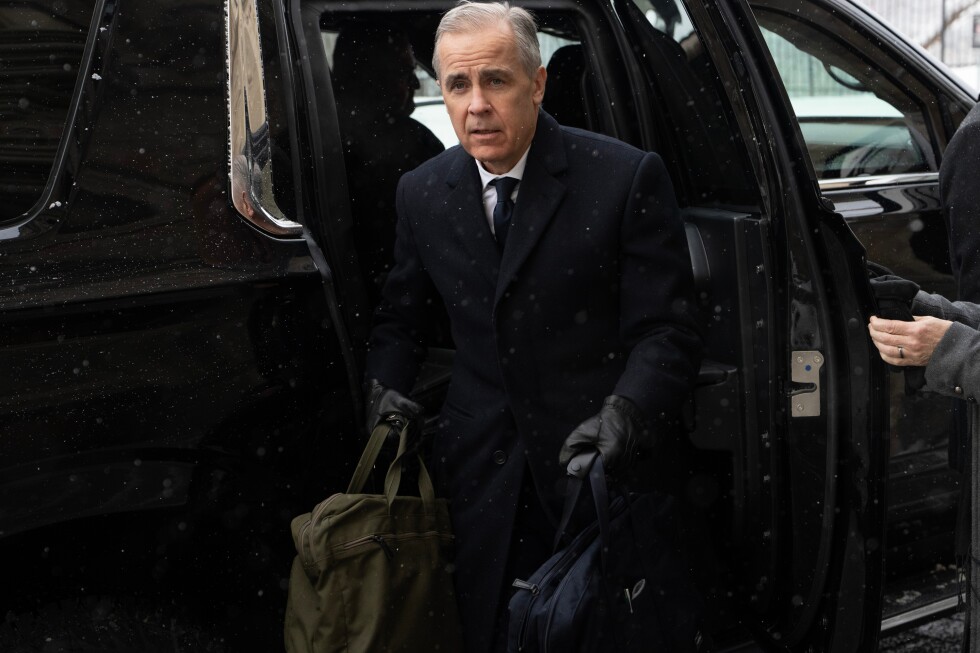
“To be absolutely clear, and I said this to the president, I meant what I said in Davos,” Carney told reporters as he arrived for a Cabinet meeting in Ottawa. “Canada was the first country to understand the change in U.S. trade policy that he initiated, and we’re responding to that.”
Carney visibly rolled his eyes when asked about U.S. Treasury Secretary Scott Bessent’s claims to Fox News that the prime minister had “very aggressively” retreated from statements made at the World Economic Forum last week. During that high-profile address, Carney condemned economic coercion by powerful nations without explicitly naming Trump, a speech that garnered widespread attention and overshadowed the American president at the gathering.
“The world has changed, Washington has changed. There is almost nothing normal in the U.S. now and that’s the truth,” Carney added in French during a Parliament session Tuesday.
The diplomatic tension escalated over the weekend when Trump threatened to impose 100% tariffs on Canadian imports if Ottawa proceeded with a trade deal with Beijing. Carney has clarified that Canada has no interest in negotiating a comprehensive trade agreement with China, describing the recent arrangement as merely cutting tariffs in select sectors.
During their 30-minute phone conversation, Carney said he explained Canada’s strategy to Trump, including plans for a dozen new trade deals across four continents within the next six months. “He was impressed,” the prime minister remarked.
The trade disagreement comes amid a broader strain in U.S.-Canada relations. Trump’s ambition to acquire Greenland has alarmed Canadian officials concerned about the 3,000-kilometer maritime border Canada shares with Greenland in the Arctic. The U.S. president has also previously suggested making Canada the 51st state and recently posted an altered map on social media depicting Canada as part of U.S. territory.
Carney has outlined plans to double Canada’s non-U.S. exports over the next decade, reducing dependence on the American market that currently accounts for more than 75% of Canadian exports. His upcoming travel to India, Australia and other nations is part of this diversification strategy.
Dominic LeBlanc, Canada’s minister responsible for U.S.-Canada trade, compared the recent Canada-China agreement to Trump’s own deal with Chinese leader Xi Jinping last summer, which saw the U.S. reducing certain tariffs while China resumed purchasing American agricultural products.
The United States-Mexico-Canada Agreement (USMCA) is due for renewal this year, adding another dimension to the evolving trade relationship between the North American neighbors.
Carney has positioned himself as a spokesman for middle powers seeking collaborative approaches in a changing global order. In his Davos speech, he delivered a memorable line that resonated widely: “Middle powers must act together because if you are not at the table, you are on the menu.”
Bessent dismissed Carney’s approach, telling Fox News that “Canada depends on the U.S.” and that “there’s much more north-south trade than there could ever be east-west trade.” The Treasury Secretary accused Carney of trying to “push his own globalist agenda.”
Beyond trade issues, Carney noted that his discussion with Trump also covered Ukraine, Venezuela, and Arctic security concerns.
Fact Checker
Verify the accuracy of this article using The Disinformation Commission analysis and real-time sources.

12 Comments
The shift in U.S. trade policy is clearly creating challenges for Canada and other allies. Carney’s comments suggest he is determined to protect Canada’s interests, even if that means clashing with the Trump administration.
This situation highlights the delicate balance countries must strike between maintaining strong relationships with the U.S. and pursuing their own economic and geopolitical priorities. It will be worth following how this unfolds.
Carney’s unwavering stance and visible frustration with the U.S. position suggest that the tensions between the two countries may be escalating. This could have significant ramifications for the broader North American trade relationship.
It will be crucial for both Canada and the U.S. to find ways to bridge their differences and maintain constructive dialogue, even as they pursue their respective economic and geopolitical interests.
This exchange highlights the growing rift between the U.S. and its allies on economic and trade issues. Carney’s eye-rolling response suggests he is frustrated with the Trump administration’s hardline stance.
It’s concerning to see such open tension between top government officials. Effective diplomacy and compromise will be crucial to resolving these disputes constructively.
Carney’s firmness in standing by his Davos remarks is commendable. As a major trading partner, Canada has to navigate a tricky path in the face of shifting U.S. policies under the Trump administration.
The growing rift between Canada and the U.S. on trade issues could have significant economic and political implications. Both sides will need to demonstrate flexibility and compromise to find a constructive resolution.
Carney’s unwavering stance on diversifying Canada’s trade partnerships is admirable. The global trade landscape is certainly shifting, and it’s important for countries to adapt accordingly.
It will be interesting to see how the diplomatic tension between Canada and the U.S. plays out. Carney seems determined to chart his own course despite pressure from the Trump administration.
It’s interesting to see Carney’s direct pushback against the U.S. Treasury Secretary’s claims. This exchange underscores the complex dynamics at play as countries try to adapt to the changing global trade landscape.
Carney’s comments about the ‘abnormal’ state of affairs in Washington highlight the broader challenges facing U.S. allies as they navigate an unpredictable policy environment under the Trump administration.