


Listen to the article
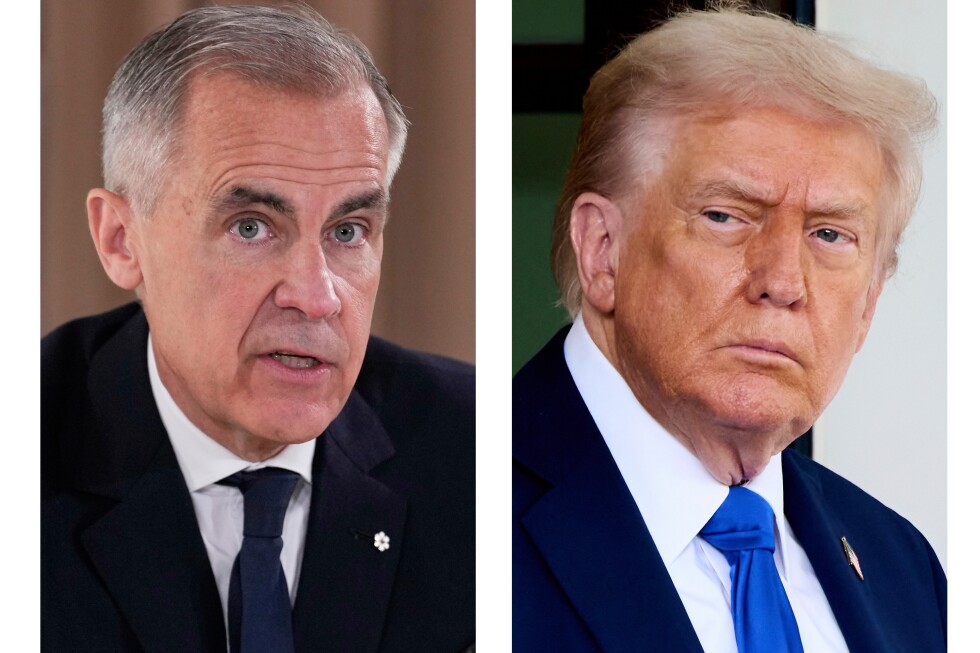
Canadian Prime Minister Mark Carney has suggested that recent threats from U.S. President Donald Trump should be viewed as strategic positioning ahead of upcoming trade negotiations between the two countries. Speaking on Monday, Carney acknowledged that as the United States-Mexico-Canada Agreement (USMCA) enters its scheduled review period this year, some posturing is to be expected.
“The president is a strong negotiator, and some of these comments and positioning should be viewed in the broader context of that,” Carney stated, anticipating what he described as a “robust review” of the trilateral trade agreement.
The comments come in response to Trump’s weekend threat to impose a 100% tariff on Canadian imports if Ottawa proceeded with a trade deal with Beijing. This threat emerged despite Carney’s previous statements that Canada has no interest in pursuing a comprehensive trade agreement with China.
U.S. Treasury Secretary Scott Bessent told Fox News that Carney and Trump spoke directly on Monday, with Bessent claiming the Canadian leader was “very aggressively walking back some of the unfortunate remarks he made at Davos.” Carney’s office has not yet confirmed details of this conversation.
Dominic LeBlanc, Canada’s minister responsible for U.S.-Canada trade, provided further context after speaking with U.S. Trade Representative Jamieson Greer on Sunday. LeBlanc clarified that Canada is only negotiating a “narrow trade arrangement” with China focused on “a few sectors of our economy,” not a comprehensive deal.
LeBlanc compared this limited arrangement to Trump’s own agreement with Chinese President Xi Jinping last summer, which reduced certain U.S. tariffs on Chinese goods while Beijing allowed rare earth exports and resumed purchasing American soy.
The minister also emphasized that the upcoming USMCA discussions represent a scheduled review, not a complete renegotiation like the one that occurred during Trump’s first term. “It’s not six years ago. We talked about that. This is a review,” LeBlanc said. “It was built into the agreement. It’s not a renegotiation.”
Earlier this year, Canada had aligned with the United States by imposing a 100% tariff on electric vehicles from China and a 25% tariff on Chinese steel and aluminum. Beijing responded with 100% import taxes on Canadian canola oil and meal, along with 25% tariffs on Canadian pork and seafood.
However, during a recent visit to Beijing, Carney broke with this alignment by reducing Canada’s tariff on Chinese electric vehicles in exchange for China lowering its tariffs on Canadian products. “Last week’s new strategic partnership with China will make available tens of thousands of affordable electric vehicles in Canada,” Carney explained on Monday.
The agreement includes an initial annual cap of 49,000 vehicles on Chinese EV exports entering Canada at a reduced tariff rate of 6.1%, eventually increasing to about 70,000 vehicles over five years. Carney noted this initial cap represents only about 3% of the 1.8 million vehicles sold annually in Canada. In exchange, China is expected to begin investing in the Canadian automotive industry within three years.
Trump’s latest tariff threat comes amid escalating tensions with Carney and as the Republican president’s controversial push to acquire Greenland has strained NATO alliances. At the World Economic Forum in Davos, Carney received significant attention for remarks that appeared to challenge Trump’s approach to international relations, stating, “Middle powers must act together because if you are not at the table, you are on the menu.”
Further complicating matters, Trump has repeatedly made provocative comments about Canadian sovereignty, even suggesting it could become the 51st U.S. state. Last week, he shared an altered map on social media depicting Canada, Venezuela, Greenland, and Cuba as U.S. territory.
The trade tensions highlight the complex diplomatic challenges facing the Canada-U.S. relationship as both nations prepare for the USMCA review process against a backdrop of increasing global economic uncertainty and shifting geopolitical alignments.
Fact Checker
Verify the accuracy of this article using The Disinformation Commission analysis and real-time sources.

16 Comments
Carney’s pragmatic perspective on Trump’s tariff rhetoric is noteworthy. Positioning and posturing ahead of trade talks is to be expected, but the potential for a 100% tariff is quite alarming. I’ll be watching closely to see how the USMCA review unfolds and whether a reasonable compromise can be reached.
Absolutely. The stakes are high, and it’s crucial that Canada and the US find a way to navigate this delicate situation without resorting to extreme measures that could damage the broader economic relationship.
Carney’s characterization of Trump’s comments as strategic positioning is an interesting take. While political posturing is common in trade negotiations, the threat of a 100% tariff on Canadian imports is quite concerning. I hope the USMCA review can lead to a mutually beneficial outcome for both countries.
You raise a good point. Even if this is just negotiating tactics, the potential for such severe tariffs could have significant economic consequences. It will be important for both sides to approach the USMCA review with pragmatism and a willingness to compromise.
Carney’s stance that Trump’s comments should be viewed in the context of negotiating tactics is understandable. However, the potential for a 100% tariff is quite extreme and could have significant economic consequences for Canada. I hope cooler heads prevail during the USMCA review process.
I agree. While political posturing is common in trade negotiations, the threat of such punitive tariffs is concerning. Maintaining a constructive dialogue and finding a mutually beneficial outcome should be the priority for both sides.
Carney’s perspective on Trump’s tariff threats as strategic positioning ahead of trade talks is understandable. However, the potential for a 100% tariff on Canadian imports is still quite alarming. I’ll be closely following the USMCA review process to see if a reasonable compromise can be reached.
Agreed. While political posturing is common in these situations, the threat of such severe tariffs is concerning and could have significant economic consequences. Maintaining open and constructive dialogue will be crucial in navigating this complex trade dynamic.
Carney’s assessment of Trump’s tariff threats as negotiating tactics is an interesting take. While positioning and posturing are common in trade talks, the potential for a 100% tariff on Canadian imports is quite extreme. I hope the USMCA review process can lead to a mutually beneficial outcome for both countries.
You make a good point. Even if this is just part of the negotiation process, the threat of such punitive tariffs is still alarming and could have far-reaching economic implications. Careful diplomacy and a willingness to compromise will be key to resolving this situation.
Trump’s aggressive rhetoric on trade is well-known, so Carney’s characterization of it as strategic positioning isn’t surprising. However, the potential for a 100% tariff on Canadian imports is certainly concerning. Hopefully the USMCA review can lead to a pragmatic outcome.
Agreed. While Trump’s negotiating style may be unorthodox, maintaining strong trade relationships with allies like Canada is crucial. A measured approach to the USMCA review would be ideal.
Interesting to see Carney’s perspective on Trump’s tariff threats. Positioning and posturing ahead of trade negotiations is common, though it can certainly create uncertainty. I wonder how the USMCA review will play out and what concessions each side may seek.
You’re right, this type of negotiating tactic is quite typical. It will be important to see if cooler heads prevail and the countries can reach a mutually beneficial agreement.
It’s interesting to see the Canadian government’s reaction to Trump’s tariff threats. Carney’s comments suggest he views this as typical negotiating tactics, but the potential for a 100% tariff is still quite alarming. I wonder how this will impact the broader Canada-US trade relationship.
You raise a good point. Even if this is just posturing, the threat of such severe tariffs could still have ripple effects and damage the overall trade dynamic between the two countries. Careful diplomacy will be needed to navigate this situation.