


Listen to the article
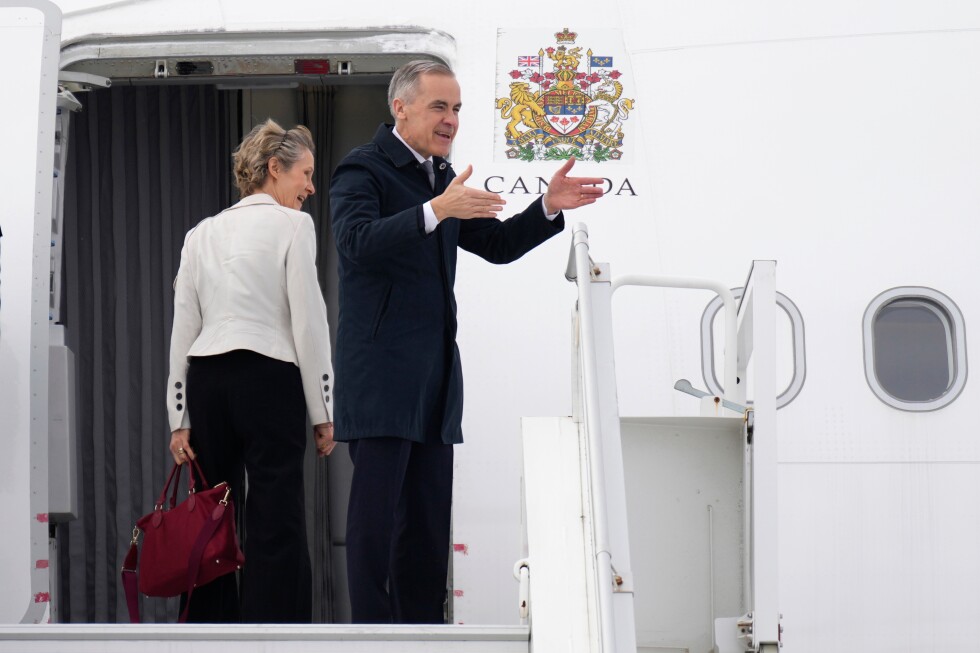
Canadian Prime Minister Mark Carney touched down in Mumbai on Friday, embarking on his first official visit to India in a bid to rejuvenate bilateral relations that had soured under his predecessor’s administration. The four-day diplomatic mission marks a significant step in Canada’s efforts to diversify its international trade partnerships beyond its heavy reliance on the United States.
Carney’s itinerary includes meetings with prominent Indian business leaders before culminating in high-level talks with Indian Prime Minister Narendra Modi in New Delhi on Monday. According to India’s foreign ministry, the upcoming dialogue between the two leaders presents a valuable opportunity to reaffirm “the positive momentum and shared vision” for advancing their bilateral relationship.
The discussions are expected to cover a wide range of cooperative ventures spanning trade and investment, energy partnerships, critical minerals access, and technological collaboration. These areas represent key sectors where both nations see mutual benefit in strengthened ties.
The visit comes at a strategic moment for Canada’s economic policy, as Carney has publicly announced an ambitious target to double Canada’s non-U.S. exports within the next decade. This push for trade diversification comes amid concerns that American tariff policies are creating investment uncertainty for Canadian businesses and highlighting the risks of over-dependence on a single market.
After completing his India visit, the Canadian Prime Minister will continue his Asia-Pacific diplomatic tour with stops in Australia and Japan, further underscoring his administration’s commitment to expanding Canada’s economic footprint across the Indo-Pacific region.
The India-Canada relationship has experienced notable turbulence in recent years. Tensions peaked in 2023 when Canadian authorities made explosive allegations regarding India’s alleged involvement in the killing of Hardeep Singh Nijjar, a Canadian Sikh activist who was shot near Vancouver in June of that year. Nijjar was a vocal advocate for Khalistan, a proposed independent Sikh homeland that would be carved from India’s Punjab region.
New Delhi vehemently rejected these allegations, countering with accusations that the Trudeau government was providing safe harbor to Sikh separatists whom India classifies as extremists. The Khalistan movement remains banned in India, where it is viewed as a threat to national sovereignty and territorial integrity.
Signs of diplomatic thaw emerged in June last year when Carney extended an invitation to Modi to attend the G7 summit in Alberta, signaling a desire to reset bilateral relations. Both nations also renewed efforts to advance a comprehensive trade agreement that had stalled during the period of heightened tensions.
The allegations against India regarding extraterritorial targeting of Sikh activists extend beyond Canadian borders. In 2023, U.S. federal prosecutors accused an Indian government official of orchestrating a failed assassination attempt against another Sikh separatist figure in New York. Earlier this month, an Indian national admitted in U.S. court to participating in a conspiracy to hire a hitman to assassinate a Sikh separatist leader.
These incidents have created complex diplomatic challenges for India’s relationships with Western democracies, though Modi’s government has consistently denied any state involvement in such operations.
The timing of Carney’s visit suggests a pragmatic approach by both nations to compartmentalize security concerns while pursuing mutual economic interests. India represents a significant market for Canadian exports, particularly in sectors like agricultural products, minerals, and advanced manufacturing, while Canada’s resource-rich economy offers complementary opportunities for Indian investment and trade.
As global geopolitical tensions rise and economic uncertainty persists, the push to strengthen India-Canada ties reflects broader trends of nations seeking to diversify partnerships and build resilience against potential trade disruptions from traditional partners.
Fact Checker
Verify the accuracy of this article using The Disinformation Commission analysis and real-time sources.

7 Comments
Strengthening Canada-India ties seems like a wise move, especially with the global economy facing uncertainties. India’s vast mineral wealth and growing energy needs present opportunities for Canadian companies in critical minerals, renewable energy, and more.
Agreed. Diversifying trade partnerships beyond the US is a smart strategy for Canada. India’s large and dynamic market is an appealing target for Canadian businesses seeking new avenues for growth.
Carney’s background in finance and economics gives him credibility to tackle complex trade and investment matters with India. His experience could help broker pragmatic agreements that benefit both countries’ industries and consumers.
I’m curious to see what kind of trade and investment deals come out of this visit. Access to India’s minerals and resources could benefit Canada’s mining and energy sectors. But the talks will likely address concerns on both sides as well.
Good point. Any new economic partnerships will need to balance the interests of both countries. It will be interesting to see how they navigate sensitive issues like tariffs, regulations, and intellectual property rights.
Interesting that Prime Minister Carney is visiting India to repair strained relations. Canada and India have so much potential for collaboration on energy, resources, and technology. I hope the discussions are productive and lead to tangible progress.
The timing of this visit is important, with global supply chains in flux and the need to secure critical mineral supplies. Canada has expertise in mining that could complement India’s resource wealth. I hope the discussions lead to concrete commercial deals.