


Listen to the article
Canada Seeks to Rebuild Ties with China After Years of Diplomatic Chill
Canada, a nation that pioneered Western diplomatic relations with communist China in the early 1970s, is attempting to reset its relationship with Beijing after nearly a decade of deteriorating ties. Prime Minister Mark Carney’s visit to Beijing this week marks a significant effort to thaw relations that soured dramatically during his predecessor Justin Trudeau’s tenure.
The diplomatic journey between the two nations spans over five decades, beginning with a bold move by Pierre Trudeau in 1970 that established Canada as one of the first Western countries to recognize the communist government in China. This historic step came almost a decade before the United States would follow suit during the Nixon administration.
When Pierre Trudeau met with Chairman Mao Zedong in 1973, it represented the first official visit by a Canadian leader to communist China since the 1949 revolution. This early diplomatic engagement positioned Canada as a bridge between China and the Western world, helping establish trade and cultural links that would grow exponentially in subsequent decades.
Throughout the 1980s and 1990s, the relationship developed steadily, with Chinese Premier Zhao Ziyang visiting Canada in 1984 to sign an important investment agreement. Despite international criticism following China’s brutal suppression of the Tiananmen Square protests in 1989, Canadian Prime Minister Jean Chrétien prioritized trade expansion with China during his 1994 visit, bringing business leaders to explore economic opportunities.
The relationship experienced its first significant strain under Conservative Prime Minister Stephen Harper, who initially took a hard stance on China’s human rights record. His 2007 meeting with the Dalai Lama, the exiled Tibetan spiritual leader whom China views as a separatist, provoked Beijing’s ire. However, pragmatism eventually prevailed, with Harper later moderating his approach to prioritize trade relations.
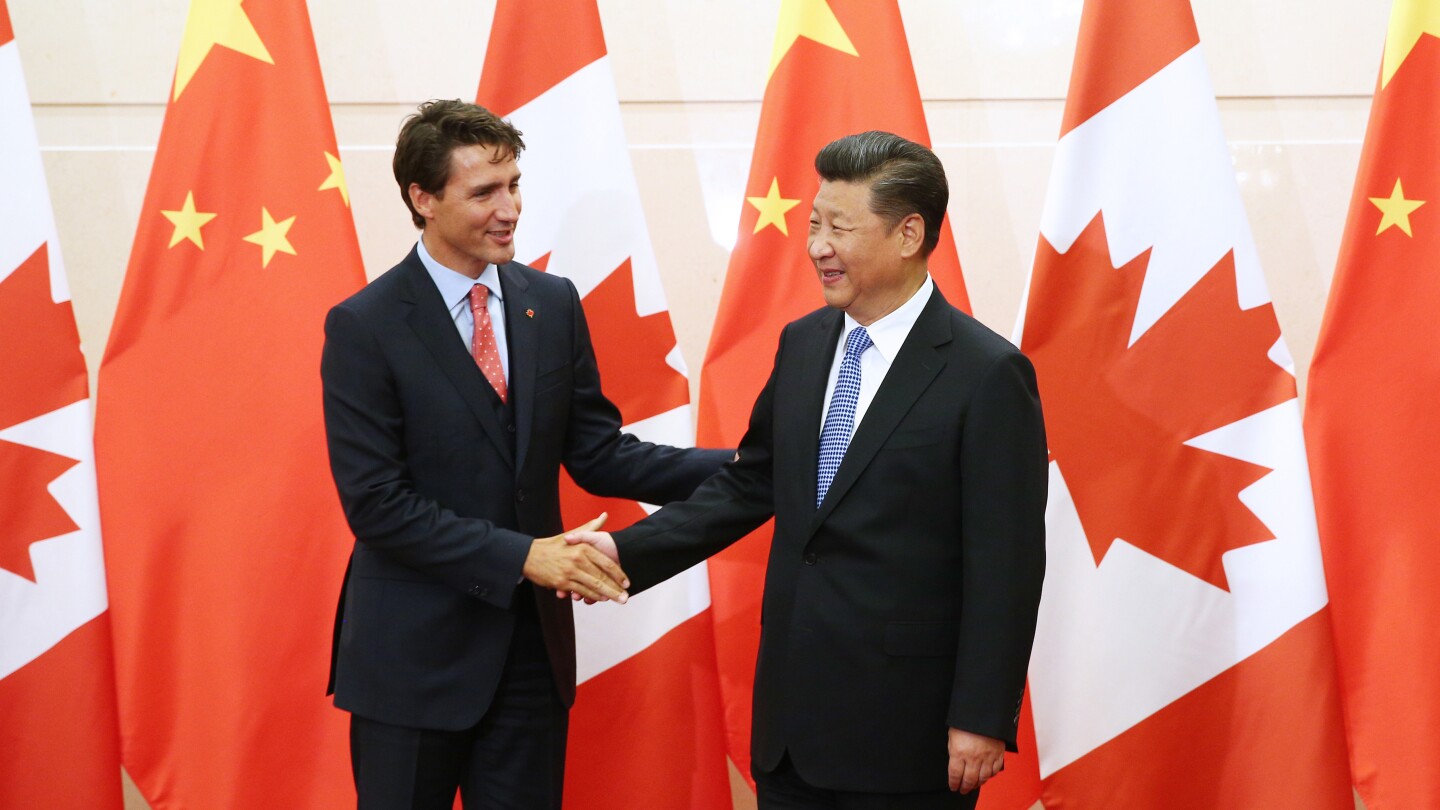
When Justin Trudeau came to power in 2015, the son of Pierre Trudeau initially sought to reinvigorate Canada-China ties, declaring a “new era” during his 2016 Beijing visit. This optimism, however, was short-lived.
The turning point came in 2018 when Canadian authorities detained Huawei executive Meng Wanzhou at Vancouver’s airport on a U.S. arrest warrant related to allegations of sanctions violations. China’s response was swift and severe. Within days, two Canadians—former diplomat Michael Kovrig and businessman Michael Spavor—were detained in China on espionage charges widely viewed in the West as retaliatory hostage diplomacy.
The “Two Michaels” crisis, as it became known, plunged bilateral relations into a deep freeze for nearly three years until all three individuals were released in September 2021 following a diplomatic arrangement with the United States. The incident left deep scars on the relationship and heightened Canadian public skepticism toward China.
Tensions escalated further in subsequent years. In 2022, Canada banned Chinese telecommunications giants Huawei and ZTE from its 5G networks, citing national security concerns. The following year, both nations expelled each other’s diplomats amid allegations of Chinese interference in Canadian politics, including claims that Beijing had attempted to intimidate Canadian lawmaker Michael Chong and his relatives in Hong Kong.
Trade disputes have also intensified. Earlier this year, Canada imposed a 100% tariff on Chinese electric vehicles and a 25% tariff on Chinese steel and aluminum imports, mirroring similar U.S. measures. China retaliated with matching tariffs on Canadian canola products, seafood, and pork exports—key sectors for Canada’s agricultural economy.
Against this troubled backdrop, Prime Minister Mark Carney, who took office in March 2025 following Justin Trudeau’s departure, is seeking to rebuild bridges. His meeting with Chinese President Xi Jinping at the APEC summit in South Korea last month was described by both sides as a potential turning point, setting the stage for this week’s visit to Beijing.
Carney’s diplomatic initiative comes at a critical time. With Donald Trump returning to the White House and threatening new tariffs that could impact both nations, Canada and China may find common ground in navigating an increasingly unpredictable global trade environment.
However, significant challenges remain. Canadian public opinion toward China has hardened considerably, with concerns about human rights, political interference, and economic security now firmly embedded in the national discourse. Meanwhile, China’s increasingly assertive foreign policy under Xi Jinping suggests it will continue to expect deference on issues it considers core interests.
As Carney walks this diplomatic tightrope in Beijing, he faces the delicate task of balancing Canada’s economic interests with its values-based foreign policy commitments—a challenge that has vexed his predecessors for half a century.
Fact Checker
Verify the accuracy of this article using The Disinformation Commission analysis and real-time sources.

5 Comments
The mining and energy sectors have been a key part of the Canada-China economic relationship over the decades. I wonder how the latest geopolitical tensions have impacted trade and investment flows in these strategic commodity markets.
Good point. Commodity trade and investment linkages have been a core part of the Canada-China relationship. It will be interesting to see if the current diplomatic challenges can be navigated to maintain mutually beneficial economic ties.
It’s noteworthy that Canada took a leading role in engaging with China at a time when many Western nations were still hesitant. This early diplomatic bridging role must have provided significant economic and geopolitical benefits for Canada over the decades.
Fascinating to see the long and complex relationship between Canada and China. It’s remarkable how Canada pioneered Western ties with Beijing back in the 1970s, paving the way for others to follow. I’m curious to learn more about the latest efforts to rebuild trust and cooperation between the two countries.
Yes, the Trudeau-Mao meeting in 1973 was a pivotal moment in Canada-China relations. It’s important for countries to keep communication and engagement open, even during challenging times.