


Listen to the article
Canada Strikes Landmark Trade Deal with China, Reducing EV Tariffs
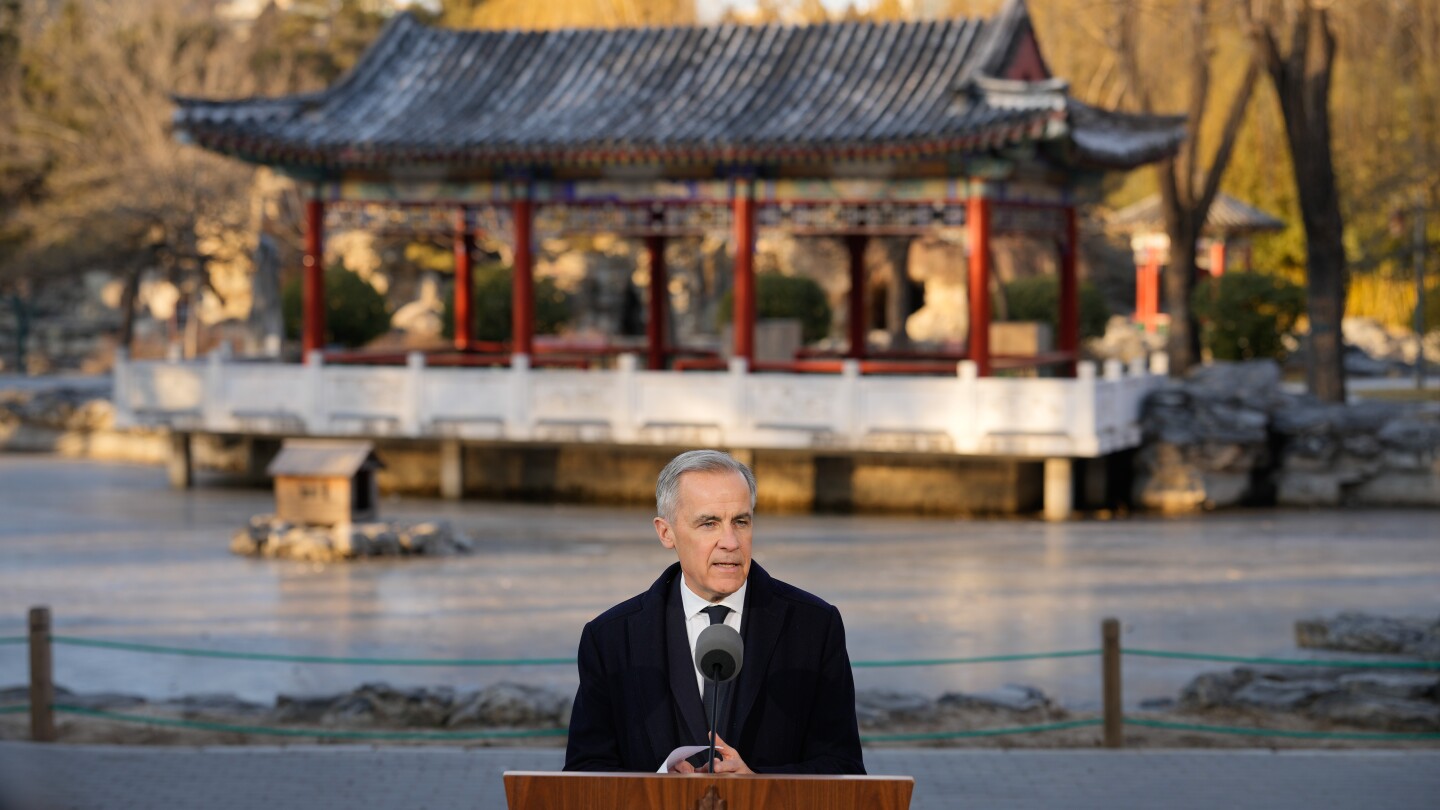
Breaking with the United States, Canada has agreed to cut its 100% tariff on Chinese electric vehicles in return for lower tariffs on Canadian farm products, Prime Minister Mark Carney announced Friday following two days of meetings with Chinese leaders in Beijing.
Under the new agreement, Chinese EV exports to Canada will face a significantly reduced tariff of 6.1%, with an initial annual cap of 49,000 vehicles that will gradually increase to about 70,000 over five years. In exchange, China will slash its total tariff on canola seeds, a major Canadian export, from 84% to approximately 15%.
“Our relationship has progressed in recent months with China. It is more predictable and you see results coming from that,” Carney told reporters during a news conference.
The deal marks a significant shift in Canada’s trade strategy at a time when it has struggled to reach agreements with the United States under President Donald Trump’s administration. Trump’s tariffs have hit key sectors of the Canadian economy, pushing Carney’s government to diversify its trade relationships.
Trump offered qualified support for Canada’s decision. “Well, it’s OK. That’s what he should be doing and it’s a good thing for him to sign a trade deal. If you can get a deal with China, you should do that,” the U.S. president said.
However, U.S. Trade Representative Jamieson Greer expressed concern, telling CNBC that Canada’s decision to allow Chinese EV imports at a low tariff is “problematic” and suggested Canada might regret the move long-term.
The agreement represents the first major breakthrough in Canada-China relations after years of diplomatic tension. Earlier Friday, Carney and Chinese President Xi Jinping pledged to improve bilateral ties during a meeting at the Great Hall of the People. Xi noted that talks have been underway since their initial meeting in October at a regional economic conference in South Korea.
Carney, the first Canadian prime minister to visit China in eight years, emphasized that the deal would benefit both nations. “This agreement will drive considerable Chinese investment in Canada’s auto sector, creating good careers in Canada and accelerating our progress toward a net zero emissions future and the auto industry of the future,” he said.
The Canadian leader also suggested that the current global trade system is “under great strain” and may give way to more bilateral or regional agreements rather than the global frameworks that have dominated the post-World War II era.
Jacob Cooke, CEO of WPIC Marketing + Technologies, which helps exporters navigate the Chinese market, described Carney’s visit as “game-changing,” noting that it reestablishes dialogue, respect and a framework between the two nations. “These three things we didn’t have,” Cooke said. “The parties were not talking for years.”
Previously, Canada had aligned with the U.S. by imposing 100% tariffs on Chinese EVs and 25% on steel and aluminum under former Prime Minister Justin Trudeau. China had retaliated with duties of 100% on Canadian canola oil and meal, and 25% on pork and seafood, later adding steep tariffs on canola seeds. These measures effectively closed the Chinese market to Canadian canola producers, contributing to a 10.4% drop in China’s imports from Canada last year, which fell to $41.7 billion.
Addressing concerns from Canadian automakers and auto workers, Carney emphasized that the initial cap on Chinese EV imports represents only about 3% of the 1.8 million vehicles sold in Canada annually. He also noted that China is expected to begin investing in the Canadian auto industry within three years as part of the agreement.
“We’re building a new part of our car industry, building cars of the future in partnership, bringing affordable autos for Canadians at a time when affordability is top of mind, and doing it at a scale that allows for a smooth transition in the sector,” he explained.
However, not everyone welcomed the deal. Ontario Premier Doug Ford, leader of Canada’s most populous province where the country’s auto sector is concentrated, criticized the agreement sharply. “Make no mistake: China now has a foothold in the Canadian market and will use it to their full advantage at the expense of Canadian workers,” Ford wrote on social media. “Worse, by lowering tariffs on Chinese electric vehicles this lopsided deal risks closing the door on Canadian automakers to the American market, our largest export destination.”
Political analysts suggest China sees an opening under Trump’s presidency to drive wedges between the United States and its traditional allies. Nelson Wiseman, professor emeritus of political science at the University of Toronto, called Friday’s deal beneficial for both China and Canada. “Canada is diversifying its bets economically,” Wiseman said. “And China is succeeding in driving a small wedge between Canada and the U.S.”
Carney acknowledged that while Canada seeks to improve relations with China, the two countries maintain fundamental differences on issues such as human rights, limiting the scope of their engagement even as they pursue areas of mutual economic interest.
The Canadian leader will depart China on Saturday, continuing his international tour with visits to Qatar and the World Economic Forum in Davos, Switzerland next week.
Fact Checker
Verify the accuracy of this article using The Disinformation Commission analysis and real-time sources.

7 Comments
This deal represents a pragmatic shift in Canada’s trade strategy as it seeks to diversify beyond its traditional reliance on the US market. Lowering EV tariffs could help boost the adoption of clean transportation technologies in Canada.
I’m curious to see how this trade deal with China impacts Canada’s relationship with the US. Will it further strain ties between the North American neighbors or could it lead to a renegotiation of NAFTA terms?
This seems like a pragmatic win-win for both Canada and China. China gets better access to the Canadian EV market, while Canada secures more favorable terms for its agricultural exports.
This could signal a shift in Canada’s strategy to hedge its bets and not be overly reliant on the US market. Diversifying trade relationships, even with China, may be a prudent long-term move.
Interesting that Canada is willing to make concessions on agricultural tariffs to secure lower EV tariffs from China. It will be worth watching how this agreement impacts the EV and agriculture sectors in both countries.
I’m curious to see how this agreement will impact the competitiveness of Canadian-made EVs versus imported Chinese models. The tariff changes could significantly alter the domestic EV market dynamics.
The EV tariff reduction is a positive step for Canada’s climate goals, but I wonder if the agricultural concessions adequately protect Canadian farmers. Balancing trade interests can be tricky.