


Listen to the article
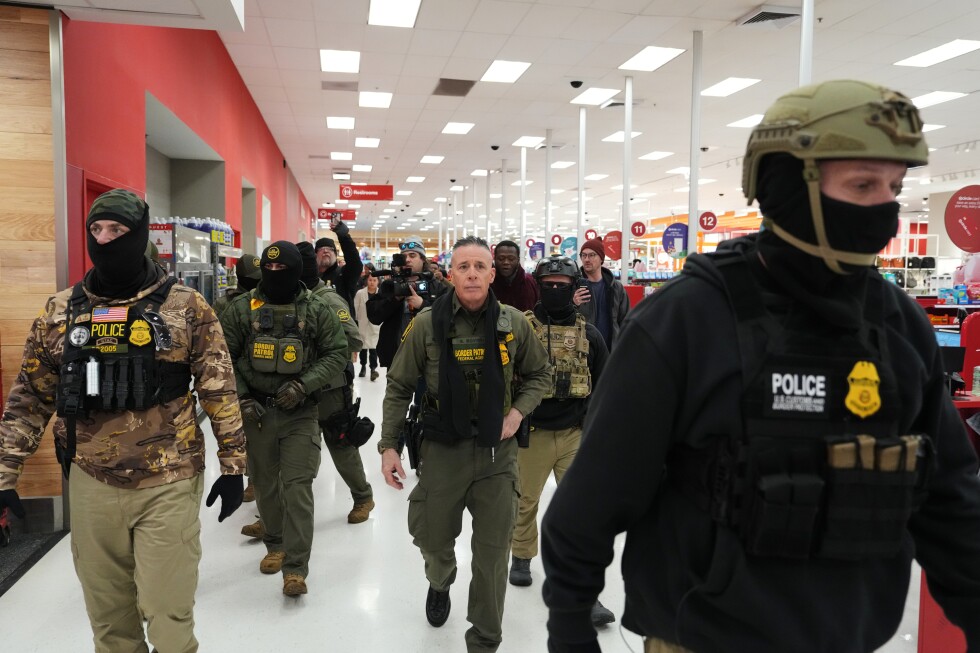
Businesses across America are increasingly caught in the crossfire of President Donald Trump’s intensified immigration enforcement efforts. From national retail chains to small family-owned establishments, companies are facing pressure to take positions on aggressive deportation activities while some have become sites for immigration arrests.
In Minneapolis, the epicenter of what the Department of Homeland Security describes as its largest operation to date, numerous hotels, restaurants, and other businesses have temporarily suspended operations amid widespread protests. The situation escalated dramatically after U.S. Border Patrol agents shot and killed Alex Pretti in Minneapolis, prompting more than 60 CEOs of Minnesota-based corporations—including retail giant Target, electronics retailer Best Buy, and health insurance provider UnitedHealth—to sign an open letter calling for “an immediate deescalation of tensions.”
Despite this collective action, the letter notably avoided direct references to immigration enforcement or recent business-based arrests. Earlier this month, videos circulated widely showing federal agents detaining two Target employees in Minnesota. U.S. Immigration and Customs Enforcement (ICE) has also conducted operations targeting day laborers in Home Depot parking lots and delivery workers on streets across the country. Last year, federal agents detained 475 people during a raid at a Hyundai manufacturing plant in Georgia.
Immigration enforcement in business settings operates under complex legal guidelines. ICE agents can freely enter public areas of businesses—including restaurant dining sections, open parking lots, office lobbies, and shopping aisles—without warrants, just as any member of the public can. This access allows immigration officials to question individuals, gather information, and potentially make arrests in customer-facing areas of establishments.
However, to access private areas like back offices or employee-only sections, ICE is legally required to have a judicial warrant signed by a court judge. These should not be confused with administrative warrants, which are signed by immigration officers themselves. An internal ICE memo obtained by The Associated Press indicated the agency now considers administrative warrants sufficient for forcibly entering private homes when there’s a final removal order in place.
“This upends years of precedent for federal agents’ authority in private spaces—and violates bedrock principles of the U.S. Constitution,” said Jessie Hahn, senior counsel for labor and employment policy at the National Immigration Law Center, an advocacy nonprofit.
Beyond visible raids, ICE can also target businesses through I-9 audits, which verify employees’ work authorization status. Attorneys have noted a significant shift since Trump returned to office, with ICE physically appearing at businesses to initiate these audits rather than beginning the process through written notices, as was previous practice.
David Jones, a regional managing partner at labor and employment law firm Fisher Phillips, described agents arriving “in their full tactical gear without identifying themselves necessarily, just to do things like serve a notice of inspection.” While employers legally have three days to respond to such audits, the intimidating approach may pressure businesses into immediate compliance.
Businesses do have rights when confronting immigration officials. Without a warrant, they can ask agents to leave or deny service based on company policies. However, John Medeiros of Minneapolis-based law firm Nilan Johnson Lewis noted that in practice, “What we’re seeing is they still conduct the activity,” regardless of business objections.
In response, many establishments in Minneapolis, Chicago, Los Angeles, and other cities experiencing increased enforcement have implemented protective measures: posting signs designating private areas, training workers to recognize different types of warrants, and establishing protocols for ICE encounters.
Public response to business-based immigration enforcement has been vocal, with some criticism directed at companies perceived as not taking strong enough positions. While smaller business owners have often spoken out about impacts on their workers and customers, larger corporations have generally remained quiet about enforcement at their locations.
Minneapolis-based Target has not commented on videos showing its employees being detained, though its incoming CEO Michael Fiddelke was among those signing the Minnesota Chamber of Commerce’s de-escalation letter. Activist groups like “ICE Out of Minnesota” have called on Target, Home Depot, and hotel chains including Hilton to take stronger public stances against ICE’s presence.
Labor organizations have been more forthright. Ted Pappageorge of the Culinary Union in Las Vegas expressed shock at the “widening pattern of unlawful ICE behavior” and concern that “anti-immigrant policies hurt tourism, business, and their families.” The United Auto Workers similarly voiced solidarity with Minneapolis residents “fighting back against the federal government’s abuses.”
Economic implications of the enforcement campaign are emerging as a significant concern. Hahn emphasized that businesses often communicate through industry associations to avoid direct retaliation while noting the broader economic impact: “We know that the raids are contributing to things like labor shortages and reduced foot traffic.”
As immigration enforcement continues to intensify across the country, the business community faces difficult choices about how to respond to operations that increasingly intersect with their properties, employees, and customers.
Fact Checker
Verify the accuracy of this article using The Disinformation Commission analysis and real-time sources.

7 Comments
This is a concerning situation that highlights the challenges businesses face in navigating complex immigration issues. Companies should advocate for practical solutions that protect their workers and operations, while also complying with the law.
The pressure on businesses to take sides in the immigration debate is understandable but problematic. Companies need to focus on serving customers and supporting their workforce, not getting embroiled in political controversies. A measured, lawful approach is needed here.
This highlights the difficult position businesses find themselves in when it comes to immigration enforcement. They want to comply with the law but also support their workforce and communities. A collaborative, nuanced approach is needed to navigate these complex issues.
It’s troubling to see federal agents detaining retail workers. Businesses should not be caught in the middle of aggressive immigration crackdowns. A measured, lawful approach that respects worker rights and public safety is needed to resolve this situation.
This is a complex issue that businesses must navigate carefully. They need to balance worker protections and public responsibilities while avoiding becoming targets of immigration enforcement. Clear communication and legal guidance will be crucial for companies in this challenging environment.
Businesses should not become collateral damage in the ongoing immigration enforcement battles. Companies need to advocate for practical, humane solutions that allow them to operate without fear of becoming targets. A pragmatic, solutions-oriented mindset is crucial here.
The pressure on companies to take sides in the immigration debate is concerning. Businesses should focus on serving customers and supporting their workforce, not getting embroiled in political controversies. Clear, consistent policies are needed to protect companies and their employees.