


Listen to the article
The British government announced Tuesday it is exploring the possibility of banning young teenagers from accessing social media platforms, marking a significant shift in its approach to online safety regulation.
Officials said they will launch a public consultation process involving parents, young people and other stakeholders to examine the safe use of technology. The initiative comes amid mounting concerns about the potential harms children face from unregulated content and excessive screen time on social media platforms.
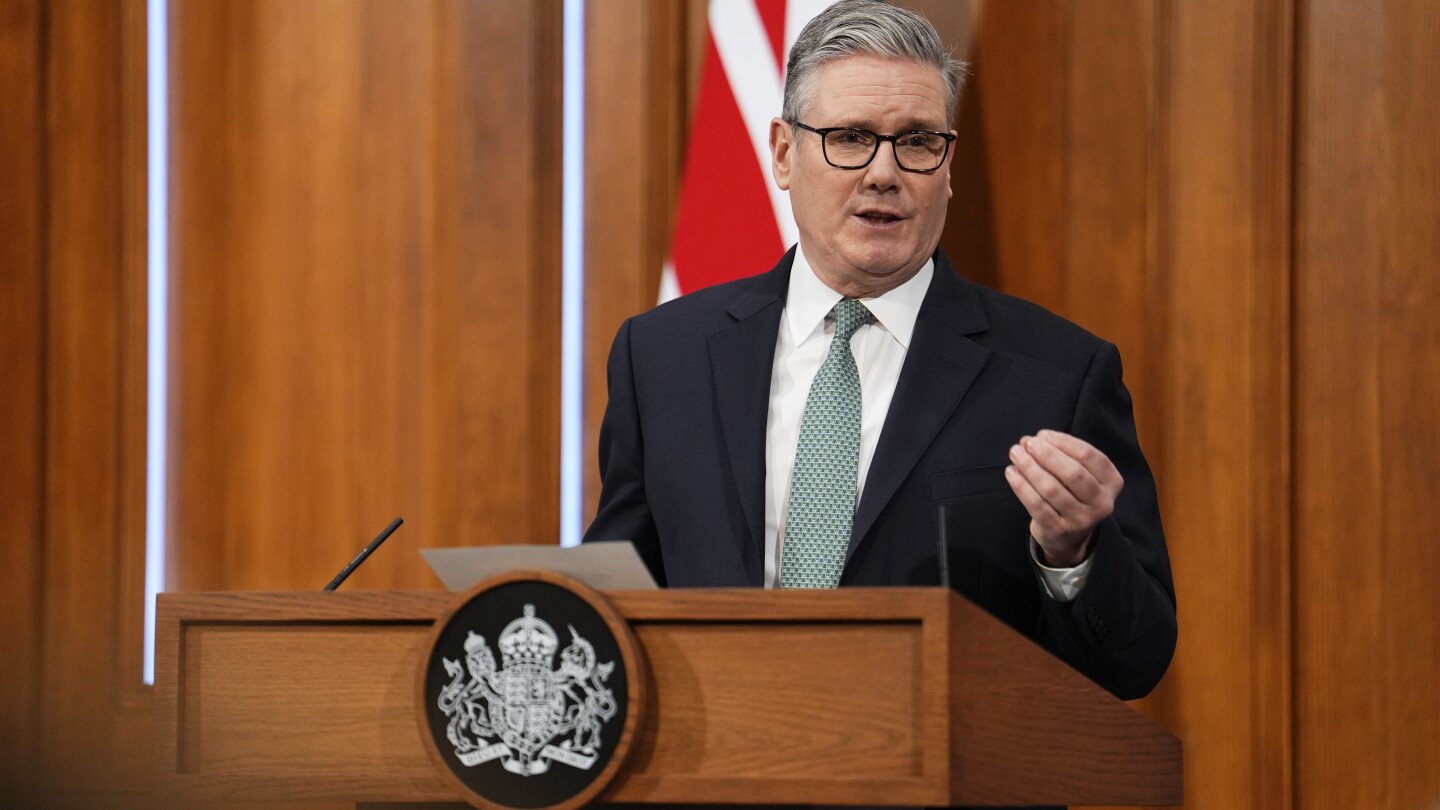
Prime Minister Keir Starmer emphasized the government’s commitment to considering all available options. “As I have been clear, no option is off the table, including looking at what age children should be able to access social media and whether we need restrictions on things such as addictive features like infinite scrolling or streaks in apps,” Starmer wrote in a statement published on Substack.
The government’s exploration of more stringent regulations follows Australia’s recent landmark decision requiring major social media platforms – including Facebook, Instagram, TikTok, and X (formerly Twitter) – to prevent children under 16 from creating and using accounts. British ministers plan to travel to Australia to study the implementation and effectiveness of these measures, which represent some of the strictest social media age restrictions globally.
The potential policy shift has gained significant support within Starmer’s Labour Party. More than 60 Labour lawmakers signed a letter to the prime minister earlier this week urging the government to adopt an Australia-style ban in Britain.
“Successive governments have done far too little to protect young people from the consequences of unregulated, addictive social media platforms,” the lawmakers stated in their letter. “We urge the government to show leadership on this issue by introducing a minimum age for social media access of 16 years old.”
Currently, most major social media platforms officially require users to be at least 13 years old to create accounts, though age verification mechanisms are often easily circumvented. The proposed changes would not only raise this minimum age requirement but would likely demand more robust verification systems.
The consultation reflects growing global concerns about social media’s impact on youth mental health. Research has linked excessive social media use among adolescents to increased anxiety, depression, and negative body image. Platform design features like infinite scrolling and notification systems have been criticized for deliberately fostering addictive behavior patterns.
Child safety advocates have welcomed the government’s initiative but stress that any effective solution must include proper enforcement mechanisms. Previous attempts at online age restrictions have proven challenging to implement due to technical limitations and privacy concerns around identity verification.
Tech industry representatives have cautioned that while they support child safety measures, blanket age bans could push younger users toward less regulated platforms or encourage them to falsify information, potentially creating new safety risks.
The government indicated it plans to respond to the public consultation by summer, suggesting that concrete policy proposals could emerge before the end of the year. Any legislative changes would represent a significant expansion of Britain’s existing Online Safety Act, which already places legal obligations on tech companies to protect children from harmful content.
This latest initiative positions Britain alongside other nations, including the European Union with its Digital Services Act, that are increasingly willing to impose stronger regulations on tech platforms to protect vulnerable users, particularly children.
Fact Checker
Verify the accuracy of this article using The Disinformation Commission analysis and real-time sources.

16 Comments
Regulating social media use for minors is a delicate balance. Outright bans could be overly restrictive, but enabling unfettered access also has risks. I’m curious to see what specific proposals emerge from the government’s consultation process.
Good point. Any new rules will need to carefully weigh the benefits and drawbacks. It will be interesting to see how the UK government tries to thread that needle.
This is a complex issue with valid arguments on both sides. Protecting minors from online harms is crucial, but we must also consider the social and educational benefits of digital engagement for young people. I’m interested to see the UK’s final policy proposals.
Well said. A balanced approach that addresses risks while preserving important digital access and opportunities for teens will be key. The consultation should yield some constructive insights.
Banning teens from social media platforms seems like a drastic step that could backfire. Focusing on safety features, parental controls, and age-appropriate content curation may be a more constructive approach. The public consultation should produce some interesting insights.
Agreed, a more surgical approach targeting specific harms is likely to be more effective than a sweeping ban. Curious to see what practical solutions emerge from the consultation process.
Australia’s teen social media ban has sparked a lot of debate. While protecting young people is vital, a ban may have unintended consequences like limiting their social connections and digital learning opportunities. I hope the UK finds a nuanced solution.
Nuance is key here. A blunt ban could do more harm than good, so I’m glad the UK is taking a consultative approach to explore more targeted measures.
The UK’s exploration of an Australia-style teen social media ban is an interesting development. While the goal of protecting minors is valid, a complete ban may be overly broad. I look forward to seeing the nuanced policy proposals that emerge from the public consultation process.
Agreed, a more surgical approach that preserves digital access while mitigating harms is likely to be more effective. The consultation should yield some constructive insights on balanced solutions.
This is a thorny issue without easy answers. I appreciate the UK government’s willingness to consider all options, including age limits and restrictions on addictive features. Robust stakeholder engagement will be crucial to developing effective policies.
Banning teens from social media platforms seems like an extreme measure that could backfire. I’m curious to see what specific policy proposals the UK government develops through its public consultation process. A balanced, evidence-based approach is needed here.
This is a complex issue with valid concerns on both sides. While protecting children online is crucial, outright banning teens from social media may have unintended consequences. Thoughtful regulation focused on safety features and age limits could be more effective.
Agreed, a balanced approach is needed that addresses harms while respecting young people’s digital rights and needs. The public consultation process is a good step to gather diverse perspectives.
Restricting teen social media access is a heavy-handed approach that could have unintended consequences. I hope the UK government explores more targeted solutions, like platform safety features, content moderation, and age-appropriate design standards. A thoughtful, evidence-based policy is needed.
While the UK government’s concern for child safety online is understandable, an outright ban on teen social media use could have significant unintended consequences. I hope the consultation process leads to a nuanced, evidence-based policy that balances protection and digital rights.