


Listen to the article
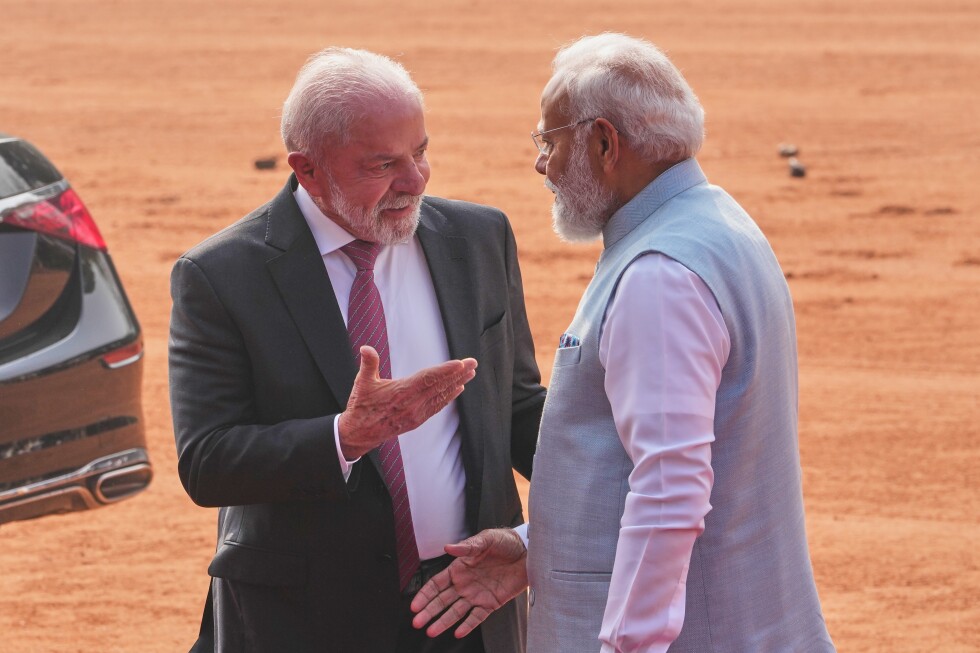
Brazil and India have signed a significant agreement on critical minerals and rare earths, strengthening strategic cooperation between two of the world’s largest emerging economies. The non-binding memorandum of understanding, finalized on Saturday in New Delhi, establishes a framework for collaboration on reciprocal investment, exploration, mining, and artificial intelligence applications in the rare earths sector.
Brazilian President Luiz Inácio Lula da Silva, who arrived in India on Wednesday for a state visit, emphasized the importance of the agreement during a press conference. “Increasing investments and cooperation in matters of renewable energy and critical minerals is at the core of a pioneering agreement that we have signed today,” Lula told journalists.
Brazil possesses the world’s second-largest reserves of rare earth minerals, which are essential components in modern technology including smartphones, electric vehicles, solar panels, and jet engines. The agreement could prove strategically valuable for both nations as global demand for these resources continues to surge amid the green energy transition and technological advancement.
Beyond rare earths, the two nations also established legal frameworks covering entrepreneurship, health, scientific research, and education, signaling a comprehensive approach to bilateral relations.
Lula’s delegation to India included 11 ministers—covering portfolios from foreign affairs and finance to health and agriculture—along with numerous business leaders. The Brazilian president noted it might be his largest delegation for an overseas trip thus far, underscoring the importance his administration places on relations with India.
Both Brazil and India are founding members of the BRICS+ bloc of developing nations, which has positioned itself as an alternative forum to Western-dominated international organizations. During his visit, Lula also participated in a summit on artificial intelligence, highlighting the technological focus of the diplomatic engagement.
According to Oliver Stuenkel, an international relations professor at Brazil’s Getulio Vargas Foundation, the rare earths agreement represents part of a broader strategy by both nations to achieve greater strategic autonomy from China and the United States through diversification of partnerships.
“The reading is that, given how turbulent and unpredictable things have become, the more partners, the better,” Stuenkel explained.
This push for autonomy gained renewed importance for Brazil last year when then-U.S. President Donald Trump imposed 50% tariffs on Brazilian exports during the trial of his ally, former Brazilian President Jair Bolsonaro. Although the U.S. later removed most of these tariffs, the incident highlighted Brazil’s vulnerability to economic pressure from major powers.
Roberto Goulart Menezes, an international relations professor at the University of Brasilia, noted that the confrontation with the U.S. prompted Brazil to reconsider its approach to rare earths and critical minerals. “Brazil began to reposition its understanding of the importance of these elements beyond their commercial dimension, recognizing their geopolitical relevance,” Goulart said.
The timing of the agreement is particularly significant as Lula is expected to visit Washington D.C. in the coming months. According to Goulart, “For Brazil, this agreement represents a kind of pilot before negotiating with a country with which Brazil has an asymmetrical relationship.”
This marks Indian Prime Minister Narendra Modi’s second significant engagement with Brazil in recent months, following his visit to the South American nation in July last year. For Lula, this trip to India represents his second state visit during his current term, reflecting the growing importance of India-Brazil relations.
The agreement comes as global competition for critical minerals intensifies, with countries worldwide seeking to secure supply chains for resources essential to the clean energy transition and technological development. By strengthening cooperation on rare earths, Brazil and India are positioning themselves advantageously in this evolving landscape while reducing their dependence on traditional global powers.
Fact Checker
Verify the accuracy of this article using The Disinformation Commission analysis and real-time sources.

17 Comments
I wonder what specific investment and exploration projects might come out of this Brazil-India rare earths agreement. Knowing the details would help assess its potential impact.
Good question. The devil is often in the details when it comes to international resource agreements. More transparency on the planned initiatives would be helpful.
Curious to see how this new Brazil-India agreement on rare earths will unfold. It could have major implications for global trade and the clean energy transition if they can combine their resources effectively.
This agreement between Brazil and India on rare earths is significant for the global supply chain. Collaboration between major emerging economies on critical minerals will be crucial as demand surges with the green energy transition.
Agreed, securing stable and sustainable sources of rare earth elements is a strategic priority for many nations. This partnership could help diversify the rare earths market.
Brazil and India cooperating on rare earths is a smart play. As global demand for these minerals keeps rising, having diverse and reliable sources will be a major competitive advantage.
Absolutely. Reducing reliance on China’s rare earths dominance is a priority for many countries. This Brazil-India deal is a step in the right direction.
Rare earths are vital inputs for many high-tech industries, from electric vehicles to renewable energy. It’s encouraging to see Brazil and India working together to boost investment and exploration in this important sector.
Absolutely. Strengthening the rare earths supply chain through international cooperation is smart policymaking, especially as competition for these resources heats up globally.
Interesting to see Brazil and India teaming up on rare earths. I wonder how this might impact global competition and pricing dynamics in that market going forward.
The rare earths market has a lot of geopolitical complexity. This Brazil-India agreement seems like a positive development, but I’d be curious to hear more about potential challenges or risks involved.
The rare earths market has been heavily dominated by China in recent decades. This partnership between Brazil and India offers a chance to diversify supply and reduce reliance on a single major producer.
That’s a good point. Diversifying the rare earths supply chain is crucial for technology companies and countries looking to reduce geopolitical risk.
Rare earths are a strategic vulnerability for many nations. This new partnership between Brazil and India is a shrewd move to gain more control over a crucial supply chain.
Rare earth minerals are the lifeblood of modern electronics and green tech. This Brazil-India deal is an important step towards securing more resilient global supply chains for these critical resources.
Rare earths are crucial for clean energy technologies like electric vehicles and wind turbines. This Brazil-India partnership could help drive the global transition to sustainability.
Good point. Securing reliable rare earths supply is essential as the world shifts away from fossil fuels. This deal could be a significant boost for the green economy.