


Listen to the article
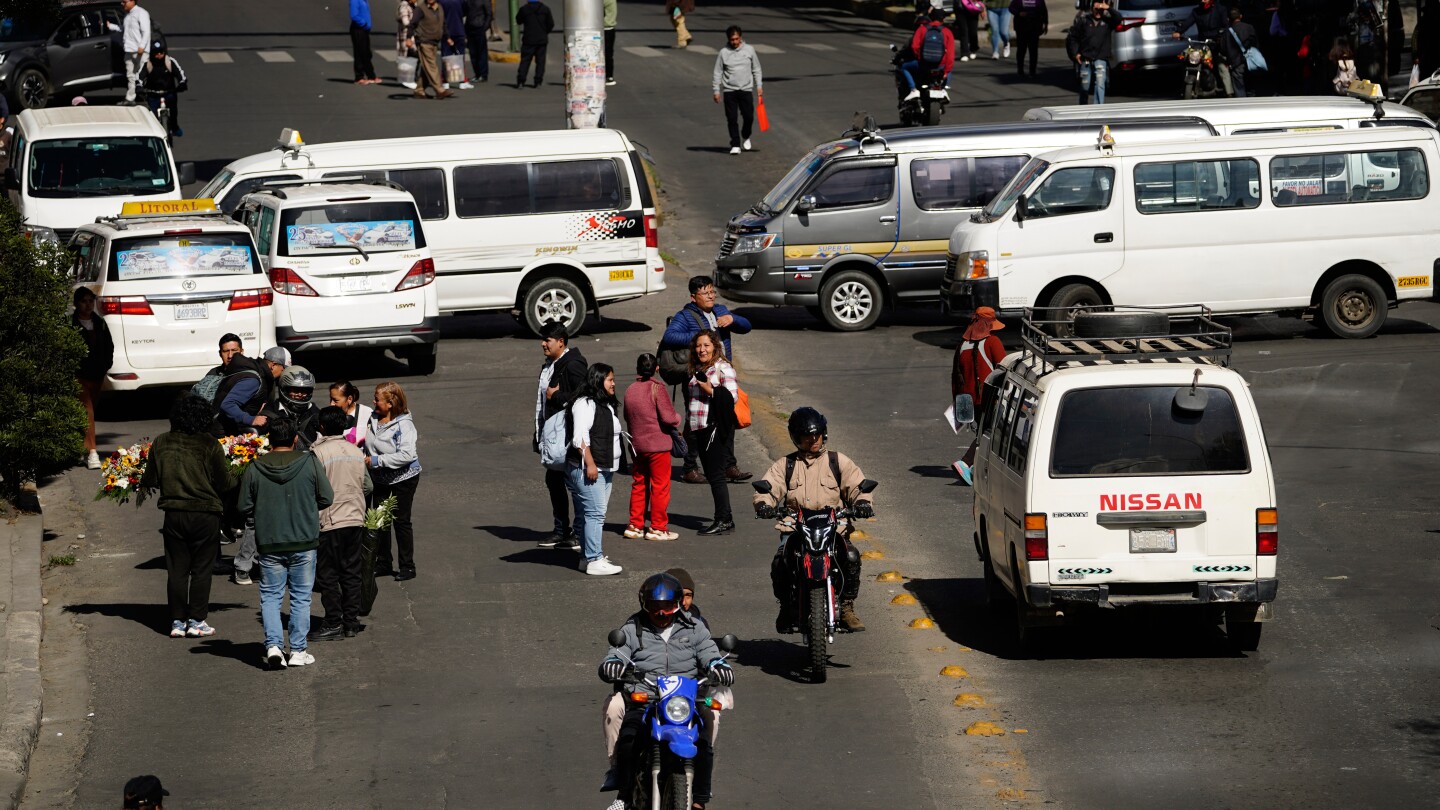
The streets of Bolivia’s largest cities fell silent Friday as public transportation workers launched a strike to protest a 100% fuel price increase imposed by the country’s new government. The strike paralyzed La Paz and Santa Cruz, bringing normal daily activities to a standstill.
Protesters blocked key intersections in La Paz, while public transportation systems completely shut down in other urban centers. Citizens formed long queues at essential services, and many joined the growing demonstrations with protest marches.
“The government has given the people the worst Christmas gift,” said Edson Valdez, a transportation union leader who warned that protests could expand nationwide if authorities don’t reinstate subsidies for gasoline and diesel.
The immediate impact on everyday Bolivians has been severe. “Not only have transportation fares doubled, food prices are through the roof, they’ve risen again,” said Natalia Rodríguez, a homemaker in La Paz. Markets across major cities saw unusual crowds as residents rushed to stock up on essentials before prices climb even higher.
Despite growing public discontent, government officials have taken a firm stance against reversing the policy. “The decree will not be touched. It is not negotiable,” said Presidency Minister José Luis Lupo. “It is a painful measure, but it must be done. We will negotiate public service rates, but there is no other way.”
The government has delegated the responsibility of negotiating urban transportation fares to city mayors, creating a patchwork approach to addressing the immediate crisis.
The fuel price hike comes just over a month into the presidency of Rodrigo Paz, a center-right politician whose election ended two decades of leftist governance in the South American nation. Paz has defended the difficult economic measures as necessary corrections to previous policies.
“We inherited a country hurt in its economy, hurt in its reserves, without dollars, with rising inflation, without fuel and with a ransacked state,” President Paz stated, highlighting the economic challenges his administration faces.
Lupo elaborated on the administration’s perspective, saying, “These measures close a populist cycle that encouraged waste and corruption, and now it is up to us to stabilize the economy to generate growth.”
The economic situation in Bolivia has reached a critical point. According to the Ministry of Economy, inflation will hit 22% by year’s end, with a fiscal deficit representing 12.5% of the country’s gross domestic product. The government claims that ending fuel subsidies “will allow savings of $3 billion that will go to investments.”
Bolivia’s economic challenges stem from years of unsustainable policies. The country has been importing half of its gasoline and nearly all of its diesel for domestic consumption while selling these fuels at heavily subsidized prices—approximately half their actual cost. This practice has severely depleted Bolivia’s foreign currency reserves and created persistent fuel shortages that have disrupted food production and driven up prices.
The administration’s economic package does include some measures aimed at softening the blow for vulnerable populations, including a 20% wage increase and the continuation of social bonuses for lower-income citizens. These initiatives, along with the broader economic reforms, have garnered support from domestic business leaders and the United States government.
In a sign of growing international confidence, a delegation of U.S. business leaders met with President Paz on Thursday to discuss investment opportunities. Additionally, Bolivia’s Legislative Assembly approved an initial $550 million loan from the Andean Development Corporation (CAF), aimed at stabilizing the economy and addressing outstanding debts.
As the standoff continues, both the government and protesters appear entrenched in their positions, suggesting that Bolivia may face extended social unrest as it navigates this difficult economic transition.
Fact Checker
Verify the accuracy of this article using The Disinformation Commission analysis and real-time sources.

8 Comments
This situation illustrates the challenges of economic policymaking, where difficult trade-offs have to be made. I hope the government can find a way to ease the burden on the people.
It’s concerning to see the widespread impact on daily life and essential services. Striking the right balance between fiscal prudence and social welfare is never easy, but needs to be the priority here.
The impact on food and other essential prices is concerning. Rising costs of living make it very challenging for families, especially those with lower incomes. I wonder if targeted subsidies or other measures could help mitigate the hardship.
This highlights the delicate balance between necessary policy changes and the real-world impacts on regular people. I hope cooler heads can prevail and a compromise be reached to restore stability.
This is a difficult situation for Bolivians, with the sudden fuel price hike causing major disruptions to transportation and daily life. I hope the government and unions can find a balanced solution that eases the burden on citizens.
The government’s stance seems rather firm, which could further inflame the protests. Some flexibility and willingness to compromise may be needed to find a workable solution.
It’s good to see citizens protesting peacefully to voice their concerns. The government will need to carefully consider the public reaction and find a way forward that addresses the underlying economic issues.
Removing fuel subsidies is often a politically fraught move, as we’re seeing here in Bolivia. The government will need to weigh the fiscal realities against the significant disruption to citizens’ lives.