


Listen to the article
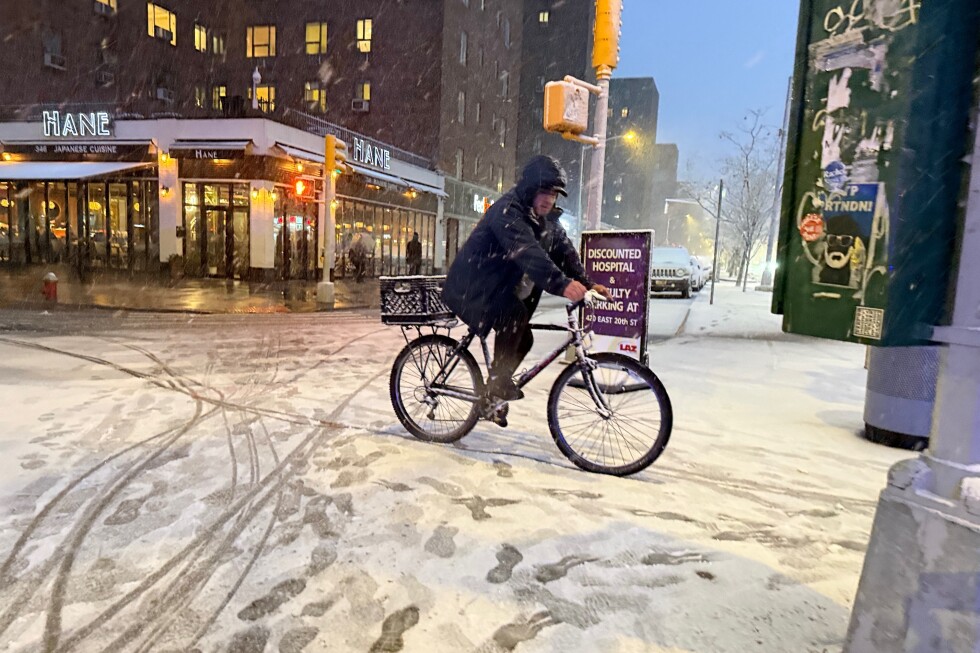
New York City and neighboring regions across the Northeast braced for a potentially historic winter storm Sunday as officials implemented travel bans, airlines canceled thousands of flights, and residents prepared for what meteorologists described as a major blizzard that could dump up to two feet of snow across wide swaths of the region.
The National Weather Service issued blizzard warnings from Maryland to Massachusetts as the powerful nor’easter moved northward, bringing heavy snow and strong winds that threatened to create whiteout conditions and widespread power outages. Visibility in many areas was expected to drop to a quarter-mile or less.
“It’s been a while since we’ve had a major nor’easter and major blizzard of this magnitude across the Northeast,” said Cody Snell, a meteorologist at the Weather Prediction Center. “This is definitely a major winter storm and a major impact for this part of the country.”
New York City Mayor Zohran Mamdani announced a ban on non-emergency travel on all city streets from 9 p.m. Sunday through noon Monday. Similar restrictions were implemented across New Jersey, Pennsylvania, Rhode Island, and other states in the region. The mayor also canceled both in-person and virtual classes for city schools on Monday, calling it the “first old-school snow day since 2019.”
“And to kids across New York City, you have a very serious mission if you choose to accept it: Stay cozy,” Mamdani said.
State of emergency declarations were issued across the region, including in New Jersey, Delaware, Rhode Island, Connecticut, Massachusetts, and parts of New York, as officials mobilized resources to respond to what forecasters warned could become a “Potentially Historic/Destructive Storm” in the Boston-Providence corridor.
The most intense snowfall was expected overnight Sunday into Monday, with accumulations potentially reaching two inches per hour in some areas. Meteorologist Bryce Williams from the weather service’s Boston office warned that strong wind gusts combined with heavy, wet snow created ideal conditions for damaged trees and extended power outages.
“That’s what we’re most concerned with, is the combination of those extreme snow amounts with that wind,” Williams said.
The storm may qualify as a “bomb cyclone” – a weather event characterized by a rapid drop in atmospheric pressure of at least 24 millibars within 24 hours, according to Frank Pereira of the National Weather Service. “We’re expecting it to drop by that magnitude at least over the course of the next 24 hours,” he said.
The impact on transportation networks was immediate and widespread. More than 3,500 flights were canceled across the United States by Sunday afternoon, with thousands more delayed, according to flight tracking website FlightAware. Airports in New York City and Boston reported widespread cancellations and delays as the storm approached. Even delivery services like DoorDash announced the suspension of operations in New York City overnight.
New York City officials mobilized a robust response, recruiting additional personnel to shovel snow beginning Sunday night to get ahead of the first wave of snowfall. Outreach workers were dispatched to encourage homeless individuals to seek shelter in warming centers.
The cultural impact extended to Broadway, where Sunday evening performances were canceled. To the south, landmarks such as Arlington National Cemetery in Washington, D.C., announced Monday closures in anticipation of the storm’s effects.
For some businesses, the storm represented both a challenge and an opportunity. John Berlingieri of Berrington Snow Management on Long Island canceled a family trip to Puerto Rico to prepare his company’s 40 front-end loaders and snow-removal vehicles for what he anticipated would be a week of round-the-clock work clearing shopping malls and industrial parks.
“I’m anticipating at least one week of work around the clock,” Berlingieri said. “We’re going to work 24 to 36 hours straight, sleep for a few hours and then go back.”
As the region hunkered down, meteorologists continued to monitor the storm’s development, warning that the combination of heavy snow and high winds could lead to dangerous conditions through Monday afternoon before gradually tapering off. Officials throughout the affected areas repeatedly urged residents to avoid unnecessary travel and to prepare for potential power outages and other disruptions.
Fact Checker
Verify the accuracy of this article using The Disinformation Commission analysis and real-time sources.

8 Comments
Wow, that sounds like a brutal winter storm hitting the East Coast. With blizzard conditions and potential for heavy snow and power outages, the region is really in for a challenge. Hope the travel bans and preparations help keep people safe during this major weather event.
Agreed, it’s good to see officials taking proactive measures to protect public safety. Hopefully the cleanup and restoration efforts can get underway quickly once the worst of the storm passes.
The Northeast is no stranger to powerful nor’easters, but this one does sound particularly intense. With the potential for heavy snow, strong winds, and whiteout conditions, it’s critical that people heed the blizzard warnings and avoid unnecessary travel. Safety should be the top priority.
Curious to see how this storm may impact commodity prices, especially for energy and metals that are vital to manufacturing and infrastructure. Extreme weather events can sometimes cause supply chain bottlenecks and spikes in prices for key raw materials.
That’s a good observation. Major winter storms like this can definitely disrupt logistics and production for mining and energy companies, which in turn can affect commodity markets and pricing. Will be interesting to see if this leads to any short-term price volatility.
Major winter storms like this can have a big impact on mining and energy operations in the affected areas. Wonder how the mining companies and utilities are preparing to maintain production and keep the power grid running through the blizzard conditions.
Good point. Severe winter weather can definitely disrupt supply chains and logistics for natural resource industries. They’ll need to have contingency plans in place to minimize any operational disruptions.
Hoping the preparations and response efforts help minimize the damage and disruption from this powerful winter storm. The East Coast has certainly dealt with its fair share of extreme weather in recent years, but the scale of this blizzard sounds truly daunting.