


Listen to the article
The racial justice funding wave that swept across America following George Floyd’s murder in 2020 has largely receded, leaving many Black-led nonprofit organizations struggling with diminished resources, according to new research released Tuesday by Candid and the Association of Black Foundation Executives (ABFE).
The analysis reveals that while some large Black-led nonprofits experienced temporary funding increases between 2020 and 2022, smaller organizations saw no significant financial gains. This pattern of disinvestment has left community groups particularly vulnerable as they face increasing demands for services amid economic challenges.
“We’re literally being asked to do more with less resources,” Cliff Albright, co-founder of Black Voters Matter, told The Associated Press. His organization is among many Black-led nonprofits now helping low-income families cope with rising healthcare costs and food prices despite their own funding constraints.
The research highlights a troubling trend: small Black-led nonprofits, those with annual expenses of $1 million or less, received just over one-third of their funding from continuing supporters. This lack of sustained backing has hampered their ability to build organizational capacity and pursue long-term goals.
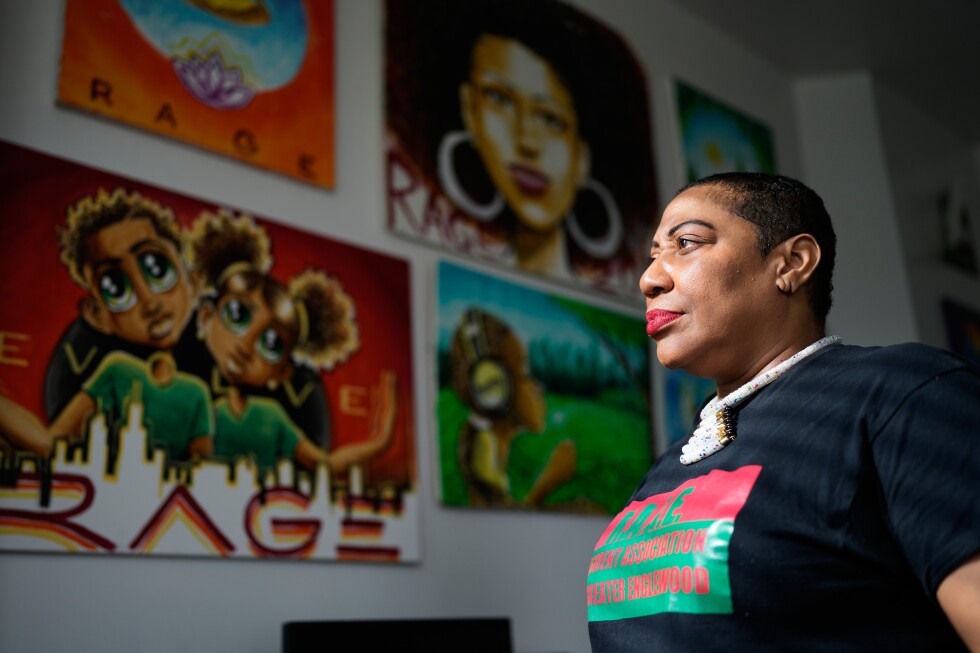
Asiaha Butler, CEO of the Resident Association of Greater Englewood on Chicago’s South Side, experienced this phenomenon firsthand. Her organization, serving one of Chicago’s most impoverished neighborhoods, operated with a handful of consistent supporters for years. Then summer 2020 arrived, bringing more than two dozen new funders.
“All of a sudden, we were desirable for people to fund,” Butler recalled. However, this funding “spurt” quickly became a “curse” as the initial capital infusion tapered off. “We started seeing this revenue and thinking we’re gaining really great relationships with funders. And, really, those priorities shifted quickly.”
The research points to a fundamental disconnect between Black-led organizations and institutional funders. ABFE CEO Susan Taylor Batten noted that foundations lacked relationships with Black organizations of any scale prior to 2020, creating a scramble when protestors demanded businesses and philanthropies address systemic racism.
Kia Croom, whose fundraising firm works with nonprofits in Black communities, observed that her clients received unprecedented corporate funding during this period. Some even expanded their development staff to manage the influx—only to face layoffs when the funds disappeared.
“It was just a very transactional gift at best,” Croom said.
The problem extends beyond mere funding amounts to the nature of the support provided. Kandee Lewis, CEO of Positive Results Center in Los Angeles, noted that while her organization received checks from new supporters, these were typically one-time donations rather than the beginning of meaningful relationships. Lewis felt funders were motivated by her organization’s Black leadership rather than a genuine understanding of its work.
“They were so busy trying to figure out who was who that they didn’t really take time to get to know people,” she said.
For smaller organizations, breaking into philanthropic networks presents a major hurdle. Jaleesa Hall, who heads Raising A Village Foundation in Washington, D.C., found that her limited connections to high-net-worth individuals made it difficult to attract foundation funding.
“Small, Black-led nonprofits simply aren’t in those rooms to begin with,” Hall explained.
The report confirms her experience: most foundation grant dollars to small Black-led nonprofits came from first-time funders rather than continuing supporters, creating what Cathleen Clerkin, associate vice president of research at Candid, described as a perpetual cycle of “first dates” with potential funders.
“They’re just constantly going on first dates with new funders and hoping that somebody will invest in them and understand them,” Clerkin said.
Small nonprofit leaders often lack the time or resources to attend networking opportunities or national conferences where connections with funders might be established. T’Pring Westbrook, a nonresident fellow at the Urban Institute’s Center on Nonprofits and Philanthropy, pointed to the problem of “trend funding” among foundations.
“Maybe during Black History Month there will be a funding campaign,” she said. “But the thing about a campaign is a campaign doesn’t build sustainability.”
Black-led organizations also face structural barriers in philanthropic practices. Many struggle with grant eligibility requirements and reporting demands that strain their limited staff. “It ends up feeling like a burden,” Hall explained. “The juice isn’t worth the squeeze.”
While the philanthropy sector has begun embracing trust-based models offering general operating support and multi-year grants, Black-led nonprofits have largely been left out of this evolution. The report showed only one-third received general operating support, compared to just over half of non-Black counterparts.
“We are still seeing remnants of bad practice when it comes to investing in Black communities,” Batten said. “There’s just no way for a foundation to move its mission for communities in this country, let alone Black nonprofits to move theirs, if we do not evolve this sector.”
For Butler in Chicago, the funding downturn has delayed a nearly $7 million capital project aimed at building economic justice through a Black business district in Englewood. She described the search for additional funding as “pulling teeth” after initially securing a $1 million grant. With philanthropic partners withholding support, she’s turned to public funding, securing a $2.5 million grant from the City of Chicago and awaiting a pending $1.5 million state award.
“Things shifted,” Butler reflected, “and so we didn’t want to start soliciting for a capital campaign. The timing was off.”
Fact Checker
Verify the accuracy of this article using The Disinformation Commission analysis and real-time sources.

14 Comments
This is a sobering reminder that progress on racial equity and justice is not linear. While the initial outpouring of support was encouraging, the failure to sustain that commitment is deeply disappointing. Funders and philanthropists need to approach this work with a deeper understanding of the challenges facing Black-led nonprofits and a steadfast, long-term approach.
Well said. Lasting change requires consistent, multi-year support and a true partnership between funders and community organizations. This research should prompt a critical re-evaluation of funding strategies and a renewed commitment to equitable, durable support.
The economic challenges facing these nonprofits are deeply concerning. They are being asked to do more with less at a time when the needs of their communities are only growing. This mismatch between demand and resources must be addressed through consistent, equitable funding.
I agree, the funding disparities highlighted in this research are unacceptable. Black-led nonprofits deserve the same level of sustained support as their better-resourced counterparts.
The research highlights a persistent gap in funding and support for Black-led nonprofit organizations, even in the wake of increased attention on racial justice issues. This is a systemic problem that requires a concerted, long-term effort to address. Funders and policymakers must do more to ensure these vital community groups have the resources they need.
It’s disheartening to see the philanthropic momentum fizzle out so quickly. Black-led nonprofits provide essential services and are a lifeline for many vulnerable communities. Funders need to demonstrate long-term commitment, not just react to high-profile events.
Exactly. Sustainable, multi-year funding is crucial for these nonprofits to effectively plan and deliver their programs. One-time donations or short-term grants are not enough to truly support their work.
The findings in this research are both disheartening and unsurprising. Black-led nonprofits have long faced chronic underfunding and disproportionate challenges, even as they provide essential services to their communities. Funders must take a hard look at their practices and find ways to build more sustainable, equitable partnerships with these vital organizations.
This is a concerning trend – the temporary surge in funding for Black-led nonprofits after George Floyd’s murder has not translated into lasting commitments. Small organizations in particular are struggling despite increased demands for their services. It’s crucial that sustainable support is provided to these vital community groups.
I agree, the disproportionate impact on smaller Black-led nonprofits is especially troubling. These organizations are often best positioned to understand and address the unique needs of their local communities.
The lack of sustained funding for small Black-led nonprofits is really troubling. These organizations are often the backbone of their communities, providing vital services and support. Funders must find ways to provide more consistent, multi-year support to ensure these groups can continue their important work.
Absolutely. Temporary funding spikes, no matter how well-intentioned, are not enough. Funders need to take a hard look at their priorities and find ways to build long-term, equitable partnerships with Black-led nonprofits.
This is a disappointing outcome, but not entirely surprising. Meaningful, systemic change is difficult and requires long-term commitment. I hope this research serves as a wake-up call for funders to reassess their priorities and ensure their support translates into lasting impact for Black communities.
This is a stark reminder that real, lasting change is difficult to achieve. While the initial outpouring of support was encouraging, it seems the true test is maintaining that commitment over time. I hope funders and policymakers take this research to heart and find ways to provide more durable support.