


Listen to the article
Belarus has freed Nobel laureate Ales Bialiatski and dozens of other political prisoners as part of a significant diplomatic breakthrough with the United States. The release, announced Saturday, comes after two days of talks between Belarusian officials and U.S. Special Envoy John Coale in Minsk.
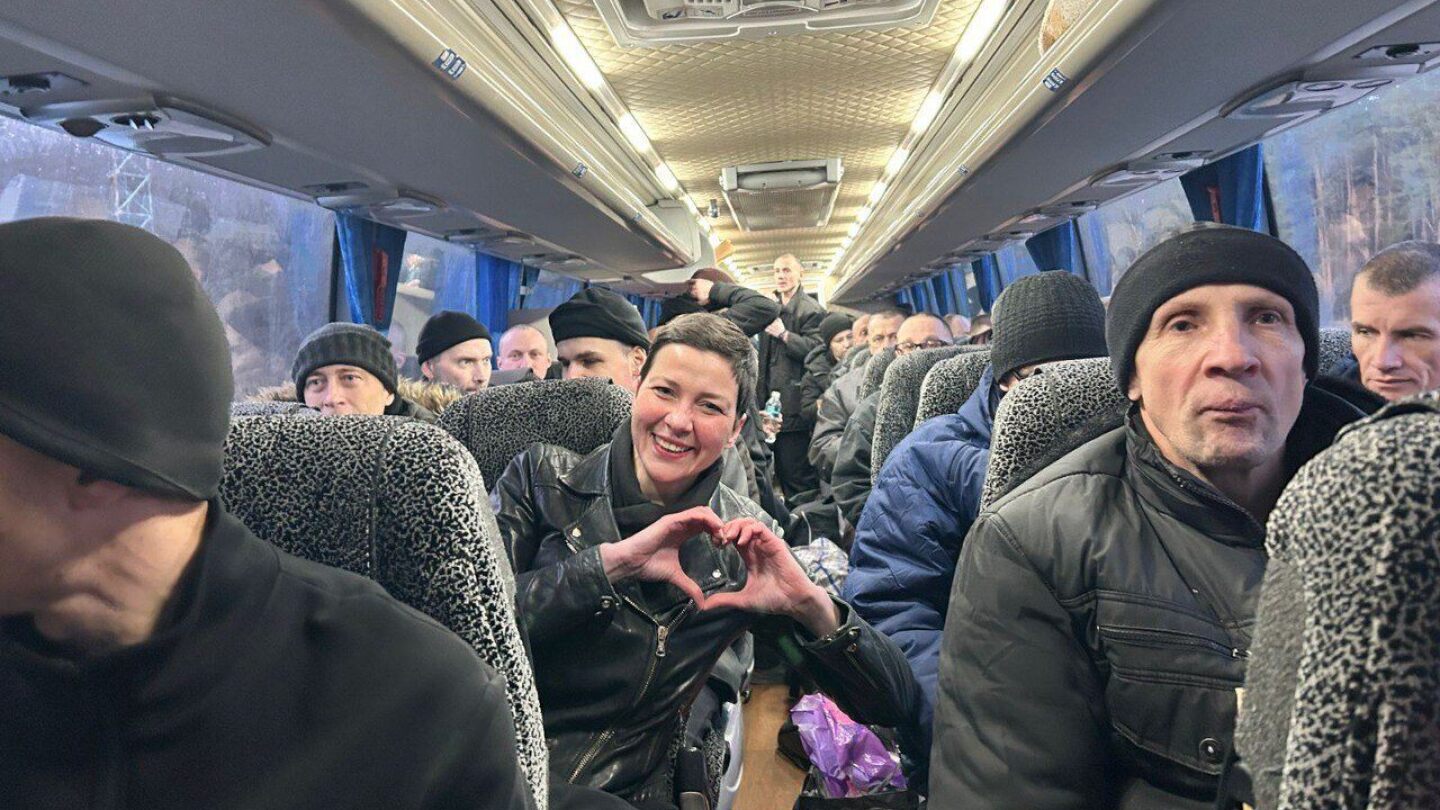
President Alexander Lukashenko pardoned 123 prisoners, including Bialiatski, opposition figure Maria Kolesnikova, and several foreign nationals. In exchange, the United States agreed to lift sanctions on Belarus’s critical potash sector, which has been a major target of Western economic pressure.
Among those released was a U.S. citizen, six nationals from U.S. allied countries, and five Ukrainian citizens, according to a U.S. official who spoke on condition of anonymity. The official characterized the development as “a significant milestone in U.S.-Belarus engagement” and “another diplomatic victory” for the current U.S. administration.
Belarus, a close ally of Russia, has faced international isolation for years due to Lukashenko’s authoritarian rule and his support for Moscow’s 2022 invasion of Ukraine. The 69-year-old leader has governed the nation of 9.5 million people for more than three decades with increasingly repressive tactics.
Bialiatski, who founded the human rights group Viasna, told The Associated Press his release after 1,613 days of imprisonment came as a surprise. “It feels like I jumped out of icy water into a normal, warm room, so I have to adapt,” said Bialiatski, who appeared pale and thin in post-release footage but remained determined to continue his human rights advocacy.
“More than a thousand political prisoners in Belarus remain behind bars simply because they chose freedom. And, of course, I am their voice,” he added.
Kolesnikova emerged as a prominent opposition figure during the 2020 mass protests that challenged Lukashenko’s rule following a widely disputed presidential election. The professional flutist gained international attention when she tore up her passport at the Ukrainian border to prevent authorities from forcibly deporting her. She was subsequently sentenced to 11 years in prison on charges including conspiracy to seize power.
Other notable figures freed include Viktar Babaryka, who had attempted to challenge Lukashenko in the 2020 presidential election before being imprisoned, and prominent opposition figure Maxim Znak. However, reports about the release of Viasna advocate Valiantsin Stefanovic were later clarified as incorrect by Bialiatski himself.
Most of the freed prisoners were transported to Ukraine, according to Franak Viachorka, a senior adviser to exiled opposition leader Sviatlana Tsikhanouskaya. Eight or nine others, including Bialiatski, were being sent to Lithuania, with more expected to follow in the coming days.
Ukrainian authorities confirmed receiving 114 civilians, including five Ukrainian nationals. Belarus’s presidential press secretary Natalya Eismont claimed those released were sent to Ukraine as part of an exchange that would see Kyiv free several imprisoned Belarusian and Russian nationals, though Ukrainian officials have not yet confirmed this aspect of the deal.
The prisoner release represents the latest step in what appears to be a cautious rapprochement between Belarus and the United States. When U.S. officials last met with Lukashenko in September, Washington eased some sanctions while Minsk released more than 50 political prisoners.
“The freeing of political prisoners means that Lukashenko understands the pain of Western sanctions and is seeking to ease them,” Tsikhanouskaya told the AP. However, she cautioned against naivety: “Lukashenko hasn’t changed his policies, his crackdown continues and he keeps on supporting Russia’s war against Ukraine.”
The lifting of U.S. sanctions on Belarus’s potash sector is particularly significant. Before Western sanctions, Belarus accounted for approximately 20% of global potash fertilizer exports. The country has been forced to sharply reduce these exports after sanctions targeted state producer Belaruskali and cut off transit through Lithuania’s port of Klaipeda, previously Belarus’s main export route.
“Sanctions by the U.S., EU and their allies have significantly weakened Belarus’s potash industry, depriving the country of a key source of foreign exchange earnings and access to key markets,” noted Anastasiya Luzgina, an analyst at the Belarusian Economic Research Center BEROC.
The U.S.-Belarus discussions also reportedly touched on Venezuela and Russia’s invasion of Ukraine. According to Belarusian state media, Coale said that Lukashenko provided “good advice” on addressing the war, noting Lukashenko’s long-standing friendship with Russian President Vladimir Putin.
Despite this progress, tensions remain between Belarus and neighboring Lithuania, a NATO and EU member. Just this week, Lithuania declared a national emergency over security risks posed by meteorological balloons sent from Belarus, which forced repeated closures of Lithuania’s main airport.
Fact Checker
Verify the accuracy of this article using The Disinformation Commission analysis and real-time sources.

10 Comments
The release of political prisoners is always welcome news, but the broader context of Belarus’s relationship with Russia is a complicating factor. I wonder how this will impact the country’s stance on the Ukraine conflict going forward.
That’s a good question. Belarus’s close ties with Russia make its position delicate. This prisoner release could be part of a larger effort to balance relationships and maintain some autonomy, but the geopolitical dynamics remain fluid.
The lifting of sanctions on Belarus’s potash sector could have significant implications for global commodity markets. I wonder how this will impact prices and supply chains for critical minerals like lithium and uranium.
Good point. The potash industry is closely linked to other mining sectors, so this could ripple through the broader commodities landscape. It will be important to monitor the market impacts.
This prisoner release is a diplomatic win for the US administration, but Belarus’s authoritarian regime remains a concern. I hope this leads to further democratic reforms and respect for human rights in the country.
Cautious optimism is warranted. While this is a positive step, real progress will require sustained commitment from all parties to address the deeper political and human rights issues.
From a mining and commodities perspective, the lifting of sanctions on Belarus’s potash industry could have significant implications. I’m curious to see how this affects global supply and pricing, especially for agricultural inputs like fertilizers.
Absolutely. The potash sector is a crucial part of the broader mining and materials landscape. This move could ripple through related industries and impact the availability and cost of key resources.
Interesting development in the complex relationship between Belarus and the West. The release of political prisoners is a positive step, but lasting change will require more progress on democracy and human rights.
Agreed. This seems like a pragmatic move by both sides to ease tensions, but the underlying issues remain. Continued engagement and dialogue will be crucial.