


Listen to the article
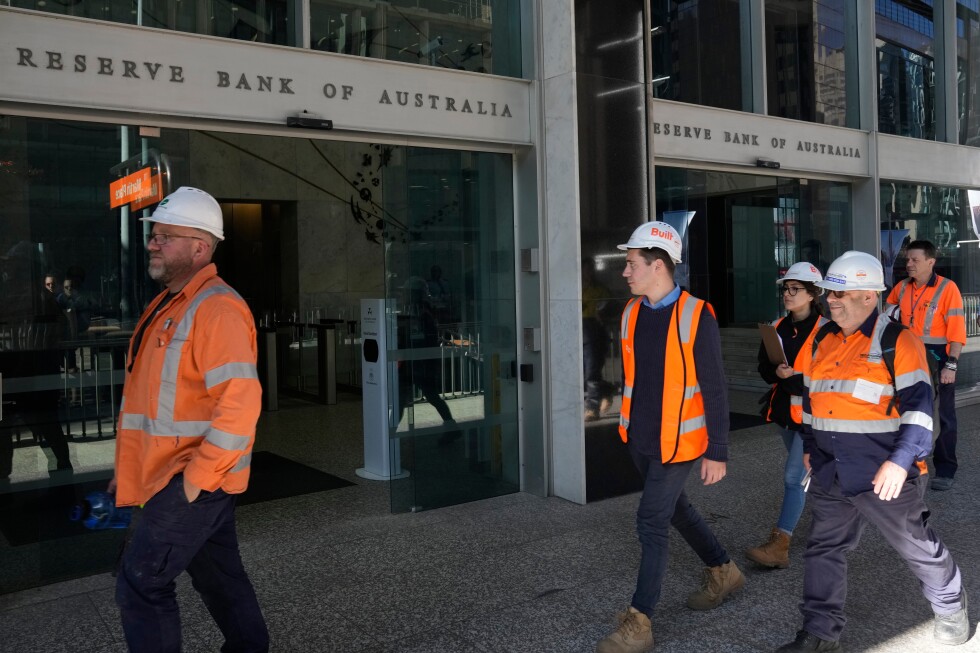
Australia’s central bank raised its benchmark interest rate by a quarter percentage point to 3.85% on Tuesday, responding to a concerning surge in inflation that has persisted despite three rate cuts last year.
The Reserve Bank of Australia’s decision marks the first rate increase since November 2023, when the cash rate climbed from 4.10% to 4.35%. Financial analysts had widely anticipated this move following government data released last week showing inflation had accelerated to 3.8% for the 12 months through December, up from 3.4% through November.
In its statement, the central bank emphasized that “inflation is likely to remain above target for some time.” The bank maintains a target inflation band between 2% and 3%, a range that has proven elusive despite earlier progress. While inflation had substantially declined from its peak of 7.8% in late 2022, it “picked up materially in the second half of 2025,” according to bank officials.
The bank also noted robust economic conditions despite global uncertainties. “Uncertainty in the global economy remains significant but so far there has been little or no depressing effect on the Australian economy; indeed, recent growth and trade in Australia’s major trading partners has surprised on the upside,” the statement said.
Treasurer Jim Chalmers acknowledged the decision would bring “difficult news” for millions of Australians with mortgages and businesses already struggling with cost-of-living pressures. He pushed back against critics who suggested government spending was fueling inflation, pointing to the bank’s assessment that blamed growth in private demand driven by household spending and investment.
The rate hike represents a significant policy shift for the Reserve Bank, which had reduced the cash rate by 25 basis points three times last year—in February, May, and August. The February 2023 adjustment had been Australia’s first rate cut since October 2020, reflecting what appeared to be improving inflation conditions at that time.
Throughout 2023, Australia’s inflation rate followed a volatile path, falling from 2.4% in the March quarter to 2.1% in June—briefly touching the target range—before rebounding to 3.2% in September and continuing upward to close the year.
Cherelle Murphy, EY Oceania Chief Economist, described the rapid policy reversal as unusual, noting, “It is certainly a possibility here obviously, that last rate cut wasn’t needed. But to be fair to the Reserve Bank, that was not obvious at all at the time.” She added that the previous cuts appeared justified based on encouraging inflation data that subsequently proved misleading.
Murphy expressed particular surprise at Australia’s strengthening labor market, with unemployment falling from 4.3% in November to 4.1% in December, suggesting economic resilience despite previous rate adjustments. “It does seem like the economy is running a little bit too hot,” she observed, and warned that further tightening might be necessary, adding, “I certainly wouldn’t rule out another rate hike later in the year.”
The central bank’s decision reflects growing concerns that inflationary pressures in Australia remain more persistent than previously expected, potentially requiring a more sustained period of monetary policy tightening to bring prices back within the target range. This development aligns with challenges faced by central banks globally, many of which have struggled to achieve soft landings while combating post-pandemic inflation surges.
For Australian households, particularly the significant portion with variable-rate mortgages, the rate increase will translate to higher monthly payments, adding pressure to household budgets already strained by rising costs across essential goods and services.
Fact Checker
Verify the accuracy of this article using The Disinformation Commission analysis and real-time sources.

18 Comments
The RBA’s decision to raise rates again signals their commitment to controlling inflation, even if it means some short-term pain for the mining and energy sectors. I’ll be watching closely to see how this plays out.
Interesting that the RBA is hiking rates despite the global economic uncertainty. I wonder if they’re more concerned about domestic inflation pressures than external factors at the moment.
Good point. The RBA may be prioritizing domestic price stability over broader global conditions. It will be important to see how this balances out in the coming months.
With inflation still elevated, the RBA appears to be taking a firm stance. This could have implications for the mining and energy sectors, which are sensitive to interest rate changes. I’ll be watching to see how companies in those industries respond.
Curious to see how the RBA’s rate hike will impact commodity prices and mining profits. While inflation is a concern, I hope they can find a way to tame it without significantly slowing the broader economy.
Agreed, it’s a delicate balance. The RBA will need to be vigilant in assessing the impacts across different industries and sectors.
Tackling high inflation is always a tricky balancing act for central banks. Curious to see how the RBA’s move will affect consumer spending, business investment, and the broader economic outlook in Australia.
Definitely a challenging environment for policymakers right now. The RBA will need to be vigilant in monitoring the effects of these rate hikes on the economy.
The RBA’s decision to raise rates again is a clear signal that they’re serious about bringing inflation under control. It will be interesting to see how this impacts the mining and energy industries in particular.
Agreed, the mining and energy sectors are likely to feel the effects of these rate hikes more acutely. It will be important to monitor how companies in those industries adapt.
Surprised to see the RBA hiking rates again after the recent cuts. I wonder if they’re concerned about inflation becoming entrenched or if there are other economic factors driving this decision.
Surprised to see the RBA hiking rates again after the recent cuts. I wonder if they’re concerned about inflation becoming entrenched or if there are other economic factors driving this decision.
The RBA’s decision to raise rates again is not surprising given the recent spike in inflation. It will be interesting to see if this helps bring prices back under control without significantly dampening economic growth.
Agreed, it’s a delicate balance the RBA has to strike. Curious to see how the mining and commodities markets react in the coming months.
Higher interest rates could create some headwinds for the mining and energy sectors in Australia, but a strong domestic economy may help offset that. It will be worth monitoring how companies in these industries adapt to the changing policy environment.
Higher interest rates could create some challenges for mining and commodities companies in Australia, but a strong domestic economy may help offset that. I’ll be curious to see how the different sectors respond.
Interesting that the RBA is hiking rates again to combat persistent inflation. I wonder how this will impact the mining and commodities sectors in Australia, which have been dealing with global economic headwinds.
Higher rates could put some pressure on commodity prices and mining profits, but a strong domestic economy may help offset that. It will be important to watch the impacts on different commodities and companies.