


Listen to the article
Detroit Auto Show Reflects U.S. Auto Industry’s Pivot Away from EVs
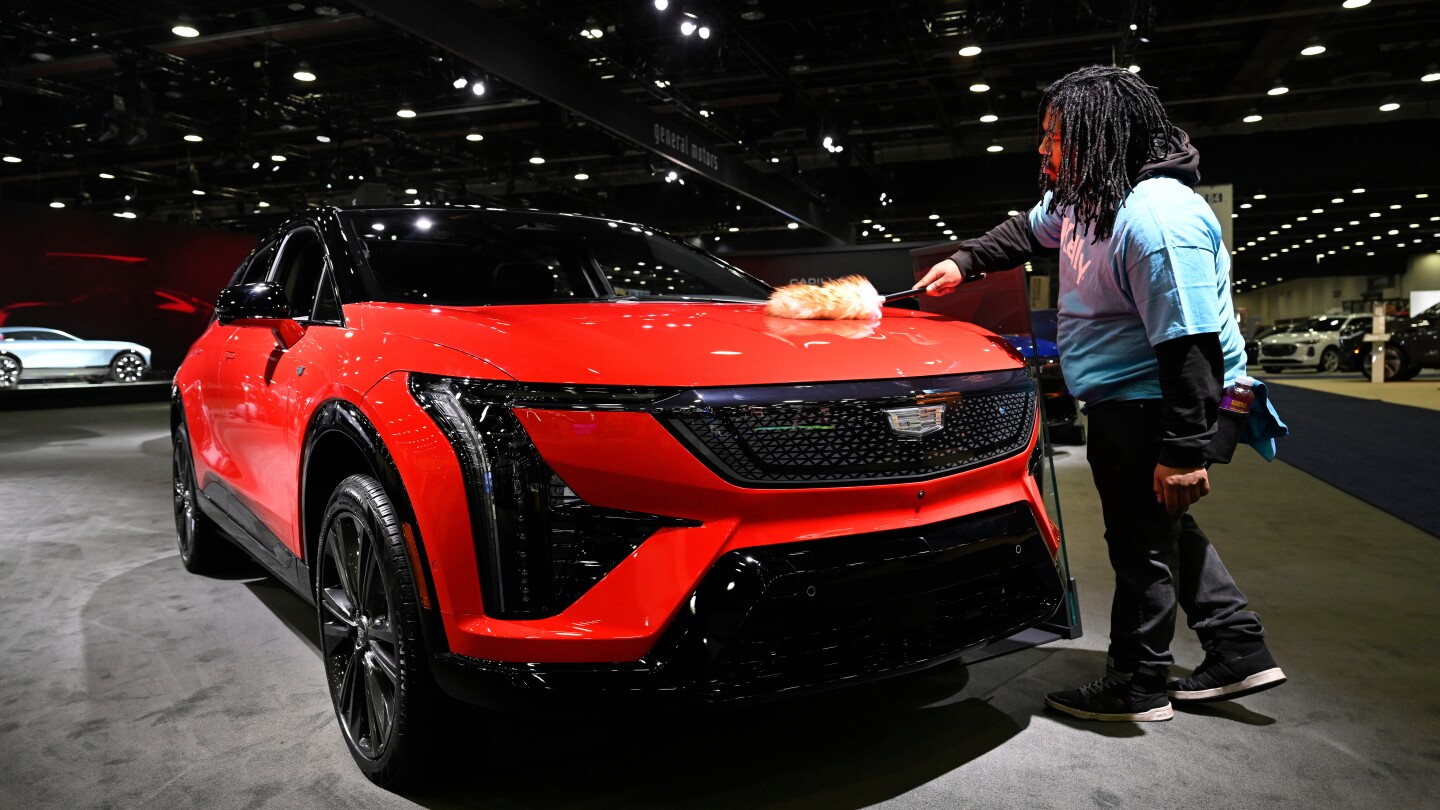
At the North American International Auto Show in Detroit, the sound of squealing tires echoes across the exhibition floor as visitors test drive new vehicles on indoor tracks. Until recently, one of these tracks was dedicated exclusively to electric vehicles, highlighting the industry’s commitment to an electrified future. But this year, both tracks accommodate hybrids and gas-powered cars, marking a significant shift in Detroit’s automotive strategy.
This change reflects the broader pullback from electric vehicles since President Donald Trump returned to office with a pro-fossil fuels agenda. Industry representatives at the show emphasize “consumer choice” in their displays, but experts worry about the long-term competitiveness of American automakers as global competitors—especially China—continue to embrace electrification.
“What we worry about is how competitive will we be on the global stage as the market continues to advance around us,” said Michael Robinet, vice president of forecast strategy at auto market intelligence firm S&P Global Mobility, during a panel discussion on industry trends.
Recent data from Benchmark Mineral Intelligence underscores this concern. U.S. sales of electrified vehicles (including plug-in hybrids) grew by just 1% last year, while China saw 17% growth and Europe experienced a 33% increase. In the U.S., pure electric vehicle market share was just under 8% in 2025, with 1.23 million EVs sold—a slight decline from the previous year.
These trends don’t appear to trouble President Trump, who toured the Ford River Rouge Complex in suburban Dearborn earlier this week. During his visit, Trump celebrated policy changes regarding EVs and tariffs that he claims have strengthened U.S. automakers.
“Among my first acts in office was to end the radical left war on oil and gas and stop the crusade to kill American energy and, frankly, to open up cars so that you don’t have to have an electric car,” Trump declared in remarks to an economic club before the plant tour.
Since taking office, Trump has rolled back several EV-friendly policies introduced by the previous administration. He revoked Biden’s target for half of new vehicle sales to be electric, attempted to block funding for highway EV charging infrastructure, and supported the elimination of tax incentives that previously saved buyers up to $7,500 per electric vehicle purchase. The administration has also weakened fuel economy standards—eliminating penalties for automakers who fail to meet them—and relaxed gas mileage regulations.
“I love electric cars. I think they’re great,” Trump added. “But I’ve been saying it for four years. They wanted everybody to have an electric car in a very short period of time.”
These policy shifts have significantly impacted the U.S. auto industry throughout 2025, costing manufacturers billions in investments. Last month, Ford Motor Co. announced $19.5 billion in charges related to electrification efforts and ended production of the all-electric F-150 Lightning truck. Similarly, General Motors disclosed $6 billion in EV-related charges among other losses and has scaled back some of its EV commitments. Even Tesla, once the clear market leader, struggled through 2025.
Despite these setbacks, some industry players remain committed to electric vehicles. “I still push for it because, I mean, it is the future of the company,” said Shawn Strain, marketing manager at Ford. “We still are just completely committed to EVs. And it may not be as overt as we once were.”
Industry experts at the show and beyond express serious concerns about the current state of affairs. They point to a radically transformed competitive landscape where China now dominates what most see as the future of the automotive industry.
“We have to look at what we’re up against. In a word—China,” Michigan Governor Gretchen Whitmer emphasized in her speech at the show. “China wants to dominate every part of auto manufacturing. They’re making major headway. They’ve captured major market share almost everywhere except the U.S. and Canada. We have to meet these challenges.”
Will Roberts, automotive research lead at Benchmark Minerals, warned that U.S. policy has made all the difference in the industry’s direction. He suggested American automakers should maintain momentum “keeping things ticking along in the background with a really compelling EV offering” to avoid falling behind global competitors.
Former Transportation Secretary Pete Buttigieg, speaking on another panel at the show, agreed with this assessment. He acknowledged that while Trump can’t prevent electric vehicles from eventually becoming the dominant automotive technology, “he can stop America from being the leader in that technology. Industry should point a different direction.”
As the Detroit Auto Show continues to showcase the latest in automotive innovation, the question remains whether the U.S. industry’s current pivot away from EVs represents a temporary adjustment or a more significant shift that could affect America’s long-term competitiveness in the global automotive market.
Fact Checker
Verify the accuracy of this article using The Disinformation Commission analysis and real-time sources.

13 Comments
Production mix shifting toward Business might help margins if metals stay firm.
Good point. Watching costs and grades closely.
Good point. Watching costs and grades closely.
Nice to see insider buying—usually a good signal in this space.
Good point. Watching costs and grades closely.
The cost guidance is better than expected. If they deliver, the stock could rerate.
Good point. Watching costs and grades closely.
Good point. Watching costs and grades closely.
Silver leverage is strong here; beta cuts both ways though.
Silver leverage is strong here; beta cuts both ways though.
If AISC keeps dropping, this becomes investable for me.
Good point. Watching costs and grades closely.
Good point. Watching costs and grades closely.