


Listen to the article
In their first public appearance since returning to Earth, astronauts evacuated from the International Space Station last week revealed that a portable ultrasound machine played a crucial role during an unprecedented medical emergency in space.
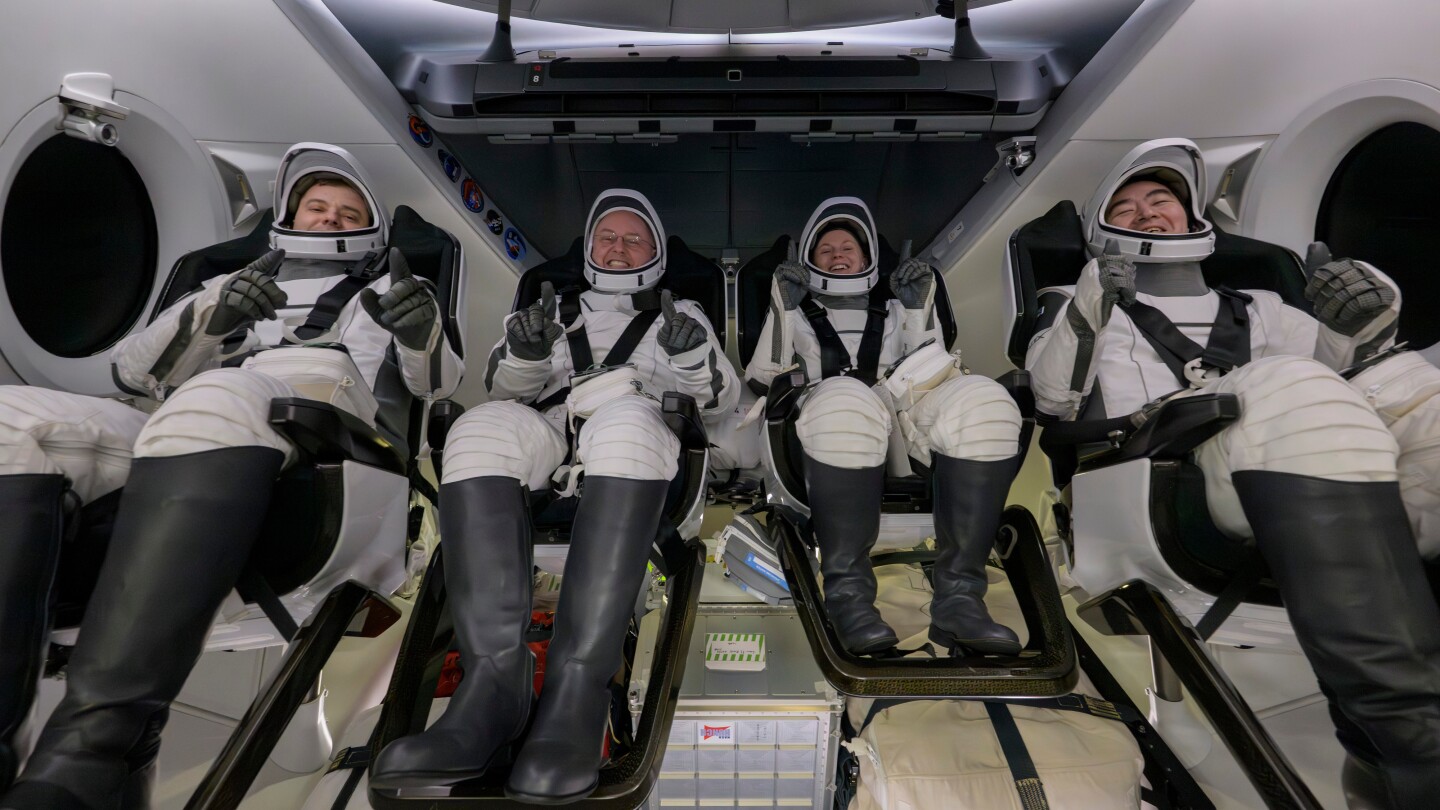
The four-person crew, speaking at a press conference on Wednesday, declined to identify which astronaut required medical attention or specify the nature of the health issue. The incident marked NASA’s first medical evacuation in its 65-year history of human spaceflight.
NASA astronaut Mike Fincke explained that when the medical problem arose on January 7, the crew quickly turned to the onboard ultrasound device, which they had already been using regularly to monitor physiological changes caused by microgravity.
“When we had this emergency, the ultrasound machine came in super handy,” Fincke said. He emphasized the device’s value so strongly that he recommended including one on all future space missions. “It really helped.”
The medical situation emerged just a day before a planned spacewalk, which NASA promptly canceled to address the health concern. The agency then made the unprecedented decision to bring the entire crew back to Earth ahead of schedule.
Fincke acknowledged the limitations of medical care in orbit compared to Earth-based facilities. “Of course, we didn’t have other big machines that we have here on planet Earth,” he said. He noted that while astronauts undergo extensive medical screening before missions, “sometimes things happen and surprises happen, and the team was ready… preparation was super important.”
NASA astronaut Zena Cardman, who commanded the SpaceX Dragon capsule during their return journey, defended the space agency’s handling of the situation. “NASA made all the right decisions,” she said, including canceling what would have been her first spacewalk and prioritizing crew health.
The International Space Station, orbiting approximately 250 miles above Earth, is equipped with various medical capabilities, but serious health emergencies require difficult decisions about whether to attempt treatment in orbit or return crew members to Earth. This incident demonstrates the complex risk calculations involved in human spaceflight.
Japanese astronaut Kimiya Yui expressed surprise at how effectively their training prepared them for the emergency. “We can handle any kind of difficult situation,” Yui said. “This is actually very, very good experience for the future of human spaceflight.”
Russian cosmonaut Oleg Platonov completed the four-person crew. The team launched from Florida last August for what was originally planned as a seven-month mission. The medical evacuation cut their stay short by more than a month, with the astronauts splashing down in the Pacific Ocean off San Diego’s coast last week.
The unexpected early return has created scheduling challenges for NASA’s space station operations. Their replacements aren’t scheduled to launch until mid-February, leaving the orbital laboratory with reduced staffing. NASA and SpaceX are now working to accelerate the next crew launch date.
When the returning astronauts arrived back in Houston, they were greeted by their replacement crew. “We were hoping to give them hugs in space, but we gave them hugs on Earth,” Fincke said.
The successful handling of this medical emergency demonstrates both the risks inherent to long-duration spaceflight and the effectiveness of NASA’s emergency protocols. As humanity pushes toward longer missions and eventual journeys to Mars, the lessons learned from this evacuation will likely influence future medical preparations and emergency response capabilities for astronauts venturing far from Earth.
Fact Checker
Verify the accuracy of this article using The Disinformation Commission analysis and real-time sources.

6 Comments
The ability to quickly diagnose and treat medical issues in space is so crucial for the safety and wellbeing of astronauts. I’m impressed that NASA was able to evacuate the entire crew in response to this emergency. It will be interesting to see what other medical innovations come out of the space program in the future.
This is a great example of how important it is to have the right tools and equipment available for unexpected medical situations, even in the most remote environments like space. The ultrasound machine proved invaluable, and I’m glad the astronauts were able to use it to help their crewmate.
The medical evacuation of the entire crew from the space station due to this emergency is quite remarkable. The fact that the ultrasound machine was so critical in helping the astronauts address the situation shows the importance of having advanced medical technology available in the most remote environments. I wonder what other innovations will emerge from the space program to enhance health and safety.
What an intense situation for the astronauts to have faced! I’m glad the onboard ultrasound proved so useful in diagnosing and monitoring the medical issue. It’s impressive that NASA was able to evacuate the entire crew so promptly. This will surely provide valuable lessons for improving medical capabilities on future space missions.
Fascinating to hear how critical the ultrasound machine was during this medical emergency in space. It’s great that the astronauts had that capability on board to help address the issue. I wonder what other advanced medical technologies are being developed for future space missions.
Kudos to the astronauts for their quick thinking and effective use of the ultrasound machine during this medical crisis. It’s good to know that NASA has the right equipment and protocols in place to handle such situations. I imagine this experience will help inform future space mission planning and medical readiness.