


Listen to the article
Asian markets tumbled Monday morning as fears over escalating tensions between the United States and Iran continued to rattle investor confidence across the region, sending oil prices surging and extending a global selloff that has dominated markets for weeks.
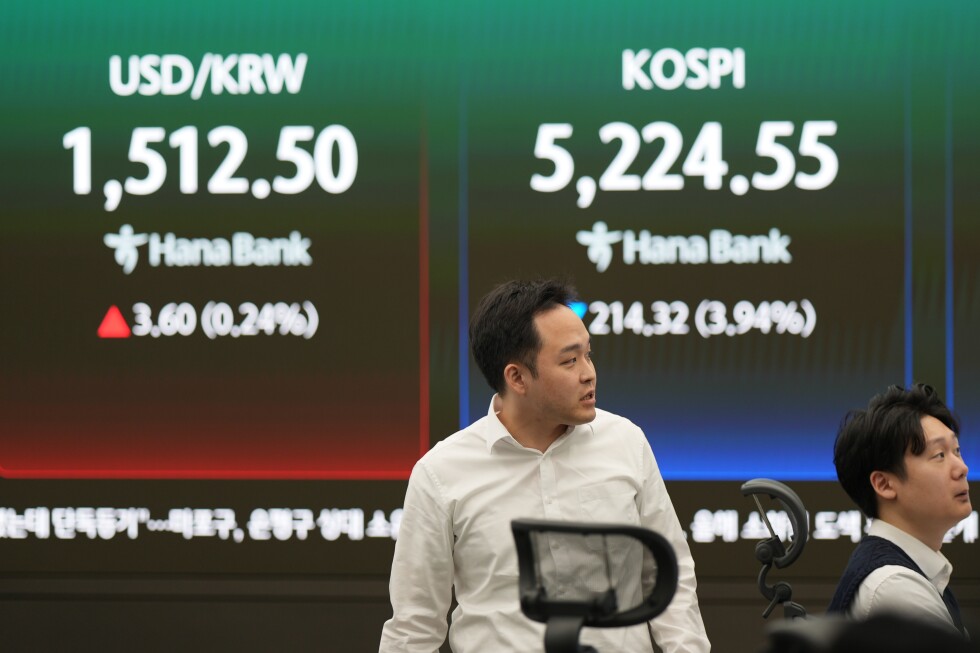
Japan’s benchmark Nikkei 225 plummeted 4.5% in morning trading to 50,979.54, while South Korea’s Kospi plunged 3.2% to 5,264.32. Hong Kong’s Hang Seng dropped 1.7% to 24,519.63, and Australia’s S&P/ASX 200 fell 1.2% to 8,417.00. Mainland China’s Shanghai Composite showed relatively more resilience but still declined 0.7% to 3,884.57.
The sharp declines in Asia mirror Wall Street’s performance last Friday, where U.S. markets closed their fifth consecutive losing week – the longest such streak in nearly four years. The S&P 500 fell 1.7% to 6,368.85, now sitting 8.7% below its January record high. The Dow Jones Industrial Average dropped 793 points to 45,166.64, officially entering correction territory as it sits more than 10% below its recent peak. Technology stocks led the selloff, with the Nasdaq composite sinking 2.1% to 20,948.36.
The ongoing conflict with Iran has particular significance for Asian economies, which heavily depend on energy imports through the Strait of Hormuz – a critical chokepoint for global oil supply. Market analysts warn that restricted access to this shipping lane could severely impact the region’s energy security and economic growth prospects.
Energy markets reflected these concerns, with benchmark U.S. crude jumping $2.28 to $101.92 a barrel and Brent crude, the international standard, soaring $2.88 to $115.45 a barrel. Brent prices have increased dramatically from pre-conflict levels of around $70 per barrel, raising inflation concerns worldwide.
“Although we do not expect the conflict to be protracted, we anticipate heightened volatility in the near term,” said Xavier Lee, senior equity analyst at Morningstar Research, reflecting the cautious stance many market observers are taking.
Oil prices had briefly stabilized when President Donald Trump extended his self-imposed deadline to “obliterate” Iran’s power plants to April 6, but resumed their upward trajectory as investors priced in a potentially extended conflict. The rising energy costs threaten to trigger inflationary pressures across global markets, particularly impacting Asian economies that are major oil importers.
Bond markets have also responded to the geopolitical tensions, with the yield on the 10-year U.S. Treasury note rising as high as 4.48% before settling at 4.43% by the end of last week. This marks a significant increase from the 3.97% level seen before the conflict began, reflecting growing risk premiums in financial markets.
Currency markets showed the Japanese yen slightly strengthening against the U.S. dollar, with the exchange rate moving to 159.97 yen from 160.32 yen. The euro traded marginally lower at $1.1505, down from $1.1510.
Market strategists note that investors are recalibrating their expectations for global economic growth in light of the geopolitical instability. Higher energy prices traditionally act as a tax on consumers and businesses, potentially dampening economic activity across major economies that were already navigating challenging post-pandemic recovery paths.
The prolonged market decline highlights growing investor concern that the conflict could expand beyond its current boundaries, disrupting global trade and energy supplies for an extended period. This uncertainty comes at a particularly sensitive time for Asian economies, many of which are heavily export-dependent and vulnerable to shifts in global demand and supply chains.
As markets open for a new trading week, investors will be closely monitoring diplomatic developments and military actions for signs of either escalation or de-escalation that could determine market direction in the days ahead.
Fact Checker
Verify the accuracy of this article using The Disinformation Commission analysis and real-time sources.

7 Comments
As someone with a keen interest in the mining and energy sectors, I’m closely watching how the US-Iran conflict unfolds. The potential impact on commodity prices and related equities is a key consideration for my investment strategy. Maintaining a balanced portfolio and staying nimble will be crucial in these turbulent times.
The impact of the US-Iran tensions on Asian markets is a reminder of the interconnectedness of the global economy. Diversified investors may want to consider strategies to mitigate geopolitical risk, such as allocating to less volatile assets. Careful analysis will be key in navigating these uncertain times.
The sharp declines in Asian shares are a concerning echo of last week’s selloff on Wall Street. The geopolitical uncertainty surrounding the US-Iran conflict is clearly fueling a broader market rout. Prudent investors will likely take a cautious approach until there is more clarity on the path forward.
The market turmoil sparked by the US-Iran tensions is a stark reminder of the importance of geopolitical risk analysis in investment decision-making. Careful evaluation of the potential implications for various industries and asset classes will be essential for navigating the current environment successfully.
With the US-Iran conflict escalating, I’m curious to see how commodity-linked equities like mining and energy stocks will fare in the current market environment. The potential for supply chain disruptions and price volatility could create both risks and opportunities for savvy investors.
The escalating tensions between the US and Iran are certainly weighing heavily on Asian markets. Investors are understandably concerned about the potential impact on oil prices and global economic stability. It will be crucial to monitor the situation closely in the coming weeks.
As an energy analyst, I’m keeping a close eye on the oil price surge amid the rising tensions. The potential supply disruptions from the region could have significant implications for commodity markets and related equities. It’s a fluid situation that bears close watching.